

Categories
Burlington County, Camden County, Gloucester County, South Jersey Real Estate, South Jersey neighborhood, Real Estate Selling Tips, NJ Housing, Housing Guide, Home Buying Guides, Real Estate GuidesPublished September 21, 2026
What Happens When a South Jersey Home Has Unpermitted Renovations?

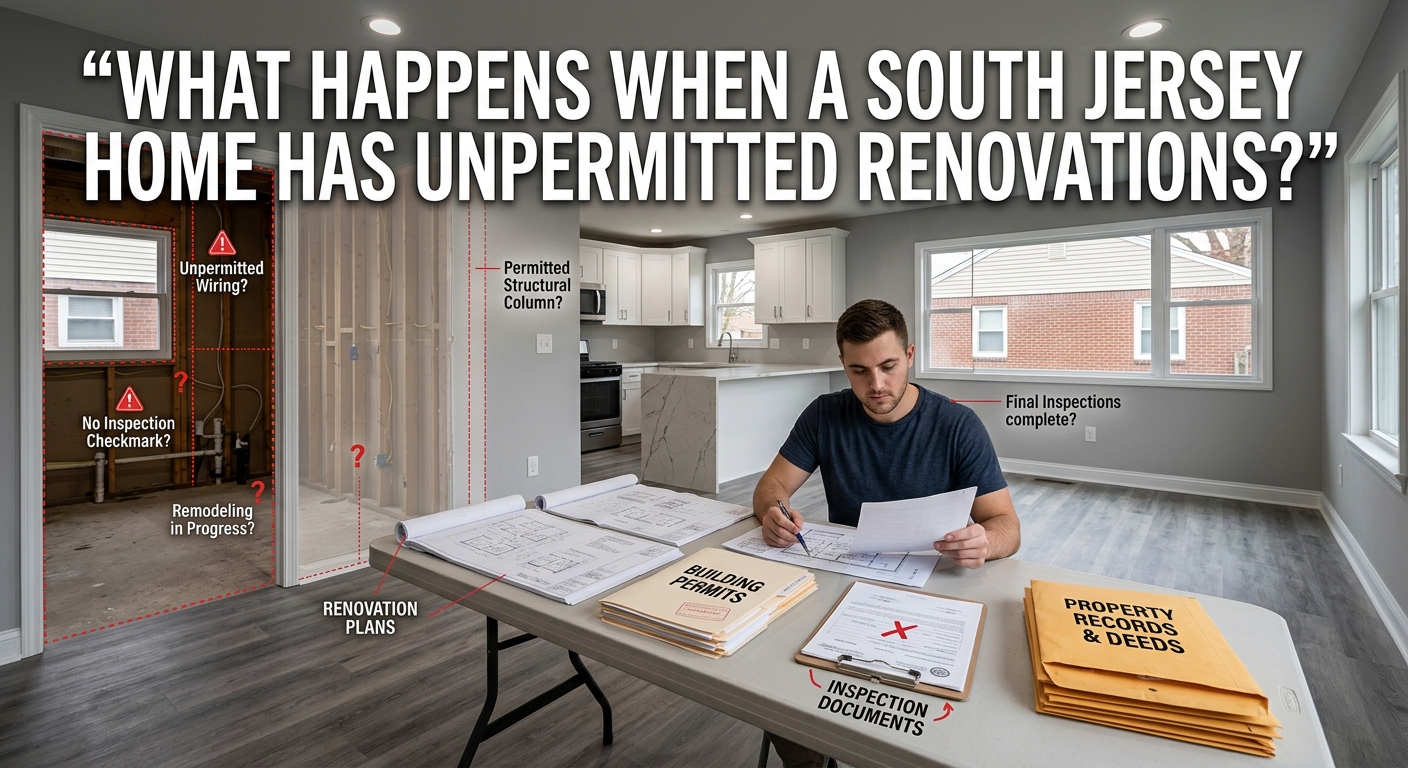
You walk into a South Jersey home and immediately notice the upgrades.
The finished basement looks great.
The kitchen has been completely remodeled.
A wall appears to have been removed to create a larger living area.
There's a new bathroom that wasn't shown on the original floor plan.
Everything looks finished.
Then you ask:
“Were permits pulled for this work?”
The answer is:
“We're not sure.”
That simple response can create a much bigger question for a buyer.
In New Jersey, construction permits can be required for work involving structural, plumbing, electrical, mechanical, and other regulated alterations. The state's Uniform Construction Code also distinguishes between ordinary maintenance, renovations, alterations, and more extensive reconstruction work.
That means an attractive renovation isn't automatically a problem—but unknown permit history is something buyers should investigate before closing.
As Mary Murphy of The Murphy Group explains:
“A beautiful renovation is great, but buyers also need to know how the work was completed and whether the proper documentation is in place. The goal is to understand what you're buying before you take ownership.”
🏠 What Does “Unpermitted” Actually Mean?
An unpermitted renovation generally means work was performed without obtaining a construction permit when one was required.
That can happen for many reasons.
A homeowner may have:
- Not realized a permit was necessary
- Hired a contractor who failed to obtain one
- Completed the work themselves
- Assumed cosmetic work didn't require approval
- Purchased the property without knowing the renovation history
Not every improvement requires a permit.
New Jersey's construction guidance distinguishes ordinary maintenance from regulated construction work, and permit requirements can depend on the type and scope of the project.
So the important question isn't simply:
“Was this renovation permitted?”
It's:
“Was a permit required for this particular work, and if so, was it obtained and finalized?”
🔨 1. Not Every Renovation Is Treated the Same Way
A homeowner replacing finishes isn't necessarily in the same situation as someone who:
- Removed structural walls
- Added a bathroom
- Reconfigured plumbing
- Rewired electrical systems
- Changed HVAC
- Added living space
- Converted a basement
- Added an addition
New Jersey's Rehabilitation Subcode categorizes different types of work, including repair, renovation, alteration, and reconstruction.
That's why buyers shouldn't automatically assume that every missing permit represents the same level of concern.
The scope matters.
🧱 2. Structural Changes Deserve Extra Attention
One of the first questions buyers should ask is:
“Did the renovation change the structure of the house?”
Examples could include:
- Removing walls
- Adding walls
- Enlarging openings
- Creating additions
- Changing ceiling heights
- Modifying load-bearing components
Structural alterations can have implications beyond appearance.
If documentation is missing, buyers may want the work reviewed by the appropriate building or engineering professional.
⚡ 3. Electrical Work Can Be Particularly Important
Electrical renovations aren't simply cosmetic.
Unpermitted electrical work could involve changes to:
- Wiring
- Panels
- Outlets
- Lighting
- Circuits
- Electrical service
Because electrical work affects safety and code compliance, buyers shouldn't rely solely on the fact that everything appears to be functioning.
A qualified professional can help determine whether additional evaluation is appropriate.
🚿 4. Plumbing Changes Can Create Hidden Questions
A new bathroom or relocated kitchen may look like a straightforward improvement.
But plumbing changes can involve work behind walls and underneath floors.
Buyers may want to determine:
- What was changed?
- When was it completed?
- Who performed the work?
- Were permits required?
- Were inspections completed?
A finished room can conceal the most important parts of the renovation.
🏡 5. Finished Basements Deserve Special Attention
Finished basements are common selling features in South Jersey.
But buyers shouldn't automatically assume that finished space is legally recognized living area simply because it looks like it belongs in the home.
Ask:
- When was the basement finished?
- Was the work permitted?
- Was plumbing added?
- Was electrical work performed?
- Were walls or ceilings altered?
- Were bedrooms or other rooms created?
- Does the municipality recognize the space as finished living area?
A basement can be useful even if it isn't counted the same way as above-grade living space.
The important thing is knowing exactly what you're purchasing.
📄 6. Missing Permits Can Lead to More Questions During the Transaction
Once an issue is discovered, the buyer, seller, agents, attorneys, lender, insurer, and municipality may all become involved depending on the circumstances.
Questions may include:
- Was a permit actually required?
- Can the work be documented?
- Does the existing work comply with current requirements?
- Can the municipality close out the work?
- Is additional inspection necessary?
- Who will be responsible for resolving it?
This can turn a straightforward transaction into a more complicated one.
That's why identifying permit questions early is valuable.
🧾 7. Check Municipal Permit Records
One of the most useful steps for a buyer is to check the municipality's records.
Depending on the town, records may help establish:
- Which permits were issued
- What work was approved
- Whether inspections occurred
- Whether permits were finalized
- Whether a certificate was issued
- Whether open permits remain
The local enforcing agency is responsible for issuing permits and performing required inspections under New Jersey's Uniform Construction Code.
The exact process for obtaining records can vary by municipality.
🏢 8. A Certificate of Occupancy Can Matter
Buyers may also hear about a Certificate of Occupancy, or CO.
New Jersey law provides that buildings or structures subject to the applicable requirements generally need the appropriate certificate before occupancy, and a CO certifies that permitted work has been completed in accordance with the permit, code, and applicable laws and ordinances.
However, buyers should not assume that every renovation automatically requires a new CO.
The requirement depends on the nature of the work.
If a renovation significantly changed the use or configuration of a property, buyers should ask the municipality what documentation applies.
🔍 9. An Inspection May Reveal Work That Isn't in the Records
A standard home inspection can sometimes identify signs of remodeling that aren't obvious from the listing.
An inspector may notice:
- New electrical components
- Unusual plumbing
- Freshly finished areas
- Structural modifications
- Different materials
- New walls
- Added fixtures
- Signs of previous construction
But a home inspector generally isn't a substitute for the municipal permitting authority.
The inspection can raise questions.
Municipal records and qualified professionals can help answer them.
📝 10. Seller Disclosures Matter
New Jersey's Seller's Property Condition Disclosure Statement tells sellers that they have an obligation to disclose known material defects, while also making clear that the disclosure is not a substitute for the buyer's own inspections and professional evaluation.
For buyers, that means the disclosure should be reviewed carefully.
If the seller states that renovations were completed, buyers can ask reasonable follow-up questions about:
- What was done
- When it was done
- Who performed it
- Whether permits were obtained
- Whether inspections occurred
- Whether documentation is available
A disclosure is one piece of the due-diligence process—not the entire process.
💰 11. Unpermitted Work Can Affect Value
A renovation may look like an asset.
But if buyers later discover that the work lacks documentation, they may question its value.
For example, imagine two homes with similar kitchens.
Home A
- Renovation documented
- Permits available where required
- Work completed and finalized
- Clear renovation history
Home B
- Similar renovation
- No records
- Unclear contractor history
- Unknown permit status
Even if both kitchens look nearly identical, buyers may perceive the second property differently.
Documentation can reduce uncertainty.
🏦 12. Financing Can Become More Complicated
A permit issue doesn't automatically mean a buyer's mortgage will be denied.
However, unresolved property issues can create additional questions during the lending and appraisal process.
Depending on the situation, professionals may need to understand:
- What the property legally contains
- Whether improvements are recognized
- Whether the property conforms to applicable requirements
- Whether there are outstanding issues
Because lender requirements vary, buyers should discuss specific concerns with their lender rather than assuming how an issue will affect financing.
🛡️ 13. Insurance Can Raise Its Own Questions
Insurance companies may also care about the condition and history of a property.
For example, significant electrical, plumbing, structural, or heating modifications may raise questions about safety and documentation.
This is another reason buyers should avoid waiting until the last minute to investigate unusual renovations.
The earlier questions are raised, the more time there is to get appropriate answers.
⚠️ 14. The Seller May Need to Correct the Situation
What happens after an unpermitted renovation is discovered depends on the specific circumstances and the municipality.
Possible outcomes can include:
- Providing existing documentation
- Applying for permits after the fact
- Having work inspected
- Correcting code deficiencies
- Obtaining required approvals
- Removing an improvement
- Negotiating responsibility between buyer and seller
There is no universal solution for every property.
The local construction official is the appropriate authority for determining what the municipality requires.
🧮 15. The Cost of “Fixing” Unpermitted Work Can Vary
Buyers shouldn't assume that legalization will cost a few hundred dollars—or tens of thousands.
The cost can depend on:
- Type of renovation
- Size of the project
- Whether plans are required
- Current condition
- Code deficiencies
- Required inspections
- Professional fees
- Permit fees
- Whether portions need to be opened or reconstructed
That uncertainty is exactly why buyers should investigate before closing.
⏰ 16. Timing Can Become a Problem
Imagine discovering an unpermitted addition a few days before closing.
Now someone needs to determine:
- What was built
- Whether permits were required
- What records exist
- Whether inspections are necessary
- What the municipality requires
- Who will handle the issue
That can introduce delays at a time when the buyer, seller, lender, movers, and attorneys are already working toward a closing date.
Permit questions are much easier to manage when identified early.
🏘️ 17. Don't Assume an Older Renovation Is Automatically “Grandfathered”
This is an area where buyers should be careful with assumptions.
A renovation being old doesn't automatically answer whether it was properly permitted or how the municipality will treat it today.
The applicable requirements can depend on:
- When the work occurred
- What work was performed
- The property's history
- Applicable code provisions
- Municipal records
- The nature of the current issue
Instead of relying on the phrase “It's been like that for years,” buyers should seek documentation and municipal guidance.
🔧 18. What Buyers Should Do Before Closing
If you discover potentially unpermitted renovations, consider this process:
Step 1: Identify the Work
Determine exactly what was changed.
Step 2: Ask for Documentation
Request permits, plans, inspection records, invoices, and other available paperwork.
Step 3: Check Municipal Records
Confirm what the local building department has on file.
Step 4: Get Professional Advice
Depending on the issue, that could mean an inspector, contractor, architect, engineer, attorney, or other qualified professional.
Step 5: Understand the Cost
If corrective work is necessary, get realistic estimates.
Step 6: Address the Issue Contractually
Have your attorney advise you on how the issue should be handled within the transaction.
Step 7: Don't Rush the Decision
Make sure you understand the problem before deciding whether the property still makes sense for you.
🏠 19. Sellers Should Check Their Records Before Listing
This issue isn't only important for buyers.
Sellers can save themselves significant stress by investigating permit history before putting the home on the market.
Before listing, sellers may want to check whether records exist for:
- Additions
- Finished basements
- Bathroom additions
- Kitchen renovations
- Structural changes
- Electrical work
- Plumbing work
- HVAC modifications
- Decks and other improvements
Discovering a documentation problem before the property hits the market gives the seller more time to determine the appropriate solution.
📸 20. Marketing Shouldn't Overstate What the Property Offers
There's another important consideration.
If an unpermitted space is being marketed as a bedroom, finished living area, apartment, or other specific use, sellers should make sure the description accurately reflects the property's documented status.
Marketing language should not create expectations that the property cannot support.
Accurate marketing protects both the buyer and seller from unnecessary confusion.
🧠 Unpermitted Doesn't Always Mean Unusable
This distinction matters.
A renovation can be unpermitted without being visibly unsafe.
It can also be attractive and functional while still requiring documentation or municipal review.
The issue isn't simply:
“Does it look good?”
It's:
“What was done, was it required to be permitted, and what documentation exists?”
That's a much better question for a serious buyer.
📋 The South Jersey Unpermitted Renovation Checklist
Before closing, buyers should ask:
About the Work
- What was renovated?
- When was it completed?
- Who performed the work?
- Was structural work involved?
About Permits
- Was a permit required?
- Was one obtained?
- Were inspections completed?
- Are there open permits?
About the Property
- Does the municipal record match the current property?
- Is finished space officially recognized?
- Are additions documented?
- Is a new CO or other approval applicable?
About the Transaction
- Could the issue affect financing?
- Could insurance be affected?
- What would it cost to correct?
- Who will be responsible?
- Does the purchase agreement address the issue?
Getting answers before closing can prevent a much bigger surprise after ownership transfers.
💼 How The Murphy Group Helps Buyers and Sellers Navigate Permit Questions
At The Murphy Group, the goal isn't to make assumptions about what a permit issue means.
It's to help clients recognize the questions that need to be answered.
That can include encouraging buyers and sellers to:
- Review municipal records
- Understand renovation history
- Examine property disclosures
- Ask for supporting documentation
- Bring in qualified professionals when needed
- Address concerns early in the transaction
“The best time to discover a permit question is before closing—not after you own the property,” Mary says. “We want our clients to have the information they need to make a confident, informed decision.”
📈 The Bottom Line
Unpermitted renovations don't automatically mean a South Jersey home is a bad purchase.
But they do mean buyers should slow down and investigate.
A beautiful finished basement, new bathroom, addition, or remodeled kitchen can add significant appeal—but the paperwork and approval history matter too.
Before closing, buyers should understand:
- What work was performed
- Whether permits were required
- What records exist
- Whether inspections were completed
- Whether the municipality has outstanding concerns
- Whether additional work or documentation may be necessary
New Jersey's construction-permit system exists to help ensure regulated work complies with applicable construction requirements, and municipalities are responsible for issuing permits and conducting required inspections.
The goal isn't to be afraid of renovations.
It's to make sure the paperwork, the property, and the expectations all tell the same story.
📲 Buying or Selling a South Jersey Home With Renovations?
The Murphy Group helps buyers and sellers navigate the questions that can arise around property condition, renovations, disclosures, pricing, and the overall transaction process.
👉 Start here: www.mgsells.com

Mary Murphy
Team Leader | The Murphy Group | eXp Realty, LLC | PLACE
or another way