

Categories
New Jersey Real Estate, Real Estate Guides, Home Buying Tips, Home Buying GuidesPublished January 30, 2026
How NJ Land Use Laws Affect Home Additions or Pools

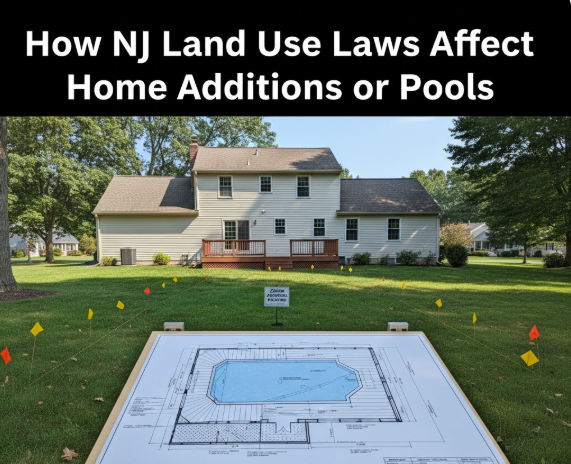
Homeowners in New Jersey often dream of adding a new room, expanding a deck, or installing a pool. But before breaking ground, it’s essential to understand local land use and zoning laws, which can heavily influence what’s allowed and how projects move forward.
Mary Murphy of The Murphy Group explains:
“Many buyers don’t realize that zoning, setbacks, and lot coverage rules can limit what you can add to a property. Knowing the rules upfront saves time and money.”
Here’s what buyers and homeowners need to know.
🏡 1. Zoning & Setback Rules
- Zoning districts determine what type of additions are allowed
- Setbacks regulate how close structures can be to property lines, streets, or other buildings
- Restrictions may vary for pools, garages, sunrooms, or second-story additions
Mary notes:
“Even if your lot seems spacious, setback requirements may reduce where you can build a pool or add a sunroom.”
⚖️ 2. Lot Coverage & Impervious Surface Limits
- NJ municipalities often regulate the percentage of lot covered by buildings, decks, or hardscapes
- Pools, patios, and driveways can count toward impervious surface limits, affecting approvals
“Lot coverage rules protect drainage and neighborhood aesthetics,” Mary explains.
“Understanding them is critical before planning a large addition.”
🏊 3. Pool-Specific Regulations
- Many towns require fencing, gates, and pool safety features
- Pool placement may be limited by setbacks or easements
- Permits are typically required, including inspections for electrical and plumbing systems
Mary adds:
“Installing a pool isn’t just a backyard decision — local codes must be met to avoid fines or insurance issues.”
🛠️ 4. Permits & Approvals
- Building permits are almost always required for additions or pools
- Some towns may require planning or zoning board approval, especially for larger projects
- Inspections may include structural, electrical, and plumbing checks
“Skipping permits is risky,” Mary warns.
“It can delay projects and even affect resale.”
🌳 5. Environmental & Neighborhood Considerations
- Wetlands, floodplains, and stormwater management regulations may affect where you can build
- Homeowners’ associations (HOAs) may have additional rules or design guidelines
- Tree removal or grading may require municipal approval
Mary notes:
“Even a small addition can trigger multiple approvals if your property is in a sensitive area.”
💡 Tips for Buyers & Homeowners Planning Additions
✔ Check your property’s zoning district before buying
✔ Review setbacks, lot coverage, and HOA rules
✔ Consult a local architect or contractor familiar with municipal codes
✔ Factor permits and inspections into project timelines
Mary adds:
“Planning ahead keeps your project legal, safe, and stress-free.”
📲 Expert Guidance for NJ Property Improvements
Whether you’re considering a second-story addition, deck expansion, or backyard pool, understanding New Jersey land use laws is essential for homeowners and buyers alike.
Mary Murphy and The Murphy Group guide clients through zoning rules, approvals, and permits — ensuring your home improvements are compliant and your investment protected.
Explore NJ homes with potential for additions or pools today:
www.mgsellsarizona.com

Mary Murphy
Team Leader | The Murphy Group | eXp Realty, LLC | PLACE
or another way