

Categories
South Jersey Real Estate, Home Buying Tips, Home Buying Guides, Real Estate Guides, Real Estate Market Insights, New Jersey Real EstatePublished January 20, 2026
Zoning Laws in South Jersey That Affect Home Additions

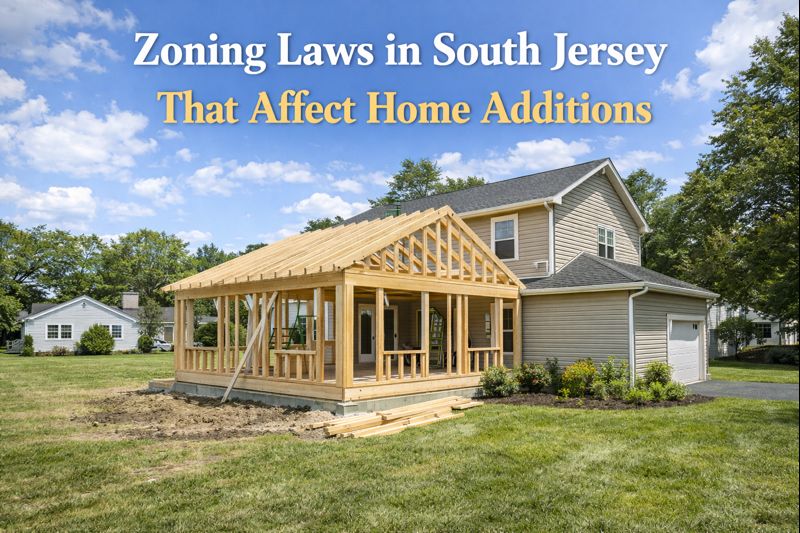
Thinking about adding a new bedroom, expanding your kitchen, or building a detached garage in South Jersey?
Before construction begins, homeowners must understand local zoning laws — and these regulations can significantly impact what you’re allowed to build.
Mary Murphy of The Murphy Group explains:
“Zoning laws are one of the most overlooked parts of homeownership. Buyers and homeowners often assume they can expand later, only to find out zoning restrictions limit what’s possible.”
Here’s what South Jersey homeowners and buyers need to know.
🏡 1. Zoning Determines What You Can Build
Each South Jersey municipality has zoning ordinances that regulate:
- Property use (residential, agricultural, mixed-use)
- Building size and height
- Placement of structures on the lot
Zoning classifications dictate whether additions like second stories, in-law suites, or detached structures are permitted.
💬 “Zoning varies town by town,” Mary notes.
“What’s allowed in one community may be restricted just a mile away.”
📏 2. Setback Requirements Matter
Setbacks define how close a structure can be to:
- Property lines
- Roads
- Neighboring homes
Common setbacks include front, side, and rear yard requirements. An addition that violates setback rules typically requires a variance.
“Setbacks are often the biggest obstacle for additions on older or smaller lots,” Mary explains.
🧱 3. Lot Coverage and Floor Area Ratio (FAR)
Zoning laws also limit how much of your lot can be covered by structures.
This includes:
- The home
- Garages
- Sheds
- Decks and patios
Exceeding lot coverage or FAR limits can prevent approval of an addition — even if setbacks are met.
⚖️ 4. Variances and Zoning Board Approval
If a proposed addition doesn’t comply with zoning rules, homeowners may apply for a variance through the local zoning board.
This process may involve:
- Architectural plans
- Public hearings
- Neighbor notification
- Legal or zoning professional support
Mary advises:
“Variances are possible, but they’re not guaranteed. Buyers should never assume approval — especially when future expansion is a priority.”
🏘️ 5. How Zoning Affects Home Buyers
For buyers, zoning laws impact:
- Future expansion plans
- Property value
- Renovation potential
- Long-term usability of the home
Homes with limited expansion potential may appeal less to buyers planning for growth or multi-generational living.
“When clients mention future additions, zoning is one of the first things I research,” Mary says.
💡 6. Best Practices Before Planning an Addition
Homeowners and buyers should:
✔ Review local zoning ordinances
✔ Confirm lot coverage and setback limits
✔ Consult the municipal zoning office
✔ Work with licensed architects and contractors
✔ Seek professional guidance early
“Understanding zoning before you buy or build saves time, money, and frustration,” Mary emphasizes.
📲 Expert Guidance for South Jersey Buyers & Homeowners
Whether you’re buying a home with expansion plans or preparing for a future addition, zoning laws play a critical role in what’s possible.
Mary Murphy and The Murphy Group help South Jersey buyers evaluate zoning restrictions, renovation potential, and long-term property value — before surprises arise.
Start your South Jersey home search with expert insight today:
www.mgsellsarizona.com

Mary Murphy
Team Leader | The Murphy Group | eXp Realty, LLC | PLACE
or another way