

Categories
South Jersey Real Estate, Burlington County, Camden County, Gloucester County, Home Buying Tips, Home Buying Guides, home inspection, home inspection checklist, Flood Risk, drainage systemPublished November 17, 2026
What Buyers Should Know About Buying a South Jersey Home With an Underground Drainage System

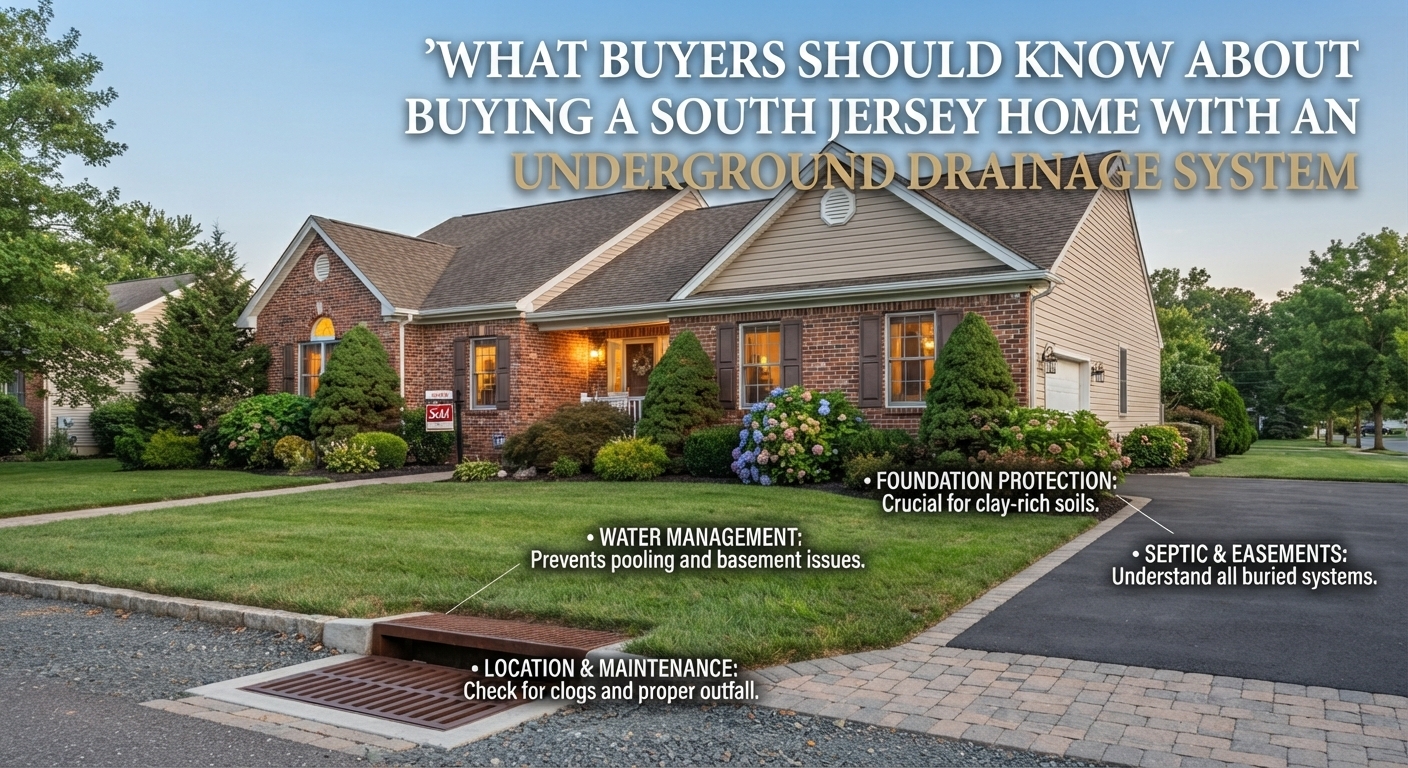
Buying a home involves looking beyond its interior features, property layout, and curb appeal. Some of the most important details are located beneath the ground, where homeowners may not immediately see potential maintenance concerns or drainage issues.
An underground drainage system can be a valuable feature of a South Jersey property, particularly in areas where heavy rainfall, saturated soil, poor surface drainage, or standing water can affect residential lots. These systems are designed to redirect excess water away from vulnerable areas, helping protect foundations, yards, driveways, and other parts of the property.
However, not all underground drainage systems are designed or maintained the same way. Some properties may have French drains, buried downspout extensions, underground catch basins, perforated drainage pipes, or more extensive stormwater management systems.
For buyers considering a South Jersey home with underground drainage, understanding how the system works, where it directs water, and what condition it is in can help prevent unexpected expenses after closing.
Here are several important things to consider before making an offer.
1. Understand What Type of Underground Drainage System the Property Has
The first step is identifying the specific drainage system installed on the property. While these systems serve a similar purpose, their designs and maintenance requirements can differ significantly.
Common underground drainage systems include:
-
French drains: Perforated pipes surrounded by gravel that collect and redirect groundwater away from problem areas.
-
Buried downspout extensions: Underground pipes that carry roof runoff away from the home's foundation.
-
Catch basins: Underground collection points that capture surface water and direct it into connected drainage pipes.
-
Yard drainage systems: Networks of underground pipes designed to address water accumulation in low-lying sections of a lawn.
-
Stormwater management systems: More extensive installations that collect, temporarily store, or redirect runoff from roofs, driveways, and other impervious surfaces.
Ask the seller whether the system was professionally installed, when it was completed, and whether documentation is available.
Understanding the type of system will help you determine what to inspect and what maintenance may be necessary.
2. Investigate the Property's History of Water Accumulation
An underground drainage system may indicate that a previous homeowner recognized recurring water problems on the property.
This does not automatically mean the home has a drainage issue. In some cases, the system was installed as a preventive measure or as part of a broader landscaping project.
Nevertheless, buyers should investigate whether the property has experienced:
-
Water pooling in the backyard or side yard.
-
Basement leaks or moisture intrusion.
-
Water collecting near the foundation.
-
Soil erosion around landscaping or retaining walls.
-
Flooding after heavy rainfall.
-
Persistent muddy areas or unusually saturated ground.
Ask the seller about previous drainage concerns and whether the current system resolved them.
It is also helpful to review the property's disclosure documents and available maintenance records. A home inspection can identify visible signs of moisture, but it may not establish the condition or effectiveness of buried drainage components.
3. Check Where the Underground System Directs Water
Knowing where water goes after entering an underground drainage system is just as important as knowing how it enters.
Some systems discharge water into designated drainage areas, approved stormwater facilities, or suitable locations on the property. Others may connect to drainage infrastructure subject to local requirements.
Buyers should determine:
-
Where the underground pipes discharge.
-
Whether the discharge area is on the property or elsewhere.
-
Whether water flows toward a neighboring property.
-
Whether the system connects to a public stormwater facility.
-
Whether the discharge location is properly maintained.
-
Whether the installation complies with applicable local requirements.
An improperly directed drainage system can create problems for neighboring properties, contribute to erosion, or result in disputes.
If the drainage system crosses property boundaries or connects to shared infrastructure, ask whether recorded easements, maintenance agreements, or other documentation apply.
4. Consider South Jersey's Soil Conditions and Property Elevation
South Jersey properties can have different soil compositions, elevations, and natural drainage characteristics depending on their location.
Some areas have sandy soils that allow water to infiltrate relatively quickly, while others have clay-heavy or compacted soils that may slow drainage and contribute to water accumulation.
Property elevation also matters. Homes located near low-lying areas, wetlands, waterways, or properties with changing grades may require additional attention to water management.
Before purchasing, consider whether the drainage system is appropriate for the property's specific conditions.
A qualified drainage contractor or appropriate site professional can help evaluate whether the system is adequately designed for the property's soil, grading, and expected water flow.
5. Have the Underground Drainage System Professionally Evaluated
A standard home inspection generally focuses on visible and accessible components of a property. Because underground drainage pipes and connections are concealed, their condition may not be fully evaluated during a routine inspection.
Consider hiring a qualified drainage contractor to assess the system, particularly if the seller cannot provide installation records or maintenance history.
Depending on the installation, an evaluation may include:
-
Checking accessible catch basins and drainage inlets.
-
Looking for sediment, debris, and blockages.
-
Examining visible discharge points.
-
Evaluating water flow through accessible sections.
-
Identifying signs of pipe damage or deterioration.
-
Determining whether specialized camera inspection is appropriate.
Ask the contractor whether the system has adequate capacity and whether repairs or routine maintenance are recommended.
Getting an independent assessment before closing can help you understand the potential costs associated with maintaining the system.
6. Ask About Permits, Easements, and Local Drainage Requirements
Some underground drainage installations may require permits or approvals, particularly when they involve significant grading changes, connections to public infrastructure, stormwater management facilities, or work affecting regulated areas.
Requirements can vary by municipality and the nature of the installation.
Buyers should ask whether the seller has:
-
Original installation plans or drawings.
-
Applicable permits and inspection records.
-
Documentation of municipal approvals, when required.
-
Recorded drainage easements.
-
Maintenance agreements for shared systems.
-
Records of previous repairs or modifications.
In South Jersey, local requirements may differ between municipalities in Burlington, Camden, Gloucester, Atlantic, and surrounding counties.
If the system is part of a larger subdivision stormwater management plan, determine whether the homeowner has individual maintenance responsibilities or whether those responsibilities belong to a homeowners association or another entity.
7. Look for Signs of Drainage Problems Around the Property
Even when underground pipes are not visible, the surrounding landscape may provide clues about how well the system is functioning.
During a property visit, pay attention to:
-
Depressions or uneven areas in the yard.
-
Standing water near drainage inlets.
-
Exposed pipes or damaged covers.
-
Unusually green or waterlogged sections of grass.
-
Soil erosion around discharge points.
-
Water stains or moisture near the foundation.
-
Areas where landscaping appears to have been repeatedly repaired.
If possible, visit the property after rainfall or ask the seller whether you can observe the yard during wet weather.
A property that looks perfectly dry during a sunny afternoon may behave differently after several hours of heavy rain.
8. Understand the Long-Term Maintenance Costs
Underground drainage systems are not necessarily maintenance-free. Over time, pipes can become clogged with leaves, soil, sediment, and other debris. Tree roots may also interfere with underground piping, depending on the system's design and location.
Maintenance requirements depend on the system's size, materials, installation quality, and surrounding landscape.
Potential maintenance expenses may include:
-
Cleaning catch basins and drainage inlets.
-
Removing sediment and debris.
-
Clearing clogged pipes.
-
Repairing damaged underground sections.
-
Replacing deteriorated components.
-
Maintaining discharge areas and drainage outlets.
Ask the seller how frequently the system has been serviced and whether there are existing maintenance recommendations.
If the property has an extensive stormwater management system, clarify whether the homeowner is responsible for ongoing inspections and upkeep.
9. Review Flood Risk and Nearby Water Features
An underground drainage system should not be mistaken for flood protection.
While it may help manage ordinary surface runoff or groundwater, it cannot necessarily prevent flooding caused by extreme rainfall, overflowing waterways, storm surges, or other severe weather events.
Buyers should independently investigate the property's flood exposure.
Consider reviewing:
-
Available local floodplain information.
-
Previous flood claims or known water intrusion.
-
Proximity to streams, rivers, wetlands, and other waterways.
-
Whether flood insurance may be necessary.
-
Whether the property's drainage system is designed to address ordinary runoff or a more specific water management concern.
South Jersey buyers should remember that flood risk can vary significantly between neighboring properties.
A drainage system is one part of a property's overall water management strategy, not a guarantee against flooding.
10. Factor Drainage Findings Into Your Purchase Decision
Discovering an underground drainage system should not automatically discourage you from purchasing a home.
In fact, a properly designed and maintained system can be an advantage, particularly when it addresses an otherwise challenging drainage condition.
The important consideration is whether the system functions as intended and whether its maintenance responsibilities are reasonable.
If an inspection identifies concerns, buyers may want to discuss the findings with their real estate agent and determine whether additional evaluations, repair estimates, or appropriate negotiations are warranted.
Depending on the purchase agreement and applicable contingencies, these findings may help inform decisions before closing.
A clear understanding of the property's drainage infrastructure can help buyers make a more informed investment.
Frequently Asked Questions About Underground Drainage Systems
1. Is an underground drainage system a good feature when buying a South Jersey home?
It can be. A properly designed underground drainage system can help redirect excess water away from the home's foundation, yard, and other vulnerable areas. However, buyers should verify its condition, installation, and maintenance history before considering it an advantage.
2. Can an underground drainage system prevent basement flooding?
Not necessarily. These systems may help reduce water accumulation around a foundation, but they cannot guarantee protection against basement flooding. Foundation waterproofing, grading, groundwater conditions, sump pumps, and other factors may also affect basement moisture.
3. Should a home inspector evaluate underground drainage pipes?
A standard home inspection may identify visible drainage concerns but generally cannot fully assess concealed underground pipes. Buyers may benefit from hiring a qualified drainage contractor for a more specialized evaluation.
4. Who is responsible for maintaining an underground drainage system?
Responsibility typically depends on ownership, recorded easements, subdivision agreements, and local requirements. Individual homeowners may maintain systems located entirely on their property, while shared stormwater facilities may have different maintenance arrangements.
5. Can an underground drainage system affect a home's resale value?
It can influence buyer perception, particularly if the system addresses recurring water problems. A documented, properly maintained system may be viewed positively, while an undocumented or poorly functioning installation could raise concerns during future inspections.
6. Should buyers request drainage records before closing?
Yes. Installation plans, permits when applicable, maintenance records, repair invoices, and drainage agreements can help buyers understand how the system operates and what responsibilities they may inherit.
Make an Informed Decision Before Buying a South Jersey Home
Buying a home with an underground drainage system requires more than simply checking whether water disappears from the yard after rainfall. Buyers should understand the system's purpose, condition, discharge location, maintenance requirements, and relationship to the property's overall water management.
A little additional investigation before closing can help prevent costly surprises and provide greater confidence in your purchase.
Whether you are exploring homes in Burlington County, Camden County, Gloucester County, or other South Jersey communities, understanding a property's less-visible features is an important part of making a smart real estate decision.
Looking for your next home in South Jersey?
The Murphy Group can help you evaluate properties, understand important home features, and navigate the buying process with greater confidence.
Explore available properties and connect with our team at https://mgsells.com

Mary Murphy
Team Leader | The Murphy Group | eXp Realty, LLC | PLACE
or another way