

Categories
home buying risks, Burlington County, Affordable Homes, Camden County, First-Time Homebuyers, New Jersey Real Estate, Real Estate GuidesPublished April 27, 2026
Flood Zones and Rising Risks: What NJ Buyers Need to Know in 2026

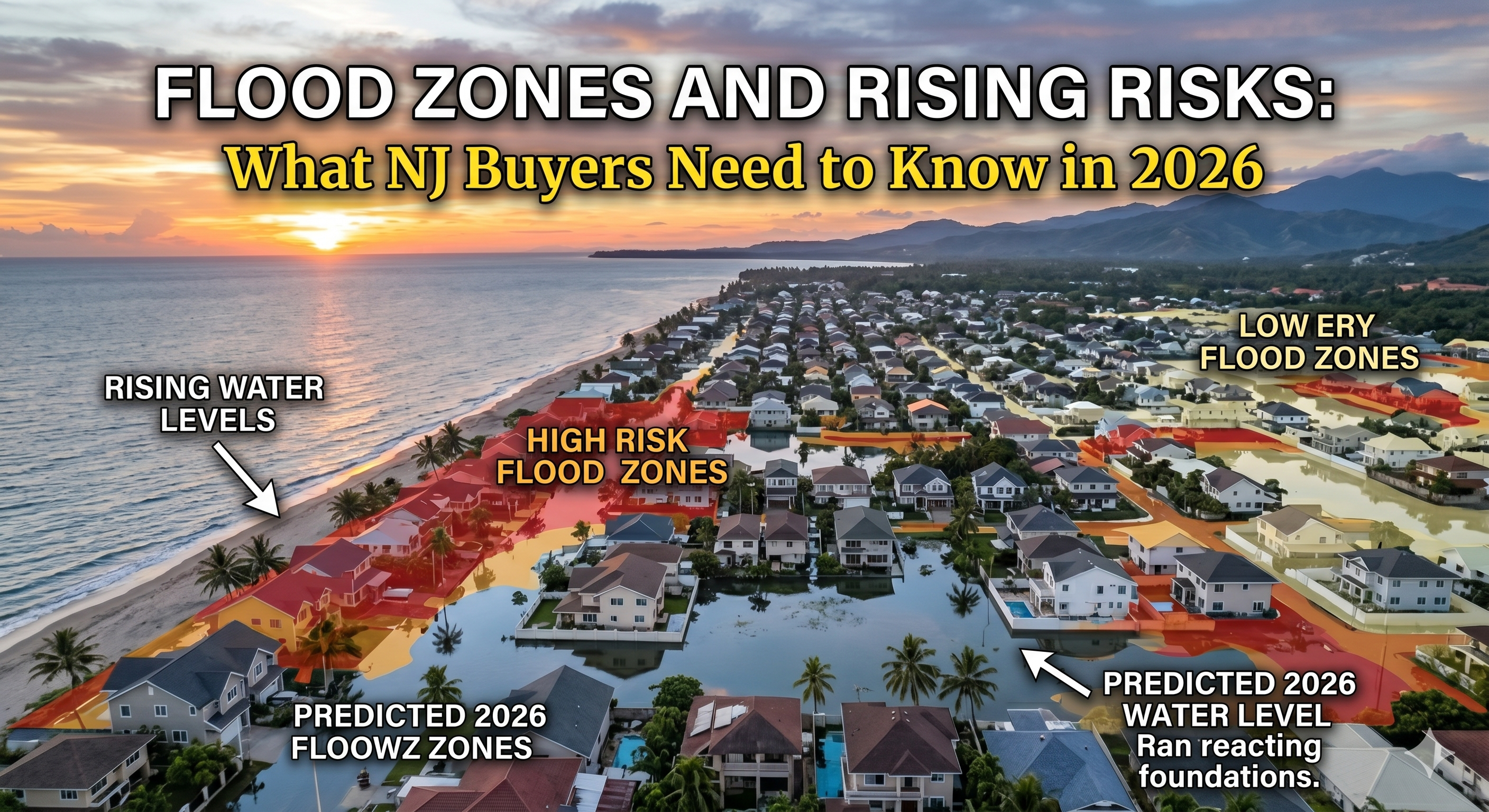
Flood zones used to be something buyers checked at the very end of the process.
In 2026, they’re becoming one of the first filters.
Across New Jersey, rising sea levels, stronger storms, and more frequent flooding events are changing how buyers evaluate homes—sometimes eliminating properties before a showing is ever scheduled.
As Mary Murphy of The Murphy Group explains:
“Flood risk isn’t just a coastal issue anymore. Buyers are asking about it earlier—and making decisions based on it faster.”
🌊 Why Flood Risk Is a Bigger Deal in New Jersey
New Jersey is uniquely exposed to multiple types of flooding:
- Coastal storm surge along the Jersey Shore
- River flooding from systems like the Passaic and Raritan
- Flash flooding in dense suburban areas
And the data is clear:
- 13 of 21 NJ counties are rated high or very high for inland flood risk ()
- Over 200,000 properties sit in FEMA high-risk flood zones ()
- The state has recorded over $6.3 billion in flood insurance payouts ()
This isn’t theoretical risk—it’s already impacting homeowners across the state.
🧠 Understanding FEMA Flood Zones (What Buyers Need to Know)
Flood zones are not all equal—and buyers are starting to learn the difference.
High-Risk Zones (A, AE, VE)
- 1% annual chance of flooding (“100-year flood”)
- Flood insurance required if financed
- Common near rivers, coasts, and low-lying areas
👉 Important: That “1% risk” equals about a 26% chance over a 30-year mortgage ()
Moderate to Low-Risk Zones (X)
- Lower probability of flooding
- Insurance not required—but often recommended
- Still vulnerable during extreme weather
What Buyers Are Realizing
Flood zones are not just about if a home floods—but how often, how costly, and how insurable it is.
📈 What’s Changing in 2026
1. Flood Risk Is Expanding
Flooding is no longer limited to traditional zones.
- Heavy rainfall is impacting inland suburbs
- Drainage systems are being overwhelmed
- Areas previously considered “safe” are seeing events
Even experts warn that flooding is increasing in frequency and intensity due to climate change ()
2. Maps Don’t Tell the Whole Story
FEMA maps are still the baseline—but they have limitations.
- They rely heavily on historical data
- They may not fully reflect future climate conditions
- Some flooding occurs outside mapped zones
In fact, many flood claims happen in moderate or low-risk areas ()
3. Insurance Is Becoming a Bigger Factor
Flood insurance is now part of affordability.
- NJ averages about $1,040/year in flood premiums ()
- Costs vary widely depending on elevation, zone, and structure
- Only about 6% of NJ households carry flood insurance ()
That gap between risk and coverage is something buyers are paying attention to.
4. Local Risk Can Be Significant
Some areas show especially high exposure.
For example, in parts of Ocean County:
- Over 34% of properties fall within high-risk flood zones (AE/VE) ()
- Storm-related damage averages over $100M annually ()
That kind of localized data is shaping buyer decisions town by town.
⚠️ Why Some Homes Lose Buyers Over Flood Risk
Even strong homes can struggle if flood concerns aren’t addressed.
1. Insurance Uncertainty
If buyers don’t know what insurance will cost, they hesitate.
2. Repetitive Flood History
New Jersey has over 16,000 properties with multiple flood losses ()
Buyers are increasingly aware of this—and cautious.
3. Misalignment Between Listing and Reality
If a home is marketed as low-risk but appears vulnerable (low elevation, near water), trust drops quickly.
4. Long-Term Resale Concerns
Buyers are thinking ahead:
👉 “Will this be harder to sell later?”
🏡 What Smart Buyers Are Doing Now
Today’s informed buyers are:
- Checking FEMA flood maps before scheduling showings
- Reviewing insurance quotes early
- Asking about past flooding and disclosures
- Looking at elevation, drainage, and surrounding terrain
- Evaluating total cost—not just purchase price
Flood risk is now part of due diligence, not an afterthought.
💼 How The Murphy Group Helps Buyers and Sellers Navigate Flood Risk
At The Murphy Group, flood awareness is built into the strategy from day one.
Their approach includes:
- Helping buyers interpret flood zone data in real terms
- Connecting clients with insurance and risk insights early
- Positioning listings transparently to build trust
- Advising sellers on how to address or mitigate concerns
- Framing homes based on long-term livability and resale value
“The goal isn’t to avoid every risk,” Mary says. “It’s to understand it—and make smart decisions around it.”
📊 The Bottom Line
Flood zones are no longer just a technical detail in New Jersey real estate.
They are a core factor influencing:
- Buyer interest
- Insurance costs
- Property value
- Long-term investment potential
And in 2026, buyers who understand flood risk are making more confident—and more strategic—decisions.
📲 Want Help Navigating NJ Flood Risks?
The Murphy Group helps buyers and sellers understand the full picture—from flood zones to long-term value—so no decision is made in the dark.
👉 Start here: www.mgsells.com

Mary Murphy
Team Leader | The Murphy Group | eXp Realty, LLC | PLACE
or another way