

Categories
South Jersey Real Estate, Burlington County, Camden County, Gloucester County, mature tree removal NJ, Real Estate Guides, property Maintenance, Home Selling Tips, Home Buying Guides, Home Buying TipsPublished October 12, 2026
What South Jersey Homeowners Should Know Before Removing Mature Trees

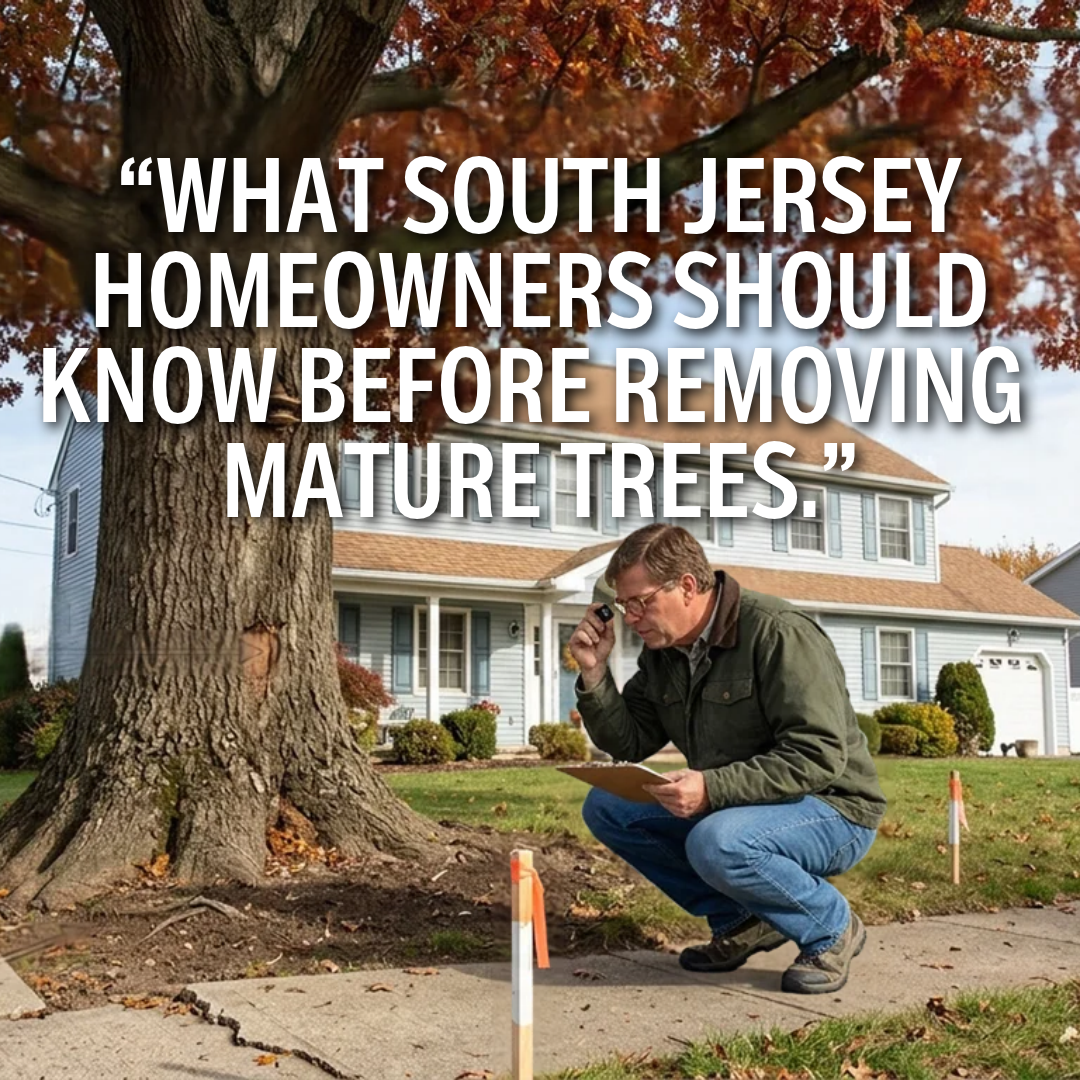
Mature trees can be some of the most attractive features of a South Jersey property.
They provide shade during hot summer afternoons, frame a home's exterior, create privacy, and give established neighborhoods the character that many buyers appreciate. But when a large tree begins dropping branches, damaging pavement, crowding a house, or raising concerns about safety, homeowners may start considering removal.
Before calling a tree service, however, there is an important question to ask:
Will removing the tree solve a problem—or create new ones for your property?
Tree removal can be the right decision when a tree is severely damaged, diseased, unstable, or interfering with necessary property improvements. Yet removing a mature tree can also change the appearance of your yard, increase sun exposure, affect drainage patterns, and eliminate a feature that contributes to your home's appeal.
There may also be local permit requirements, environmental restrictions, and significant removal expenses to consider.
As Mary Murphy of The Murphy Group explains:
“Mature trees can add beauty, privacy, and character to a property. Before removing one, homeowners should understand the tree's condition, the practical reasons for removal, and how that decision could affect the home's overall appeal.”
Whether you are maintaining your current home or preparing to sell, here is what South Jersey homeowners should know before removing a mature tree.
🌳 1. Understand What Mature Trees Contribute to Your Property
A large tree offers more than visual appeal.
Depending on its location, species, and condition, a mature tree may provide:
- Shade for outdoor living areas
- Privacy from neighboring properties
- A more established landscape
- Protection from direct afternoon sunlight
- Habitat for birds and other wildlife
- Visual balance around the home
- Seasonal color and natural character
These benefits can be particularly noticeable in established South Jersey neighborhoods, where mature landscaping helps distinguish one property from another.
Removing a tree changes more than the appearance of a single spot in the yard. It can alter the way the house looks from the street, how the backyard feels, and how sunlight reaches outdoor spaces.
Before deciding, consider what the tree contributes and whether those benefits can be preserved through pruning, selective canopy reduction, or another appropriate treatment.
🏡 2. Determine Whether the Tree Actually Needs to Be Removed
A tree that looks inconvenient is not necessarily unhealthy or dangerous.
Sometimes, the problem can be addressed without removing the entire tree.
For example, a qualified tree professional may recommend:
- Removing dead or damaged branches
- Correcting certain structural problems through appropriate pruning
- Reducing selected branches to improve clearance
- Monitoring a manageable health issue
- Addressing competing vegetation
- Improving growing conditions where practical
In other cases, removal may be appropriate because of significant decay, severe structural defects, extensive disease, or a credible risk of failure.
The important distinction is between a tree that requires attention and one that cannot reasonably be retained.
If you are concerned about a large tree near your house, ask a New Jersey Licensed Tree Expert to assess its condition and explain the available options.
A professional evaluation can help you avoid removing a healthy tree unnecessarily—or keeping a hazardous tree simply because it has been part of the landscape for decades.
⚠️ 3. Look for Warning Signs That Deserve Professional Attention
Some visible conditions warrant closer investigation.
Watch for:
- Large dead branches in the canopy
- Major cracks or splits in the trunk
- Significant cavities or signs of decay
- A newly developing lean
- Root damage or substantial soil disturbance
- Large branches extending over frequently used areas
- Fungal growth near the trunk or root flare
- Sudden changes in the tree's condition after a storm
These signs do not automatically mean the tree must be removed. Their significance depends on the tree's species, structure, location, and the specific defect.
A mature tree can sometimes look healthy while having internal problems. Conversely, an unusual appearance does not always indicate imminent failure.
If a tree appears unstable or has suffered major storm damage, keep people away from the affected area and arrange for professional assessment. Trees near power lines require particular caution; do not attempt to trim or remove them yourself.
The goal is to make a decision based on the actual risk rather than appearance alone.
📋 4. Check Your Municipality's Tree Removal Rules Before Scheduling Work
One of the most important steps is confirming whether your town requires a permit or other approval.
Do not assume that a tree on private property can always be removed without permission.
New Jersey municipalities may have local ordinances governing tree removal, and requirements can vary by town. Some rules apply to trees of certain sizes, trees in designated locations, protected species, or trees affected by particular land-use conditions.
Depending on the municipality, you may need to check with:
- The municipal shade-tree commission
- The zoning or planning office
- The department of public works
- The construction or code enforcement office
- Another department responsible for tree protection
Ask whether the proposed removal requires an application, inspection, arborist report, replacement planting, or other approval.
Also clarify whether the rules differ for a dead or hazardous tree. Even when a tree presents a concern, do not assume an exemption applies without confirming the requirements.
Starting work before obtaining required approval can create delays, expenses, or enforcement problems.
🌿 5. Investigate Wetlands and Other Environmental Restrictions
Some South Jersey properties contain wetlands, streams, flood-prone areas, or environmentally sensitive land.
If a mature tree is located in or near one of these areas, additional restrictions may apply.
The New Jersey Department of Environmental Protection explains that activities affecting freshwater wetlands and regulated transition areas can require authorization. Its guidance specifically addresses when certain vegetation work may qualify as normal maintenance and when more extensive tree removal may require approval.
Before removing trees near a wetland, stream, or other potentially regulated area, determine whether the proposed work falls under any applicable environmental requirements.
This is especially important if the project also involves:
- Heavy equipment
- Excavation or grading
- Changes to drainage
- Removal of substantial vegetation
- Work near a streambank
- Placement of fill or debris
A tree removal contractor's willingness to perform the work does not, by itself, establish that every required approval has been obtained.
If you are uncertain about the property's environmental status, consult the appropriate municipal office or NJDEP before proceeding.
📏 6. Confirm the Tree Is Actually on Your Property
A mature tree near a property line can create confusion about ownership and responsibility.
Its trunk may sit close to a fence, driveway, sidewalk, or neighboring yard. Branches may extend over another property even when the trunk is entirely on yours.
Before authorizing removal, determine where the tree is located in relation to the legal property boundary.
This is particularly important when:
- The trunk is close to a shared fence
- The tree appears to grow across a boundary
- The trunk is on one property but branches extend over another
- A neighbor claims ownership or objects to removal
- The tree is located in a shared or disputed area
Do not assume that a fence establishes the exact property line or that overhanging branches automatically determine who owns the tree.
If ownership is unclear, review the available survey and property records, and seek legal advice when necessary. Discuss the proposed work with affected neighbors before scheduling a project that could create a dispute.
🏠 7. Consider How Tree Removal Could Affect Your Home's Appearance
A mature tree can shape the way a property is perceived from the street.
Its canopy may frame the entrance, soften the appearance of a large exterior wall, or balance the home's architectural features.
Removing it can reveal parts of the house that were previously hidden, but it can also leave the yard looking unfinished.
Consider the visual change before making a final decision.
Ask yourself:
- Will the front of the home look more exposed?
- Will the yard lose an important focal point?
- Will neighboring properties become more visible?
- Will the home appear less established?
- Is there a practical landscaping plan for the newly opened space?
If the tree is unhealthy or hazardous, safety should take priority. But when removal is optional, thinking about the property's overall composition can help you make a better long-term decision.
In some cases, replacing the tree with a suitable species or redesigning the surrounding landscape can preserve much of the original appeal.
💰 8. Understand the Potential Cost of Tree Removal
Removing a mature tree can be a substantial expense, particularly when the tree is large or located close to structures.
The cost depends on several factors, including:
- Tree height and trunk diameter
- Species and wood characteristics
- Tree condition
- Proximity to the house, garage, or neighboring structures
- Accessibility for equipment
- Nearby utility lines
- Whether the tree can be felled in sections
- The amount of debris to be removed
- Whether stump grinding is included
A large tree in an open yard may be easier to remove than a smaller tree surrounded by structures, fences, landscaping, or overhead obstacles.
Additional charges may apply for emergency work, specialized equipment, difficult access, or extensive cleanup.
Obtain written estimates from qualified tree-care professionals and compare the scope of work—not just the total price.
Make sure each estimate clearly identifies what is included, such as branch removal, hauling, stump grinding, site cleanup, and any additional services.
🪵 9. Decide What Will Happen to the Stump
Removing the visible tree does not necessarily eliminate the entire problem.
Unless the stump is also addressed, it may remain in the yard and affect future landscaping or property use.
Depending on the circumstances, options may include:
- Stump grinding
- More extensive stump removal
- Leaving the stump temporarily
- Incorporating it into a planned landscape design
Stump grinding can make the area easier to maintain, but it does not always remove every root or make the ground immediately suitable for construction.
If you plan to install a patio, extend a driveway, build a structure, or replant the area, discuss the intended use with the contractor before choosing a removal method.
Also ask how the work will affect nearby surfaces, irrigation, planting beds, and underground utilities.
A clear plan for the stump and surrounding ground can prevent the need for additional work later.
🌧️ 10. Think About Drainage Before Removing the Tree
Mature trees interact with the soil and surrounding landscape.
Their roots help stabilize soil, while their canopies intercept rainfall. Removing a tree changes these conditions, although the effects vary according to the species, soil, terrain, and location.
Before removing a tree on a sloped lot or in an area that already experiences drainage problems, consider whether the project could affect:
- Soil stability
- Surface runoff
- Erosion
- Water movement toward the house
- The condition of nearby planting beds
- Areas that already collect standing water
The greatest concern is not that every tree removal causes drainage problems. Rather, a tree may be part of a larger landscape system that should be understood before it is removed.
If the tree is near a retaining wall, stream, steep slope, or low-lying area, ask whether additional assessment is appropriate.
Where necessary, consult a qualified landscaping, drainage, or environmental professional before making changes to the site.
☀️ 11. Prepare for Changes in Shade and Sunlight
One of the most immediate effects of removing a mature tree is the change in sunlight.
An area that previously stayed cool and shaded may receive direct sun for much of the day.
That can affect:
- Outdoor seating areas
- Patios and decks
- Garden beds
- Grass and other plantings
- Windows and interior comfort
- The usability of certain parts of the yard
In some cases, additional sunlight may be welcome. In others, it may make a patio less comfortable during hot weather or increase the need for shade structures.
Consider the direction of the sun, the location of windows, and how the yard is used throughout the day.
If shade is important to your lifestyle, you may want to plan replacement landscaping or another suitable shading solution before removing the tree.
🏡 12. Evaluate the Effect on Privacy
Mature trees often serve as natural screens between homes.
Removing one may open up views into neighboring yards or make your outdoor living areas more visible from the street.
Before proceeding, look at the tree from several angles:
- From inside the main living areas
- From the patio or deck
- From the street
- From neighboring properties
- From the most frequently used parts of the yard
If the tree contributes significantly to privacy, consider alternatives such as selective pruning, layered landscaping, or planting a suitable replacement.
Keep in mind that a new tree may take years to provide the same screening effect as a mature one.
If privacy is a major feature of your property, include it in the decision rather than treating the tree as an isolated maintenance issue.
🏗️ 13. Consider Roots Near Foundations, Driveways, and Utilities
Tree roots can interact with nearby structures and underground infrastructure, but the cause of damage is not always obvious.
Roots may contribute to conflicts involving:
- Sidewalks and paving
- Driveways and patios
- Retaining walls
- Underground drainage systems
- Certain utility lines
- Existing landscape structures
However, visible cracks or uneven pavement do not automatically prove that a tree is responsible. Soil movement, installation defects, water problems, and other factors can also contribute.
If you believe roots are damaging your property, have the situation assessed before deciding on removal.
Also remember that removing a tree does not automatically repair damage that has already occurred. Depending on the problem, additional work may still be necessary.
Before excavation, stump grinding, or other ground disturbance, identify underground utilities and follow the applicable utility-marking process.
🌲 14. Choose a Replacement Tree Carefully
When a mature tree must be removed, replacement planting may help restore the landscape over time.
The best replacement is not necessarily another tree of the same size or species.
Consider:
- The mature height and canopy width
- Root characteristics
- Soil and drainage conditions
- Sunlight and available space
- Proximity to the house and pavement
- Seasonal maintenance requirements
- Local environmental conditions
- Potential conflicts with overhead or underground utilities
A smaller, well-suited tree may be a better long-term choice than a species that will outgrow its location.
If your municipality requires replacement planting as part of its tree-removal rules, confirm the approved species, quantity, size, timing, and documentation requirements before beginning the project.
For a thoughtful landscape plan, consult a qualified arborist or landscape professional familiar with the site's conditions.
🏘️ 15. Understand How Tree Removal May Affect Resale Appeal
Mature landscaping can influence how buyers experience a property, particularly when trees provide privacy, shade, curb appeal, or a sense of permanence.
However, removing a tree does not automatically reduce a home's market value. The effect depends on the tree's condition, location, safety, and contribution to the overall landscape.
For example:
- Removing a hazardous tree may reassure buyers.
- Removing a tree that blocks a desirable view may improve appeal.
- Removing a healthy tree that provides privacy may make the yard less attractive to some buyers.
- Removing a tree that crowds the house may improve access or create space for other improvements.
The surrounding market and the preferences of likely buyers also matter.
If you are preparing to sell, consider discussing the planned removal with your real estate professional before authorizing the work. They can help you evaluate how the tree contributes to the property's presentation and whether a landscaping plan would improve the final result.
The goal is not to preserve every tree at all costs. It is to make decisions that support the property's safety, functionality, and overall appeal.
📸 16. Think About Tree Removal Before Listing Your Home
If you plan to sell your South Jersey home, tree removal may be part of a broader exterior preparation strategy.
But timing and presentation matter.
Before listing, consider whether removing the tree will:
- Improve visibility of the house
- Address a genuine safety concern
- Open up an overgrown yard
- Improve access to outdoor spaces
- Create a cleaner, more functional landscape
Also consider whether removal will leave bare soil, damaged lawn areas, exposed roots, or an unfinished stump.
If work is necessary, coordinate the removal with any planned landscaping, lawn repair, or exterior improvements.
Keep copies of relevant permits, contractor invoices, and professional evaluations. These records may help answer future buyer questions about why the tree was removed and what work was performed.
A well-planned project can help the property look intentional and well maintained rather than simply altered.
🚩 17. Common Mistakes Homeowners Should Avoid
Tree removal can become more complicated when homeowners make decisions too quickly.
Avoid these common mistakes:
Assuming no permit is needed. Requirements vary by municipality and may also depend on the property's location and environmental conditions.
Removing a tree without evaluating alternatives. Pruning or other professional treatment may address the concern without eliminating the tree.
Choosing a contractor based only on price. Compare qualifications, insurance, written estimates, work scope, and cleanup arrangements.
Ignoring nearby structures. Large trees close to homes, fences, utility lines, or pavement may require specialized planning.
Forgetting about the stump. Clarify whether stump grinding or removal is included in the quote.
Overlooking drainage and landscaping. The area may need grading, soil restoration, replacement planting, or other follow-up work.
Assuming removal will increase property value. The outcome depends on the property's specific characteristics and buyer preferences.
Taking time to evaluate these factors can help reduce avoidable expenses and make the project more predictable.
✅ 18. Your Mature Tree Removal Checklist
Before authorizing the work, make sure you have addressed the following:
-
Confirmed the tree's location and ownership
-
Evaluated the tree's condition with a qualified professional when appropriate
-
Considered pruning or other alternatives
-
Checked municipal permit and replacement requirements
-
Investigated potential wetlands or other environmental restrictions
-
Obtained written estimates from qualified tree-care professionals
-
Confirmed the scope of cleanup and stump work
-
Identified underground utilities before ground disturbance
-
Considered effects on drainage, sunlight, privacy, and landscaping
-
Planned for replacement planting or site restoration if needed
-
Kept copies of permits, assessments, and invoices
A little preparation can help ensure that tree removal addresses the original concern without creating unnecessary problems for the rest of the property.
💼 How The Murphy Group Helps Homeowners Protect Their Property's Appeal
At The Murphy Group, preparing a home for the market involves understanding how the property's exterior contributes to the overall buyer experience.
Mature trees can be valuable landscape features, but they can also create maintenance, safety, or access concerns that homeowners need to address.
When a seller is considering tree removal, it is worth evaluating the tree's condition, the appearance of the yard, and the likely effect on curb appeal before making a decision.
The Murphy Group helps sellers consider how landscaping, exterior maintenance, and property presentation fit into their broader marketing strategy.
“Every property has its own strengths,” Mary says. “The key is understanding which features to preserve, which issues to address, and how to present the home in a way that helps buyers appreciate its value.”
📊 The Bottom Line
Removing a mature tree can be the right decision when safety, disease, property damage, or practical needs justify the work. But the decision deserves more thought than simply calling a tree service.
Before moving forward, South Jersey homeowners should consider:
- The tree's health and structural condition
- Local permits and environmental requirements
- Property boundaries and neighboring concerns
- Removal and stump-grinding expenses
- Potential changes to drainage, sunlight, and privacy
- Replacement landscaping
- The property's future resale appeal
The best approach is to make tree removal a planned property decision—not a rushed landscaping expense.
By understanding the tree's condition, checking applicable rules, and considering how the change will affect the entire yard, you can make a more informed decision about your home.
📲 Thinking About Selling Your South Jersey Home?
The Murphy Group helps homeowners evaluate their property's presentation, understand which improvements may be worth considering, and prepare a thoughtful marketing strategy for the South Jersey real estate market.
👉 Start here: www.mgsells.com

Mary Murphy
Team Leader | The Murphy Group | eXp Realty, LLC | PLACE
or another way