

Categories
Burlington County, Camden County, Gloucester County, South Jersey Real Estate, home inspection, older homes NJ, electrical safety, Home Buying TipsPublished November 9, 2026
Why the Age of a Home’s Electrical Panel Matters to South Jersey Buyers

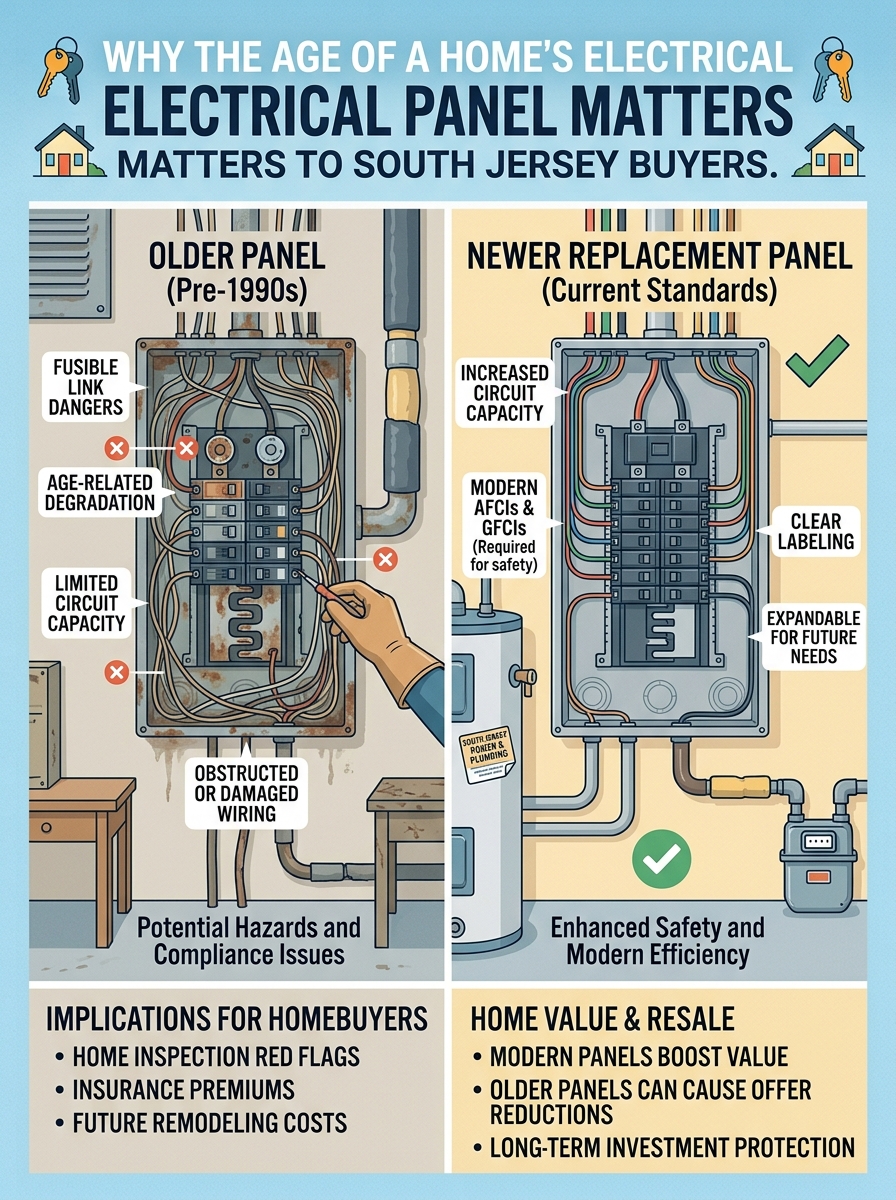
When touring a South Jersey home, buyers often focus on the features they can immediately see.
They notice the kitchen, flooring, bathrooms, windows, and overall condition of the property. But one important component is often overlooked until the home inspection:
👉 The electrical panel.
Although it may be tucked away in a basement, garage, utility room, or hallway, the electrical panel plays a major role in how a home distributes electricity throughout the property.
Its age, condition, capacity, and installation history can affect everything from everyday convenience to future renovation plans.
This is especially important when purchasing an older South Jersey home, where electrical systems may have been installed decades ago and modified as household needs changed.
As Mary Murphy of The Murphy Group explains:
"Buyers should look beyond the appearance of a home and understand the systems that keep it operating. An electrical panel may not be the most exciting feature, but knowing its condition can help prevent unexpected expenses after closing."
Here's what South Jersey buyers should understand before purchasing a home with an older electrical panel.
⚡ 1. Why the Age of an Electrical Panel Matters
An electrical panel distributes electricity to the different circuits throughout a home. It also houses the circuit breakers or other overcurrent protection devices designed to interrupt power when a circuit becomes overloaded or experiences certain electrical faults.
Like other major home components, electrical panels can age.
Over time, buyers may encounter:
- Older equipment and components
- Signs of corrosion or deterioration
- Outdated electrical configurations
- Limited capacity for modern appliances
- Previous modifications that require closer evaluation
- Replacement parts that may be difficult to obtain
However, age alone does not determine whether a panel is unsafe or needs replacement.
A properly maintained older panel may still be serviceable, while a newer panel may have installation defects or other problems.
The important question is whether the equipment is appropriate for the home, properly installed, and operating safely.
🏠 2. Older South Jersey Homes May Have Different Electrical Needs
South Jersey has a mix of older residential properties, renovated homes, newer construction, and properties that have undergone several additions over the years.
A home built decades ago may have originally been designed around a much smaller electrical demand.
Today's households often use considerably more electricity through:
- Central air conditioning
- Electric ranges and ovens
- Clothes dryers
- Multiple refrigerators and freezers
- Home office equipment
- Electric water heaters
- EV charging equipment
- Hot tubs and swimming pools
- Modern entertainment systems
As homeowners add appliances and equipment, the electrical system must be evaluated to determine whether it can safely support the additional demand.
A panel that worked adequately when the home was originally built may require closer review if the property's electrical needs have expanded significantly.
🔌 3. Understand the Difference Between Panel Age and Electrical Capacity
One of the most important things buyers should understand is that the age of an electrical panel and its capacity are two different considerations.
Electrical service capacity is commonly discussed in amperes, often referred to as amps.
Some residential properties have 100-amp service, while others have 150-amp or 200-amp service. Larger or more electrically demanding properties may have different configurations.
But a higher amp rating does not automatically mean a panel is safer or better maintained.
An electrician should evaluate:
- The electrical service rating
- The panel's manufacturer and model
- The number and type of circuits
- The condition of breakers and connections
- The compatibility of breakers with the panel
- The home's current and anticipated electrical demand
For example, a buyer planning to install an EV charger, upgrade HVAC equipment, or add a finished basement may need an electrician to determine whether the existing electrical service can accommodate those plans.
The answer depends on the home's actual electrical load and the equipment involved—not simply the number printed on the panel.
🚩 4. Watch for Warning Signs Around the Electrical Panel
During a showing, buyers should never remove the panel cover or attempt to inspect internal electrical components themselves.
However, there are visible warning signs worth reporting to a home inspector or licensed electrician.
Look for:
- Rust or visible corrosion
- Burn marks or discoloration
- A burning or unusual electrical odor
- Buzzing, crackling, or unusual sounds
- A panel enclosure that feels unusually warm
- Missing or damaged covers
- Exposed wiring
- Breakers that frequently trip
- Signs of water intrusion near the panel
These conditions do not all indicate the same problem, but they deserve professional evaluation.
If there is an active burning smell, smoke, sparking, or another immediate electrical hazard, avoid touching the equipment and contact emergency services or a qualified professional as appropriate.
Do not attempt to reset, repair, or investigate potentially hazardous equipment yourself.
🔍 5. Identify the Panel's Manufacturer and Model
Not all electrical panels are manufactured the same way.
During the inspection process, ask the inspector to identify the panel's manufacturer, model, and other available identifying information.
This can help determine:
- The approximate age of the equipment
- Whether the manufacturer has issued relevant safety information
- Whether the panel has known model-specific concerns
- Whether compatible replacement components are available
- Whether a qualified electrician recommends further evaluation
Certain older electrical panel models have received particular attention because of reported safety concerns.
However, buyers should avoid assuming that every older panel—or every panel from a particular manufacturer—has the same condition or risk.
The exact model, installation, maintenance history, and professional evaluation matter.
If the panel's identification label is missing or difficult to read, have an electrician determine what can reasonably be established.
⚠️ 6. Understand Why Some Older Panels Deserve Extra Attention
Some older electrical equipment may have design limitations, outdated components, or documented safety concerns.
A professional evaluation is particularly important when the panel is associated with a model that has been subject to safety warnings, recalls, or other documented concerns.
Buyers should also ask about:
- Panels with known breaker compatibility issues
- Older fuse-based systems
- Evidence of overheating
- Improperly installed replacement breakers
- Damaged or deteriorated internal components
- Signs of unauthorized electrical modifications
The presence of older equipment does not automatically mean the entire electrical system must be replaced.
A licensed electrician can identify the specific concern and explain whether repair, further testing, or replacement is appropriate.
🧰 7. Check Whether Previous Electrical Upgrades Were Properly Completed
A home may have an older electrical panel even if other parts of the electrical system have been updated.
For example, a previous owner may have installed:
- New kitchen appliances
- Central air conditioning
- Additional lighting
- A finished basement
- An outdoor electrical outlet
- A generator connection
- A hot tub or pool circuit
These improvements may have required electrical work beyond the original installation.
Ask the seller whether permits were obtained for relevant upgrades and whether documentation is available.
In New Jersey, electrical work is regulated under the State Uniform Construction Code. Depending on the scope of work, permits and inspections may be required. The state identifies electrical work and panel installation among the activities subject to construction-code requirements.
A buyer should not assume that visible improvements were automatically completed with the required approvals.
The local municipal construction office can help verify available permit and inspection records.
🏡 8. Consider the Impact of Future Renovations
An older electrical panel may become a bigger consideration when buyers plan to renovate.
A home that currently meets a family's needs may require additional electrical capacity or circuits when new equipment is installed.
Potential projects include:
- Kitchen remodeling
- Basement finishing
- Adding a home office
- Installing a second HVAC system
- Building an addition
- Installing an EV charger
- Adding a pool or hot tub
- Upgrading major appliances
Before budgeting for these projects, ask an electrician to evaluate the existing service and determine what additional work may be necessary.
A panel upgrade may not be required for every renovation. Some projects can be accommodated within the existing system, depending on the electrical load and available capacity.
The important thing is to understand the limitations before committing to a renovation budget.
💰 9. How Much Could an Electrical Panel Replacement Cost?
Electrical panel replacement can be a significant expense, particularly when the project involves more than simply replacing the panel enclosure.
The total cost depends on several factors:
- Existing service capacity
- Desired service rating
- Condition of the existing wiring
- Required grounding and bonding work
- Meter or service entrance modifications
- Accessibility of the equipment
- Utility coordination
- Permit and inspection requirements
- Additional electrical corrections
A straightforward replacement may be very different from a project that requires a complete service upgrade or extensive electrical repairs.
For this reason, buyers should avoid relying on a generic online estimate when evaluating a specific property.
If the inspection identifies concerns, request a written estimate from a qualified electrical contractor before finalizing financial decisions.
This can help buyers understand whether the issue is a relatively limited repair or a larger project that should be considered during negotiations.
🛡️ 10. Ask Whether the Electrical Panel Could Affect Homeowners Insurance
Electrical equipment can also become relevant when obtaining homeowners insurance.
Depending on the insurance company and the property's condition, an older panel or a specific panel model may lead to additional questions during underwriting.
An insurer may request:
- Panel manufacturer and model
- Photos of the equipment
- Confirmation of its condition
- Documentation of repairs or replacement
- An electrician's evaluation
Some insurers may impose requirements or restrictions involving particular equipment or unresolved electrical concerns.
However, insurance decisions vary by company and property. An older panel does not automatically mean coverage will be unavailable.
Buyers should discuss the specific panel with their insurance agent early in the transaction rather than waiting until the final stages of closing.
🔥 11. Look Beyond the Panel at the Entire Electrical System
The electrical panel is only one part of a home's electrical system.
Even if the panel appears relatively new, other components may still require attention.
During the inspection, consider:
- Visible wiring condition
- Grounding and bonding
- Circuit breaker compatibility
- Electrical outlets and switches
- GFCI protection where required
- Outdoor electrical connections
- Garage and basement wiring
- Signs of overloaded circuits
- Previous DIY electrical work
A home may have an updated panel but older wiring throughout the property.
Likewise, an older panel may be connected to a system that has been professionally maintained.
The goal is to evaluate the complete electrical system rather than judging the property based on one component.
📋 12. What Buyers Should Ask During the Home Inspection
If you're considering an older South Jersey home, use the inspection period to gather as much information as possible.
Here are useful questions to discuss with your home inspector and, when necessary, a licensed electrician:
Panel identification
- How old does the panel appear to be?
- Can the manufacturer and model be identified?
- Are there known concerns associated with this equipment?
Condition and safety
- Are there signs of overheating, corrosion, or physical damage?
- Are the breakers compatible with the panel?
- Are there visible installation concerns?
Electrical capacity
- What is the service rating?
- Does the existing system appear appropriate for the home's current electrical demand?
- Would planned renovations or new appliances require further evaluation?
Installation history
- Are records available for previous panel upgrades?
- Were permits and required inspections obtained?
- Are there signs of unprofessional modifications?
Future expenses
- Is replacement recommended?
- Are additional repairs necessary?
- Can the electrician provide a written estimate?
A home inspection provides valuable information about the visible and accessible condition of the electrical system. However, it is not a substitute for a specialized evaluation when the panel raises safety or performance concerns.
📊 13. Should You Walk Away From a Home With an Older Electrical Panel?
Not necessarily.
An older electrical panel should be treated as a due-diligence issue, not an automatic reason to reject an otherwise suitable property.
The right decision depends on what the inspection reveals.
For example:
Situation 1: Older but serviceable equipment
The panel is older, but a qualified professional finds no significant safety concerns and confirms that the system is appropriate for the home's current needs.
Situation 2: Limited capacity
The panel is functioning, but the buyer's plans for an EV charger, additional HVAC equipment, or renovations may require an upgrade.
Situation 3: Identified safety concerns
The electrician finds damaged components, improper connections, overheating, or other issues requiring correction.
Situation 4: Replacement recommended
The equipment is no longer appropriate for the property, and replacement should be included in the buyer's ownership budget.
Each situation requires a different response.
Buyers should use the inspection findings and professional recommendations to understand the potential costs, negotiate where appropriate, and make an informed decision.
💼 How The Murphy Group Helps Buyers Evaluate Older South Jersey Homes
At The Murphy Group, helping buyers understand a property means looking beyond its appearance and considering the systems that support everyday living.
An older electrical panel may not be obvious during a showing, but it can influence maintenance planning, renovation decisions, and the overall cost of ownership.
The Murphy Group helps clients:
- Identify important questions to raise during property showings
- Understand inspection findings and potential follow-up needs
- Recognize when a specialized electrical evaluation may be appropriate
- Consider potential upgrades when planning renovations
- Evaluate how property condition fits into the overall purchase decision
- Navigate negotiations with a clearer understanding of the property's condition
"A home should be evaluated as a complete property, not just by its finishes and features," Mary says. "Understanding the condition of major systems helps buyers prepare for what ownership may involve."
📊 The Bottom Line
The age of a home's electrical panel matters because it can provide useful clues about the property's electrical history, equipment, and potential future maintenance needs.
But age alone does not tell the entire story.
South Jersey buyers should pay attention to:
- The panel's manufacturer and model
- Its overall condition
- Electrical service capacity
- Breaker compatibility
- Signs of overheating or deterioration
- Previous electrical upgrades
- Permit and inspection history
- Future renovation requirements
- Potential insurance considerations
The best approach is to understand the electrical system before closing—not after an unexpected problem appears.
An older panel may be manageable, but buyers should know exactly what they're purchasing and what improvements may be necessary.
📲 Thinking About Buying a Home in South Jersey?
Whether you're considering an older home, a recently renovated property, or a house that may need electrical upgrades, The Murphy Group can help you navigate the buying process with greater confidence.
👉 Start here: www.mgsells.com

Mary Murphy
Team Leader | The Murphy Group | eXp Realty, LLC | PLACE
or another way