

Categories
older homes NJ, Burlington County, Camden County, Gloucester County, homeownership costs, Housing Guide, Real Estate Market Insights, South Jersey Real Estate, South Jersey Market TrendsPublished August 26, 2026
The Real Cost of Owning an Older Home in South Jersey

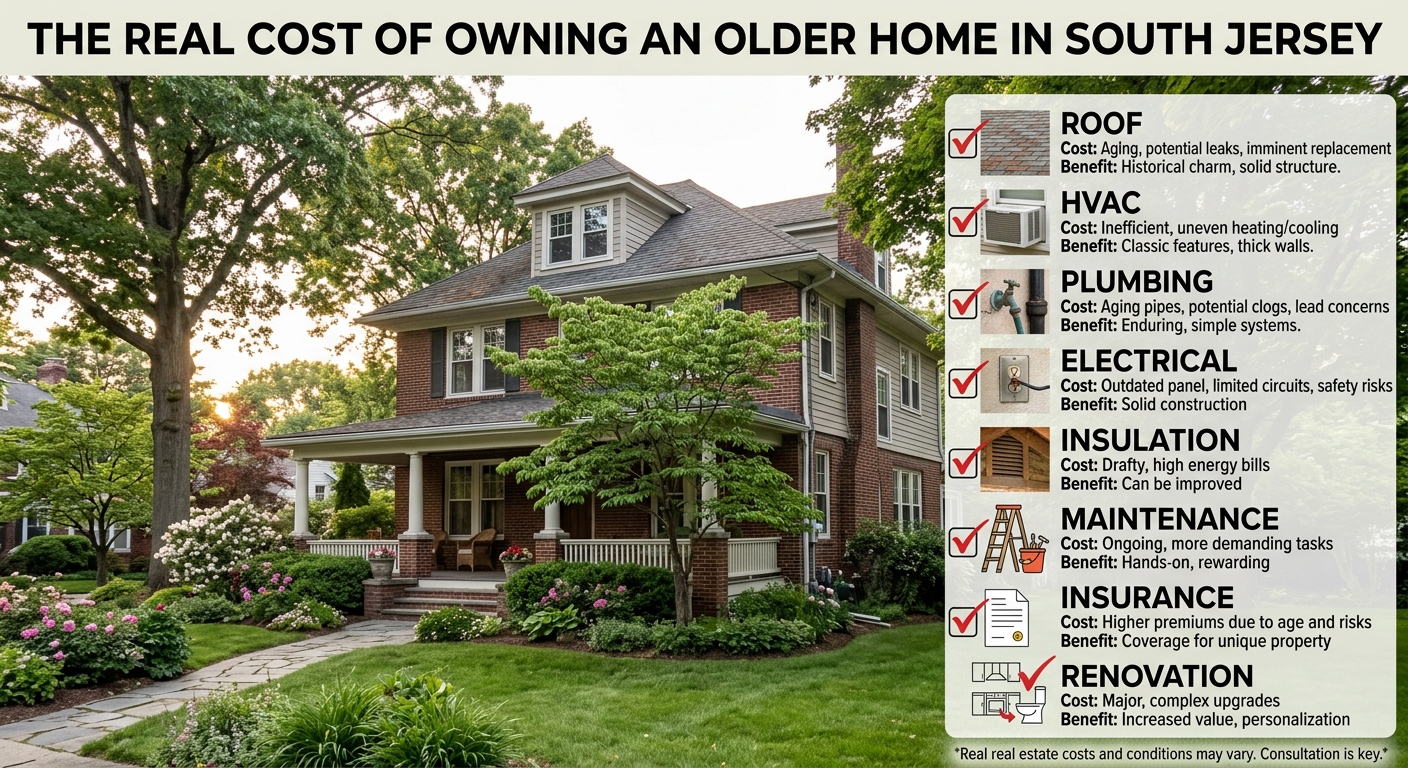
Older homes can have something new construction often can't replicate.
Character.
Mature neighborhoods. Larger lots. Established landscaping. Unique architecture. Convenient locations.
But an older home can also come with costs that aren't immediately obvious from the listing price.
The real cost of owning an older South Jersey home may include more than the mortgage and property taxes. Buyers may also need to consider aging systems, maintenance, energy efficiency, insurance, renovations, and the possibility of unexpected repairs.
As Mary Murphy of The Murphy Group explains:
"An older home isn't necessarily a bad investment. The key is understanding what you're buying, what has already been updated, and what expenses could be ahead."
🏡 1. The Purchase Price Doesn't Tell the Whole Story
An older home may initially appear more affordable than a newer property.
But buyers should look beyond the asking price.
Consider:
- Property taxes
- Homeowners insurance
- Utility costs
- Maintenance
- Repairs
- Renovations
- Replacement of aging systems
A lower purchase price can become less attractive if the property requires significant investment immediately after closing.
🔧 2. Major Systems Can Become Major Expenses
One of the first things buyers should investigate is the age and condition of the home's major systems.
These may include:
- Roof
- HVAC
- Water heater
- Electrical system
- Plumbing
- Windows
- Appliances
If several major components are nearing the end of their expected service lives, buyers should understand the potential replacement costs before deciding what the home is worth to them.
🏠 3. The Roof Deserves Special Attention
A roof is one of the most important components of any home.
For an older property, buyers should determine:
- Approximate roof age
- Type of roofing material
- Evidence of previous repairs
- Signs of leaks
- Condition of flashing
- Remaining expected service life
A roof that looks acceptable during a showing can still warrant closer inspection.
A professional home inspection can help identify visible concerns.
⚡ 4. Older Electrical Systems May Require Upgrades
Electrical standards and household energy demands have changed considerably over the decades.
Older homes may have electrical components that require further evaluation or updating.
Buyers should ask about:
- Electrical panel age
- Wiring
- Outlets
- Grounding
- Previous electrical work
- Capacity for modern appliances and technology
Any concerns should be evaluated by an appropriately licensed professional.
🚿 5. Plumbing Can Become an Important Maintenance Factor
Older plumbing systems can require more attention than newer installations.
Potential issues may include:
- Aging pipes
- Leaks
- Corrosion
- Low water pressure
- Outdated fixtures
- Previous water damage
A buyer shouldn't assume that an attractive bathroom or renovated kitchen means the underlying plumbing has also been updated.
🌡️ 6. Energy Efficiency Can Affect Monthly Costs
Older homes aren't automatically inefficient, but some may have less efficient:
- Windows
- Insulation
- Heating systems
- Cooling systems
- Doors
- Appliances
This can affect monthly utility expenses.
Buyers should ask for available information about energy usage and consider the condition of insulation, windows, and mechanical systems.
🪟 7. Windows Can Be More Than a Cosmetic Feature
Older windows can contribute to:
- Drafts
- Heat loss
- Higher heating or cooling costs
- Maintenance requirements
However, replacing windows throughout an entire house can be expensive.
Buyers should consider whether existing windows are functional and appropriate for the property before assuming replacement is necessary.
🛡️ 8. Insurance Can Be Different for Older Homes
Homeowners insurance can depend on factors such as:
- Age of the home
- Roof condition
- Electrical systems
- Plumbing
- Heating system
- Location
- Replacement costs
That's why buyers should consider obtaining an insurance quote before committing to a property.
A home that appears affordable may have different insurance costs than a newer or recently updated property.
🧱 9. Renovations Can Add Up Quickly
Many older homes have great potential—but potential isn't free.
Buyers may want to update:
- Kitchens
- Bathrooms
- Flooring
- Lighting
- Windows
- Exterior finishes
- Basements
- Landscaping
The key is separating cosmetic improvements from necessary repairs.
A dated kitchen may simply need modernization.
A failing roof or outdated electrical system is a different category of expense.
🏘️ 10. Location Can Offset Some of the Drawbacks
One of the biggest advantages older homes can have is location.
Established properties are often located in communities with:
- Mature trees
- Established infrastructure
- Nearby shopping
- Restaurants
- Parks
- Schools
- Healthcare
- Convenient transportation
A buyer may decide that the benefits of the location outweigh the additional maintenance involved with an older home.
🌳 11. Older Homes May Offer Features New Construction Can't Easily Recreate
An established South Jersey home may provide:
- Mature landscaping
- Larger lots
- Larger trees
- Unique architecture
- Established neighborhood character
- More separation between properties
These characteristics can be difficult or impossible to recreate quickly.
For some buyers, that makes an older home particularly appealing.
🧹 12. Maintenance Can Be More Important Than Renovation
Buyers sometimes focus heavily on remodeling costs.
But ongoing maintenance deserves equal attention.
Older homes may require more frequent attention to:
- Exterior surfaces
- Gutters
- Roof components
- Landscaping
- Windows
- Plumbing
- Heating and cooling equipment
A home doesn't have to be newly renovated to be a good purchase.
But it should be realistically maintained.
💰 13. A Lower Price Can Create Renovation Opportunity
There is another side to the equation.
An older home that needs cosmetic updates may provide an opportunity for buyers to customize the property over time.
Instead of paying a premium for someone else's finishes, buyers may prefer to:
- Renovate gradually
- Choose their own materials
- Improve one room at a time
- Prioritize the projects that matter most
This can make an older home attractive to buyers who are comfortable taking on improvements.
🔍 14. Buyers Should Distinguish Character From Deferred Maintenance
There's a big difference between:
"This home has character."
and
"This home has years of deferred maintenance."
Original hardwood floors, architectural details, built-ins, and mature landscaping may be desirable characteristics.
But neglected systems, moisture problems, structural concerns, or significant deferred repairs deserve careful evaluation.
The goal is to understand which features add character and which conditions could create future expenses.
📋 15. A Professional Inspection Becomes Especially Valuable
A home inspection doesn't eliminate every risk, but it can provide important information about the property's visible condition.
For an older home, buyers may want to pay particular attention to:
- Roof
- Foundation
- Electrical
- Plumbing
- HVAC
- Attic
- Basement
- Drainage
- Windows
- Structural components
Specialized inspections may also be appropriate depending on the property and circumstances.
📈 16. Think About Resale Before Buying
An older home can have strong resale potential if it offers the characteristics future buyers want.
Consider:
- Location
- Layout
- Lot size
- Neighborhood
- Updates
- Maintenance
- Parking
- Outdoor space
- Overall condition
Age alone doesn't determine future marketability.
A well-maintained older home in a desirable location can remain highly competitive.
🧠 17. The Right Question Isn't "How Old Is the Home?"
A better question is:
"How well has the home been maintained and updated?"
A 70-year-old home with a newer roof, updated electrical, modern HVAC, and careful maintenance may present fewer immediate concerns than a much newer property that has been poorly maintained.
The home's history matters.
💼 How The Murphy Group Helps Buyers Evaluate Older Homes
At The Murphy Group, the goal isn't to steer buyers toward new construction or older properties.
It's to help them understand the complete picture.
That includes considering:
- Property condition
- Major system updates
- Maintenance requirements
- Location
- Neighborhood characteristics
- Pricing
- Comparable properties
- Long-term resale potential
"Older homes can offer tremendous value when buyers understand both the character and the costs," Mary says. "The important thing is knowing what you're getting before you make a commitment."
📊 The Bottom Line
Owning an older South Jersey home can come with additional responsibilities, but it can also offer advantages that newer properties don't.
Potential benefits include:
- Established neighborhoods
- Mature landscaping
- Larger lots
- Unique architectural character
- Convenient locations
- Renovation opportunities
Potential costs can include:
- Major system replacements
- Maintenance
- Energy expenses
- Insurance considerations
- Renovation costs
- Unexpected repairs
👉 The real cost of an older home isn't determined by its age. It's determined by its condition, maintenance history, systems, location, and the investment required to make it work for you.
Before making an offer, buyers should look beyond the charm and asking price and understand the property's complete ownership picture.
📲 Thinking About Buying or Selling an Older South Jersey Home?
The Murphy Group can help you evaluate an older property's condition, location, market position, and potential long-term value so you can make a more informed real estate decision.
👉 Start here: www.mgsells.com

Mary Murphy
Team Leader | The Murphy Group | eXp Realty, LLC | PLACE
or another way