

Categories
Burlington County, Camden County, Gloucester County, Home Buying Tips, Home Buying Guides, Housing Guide, Real Estate Guides, New Jersey Real EstatePublished May 11, 2026
Why South Jersey housing demand is shifting toward smaller neighborhoods instead of big towns

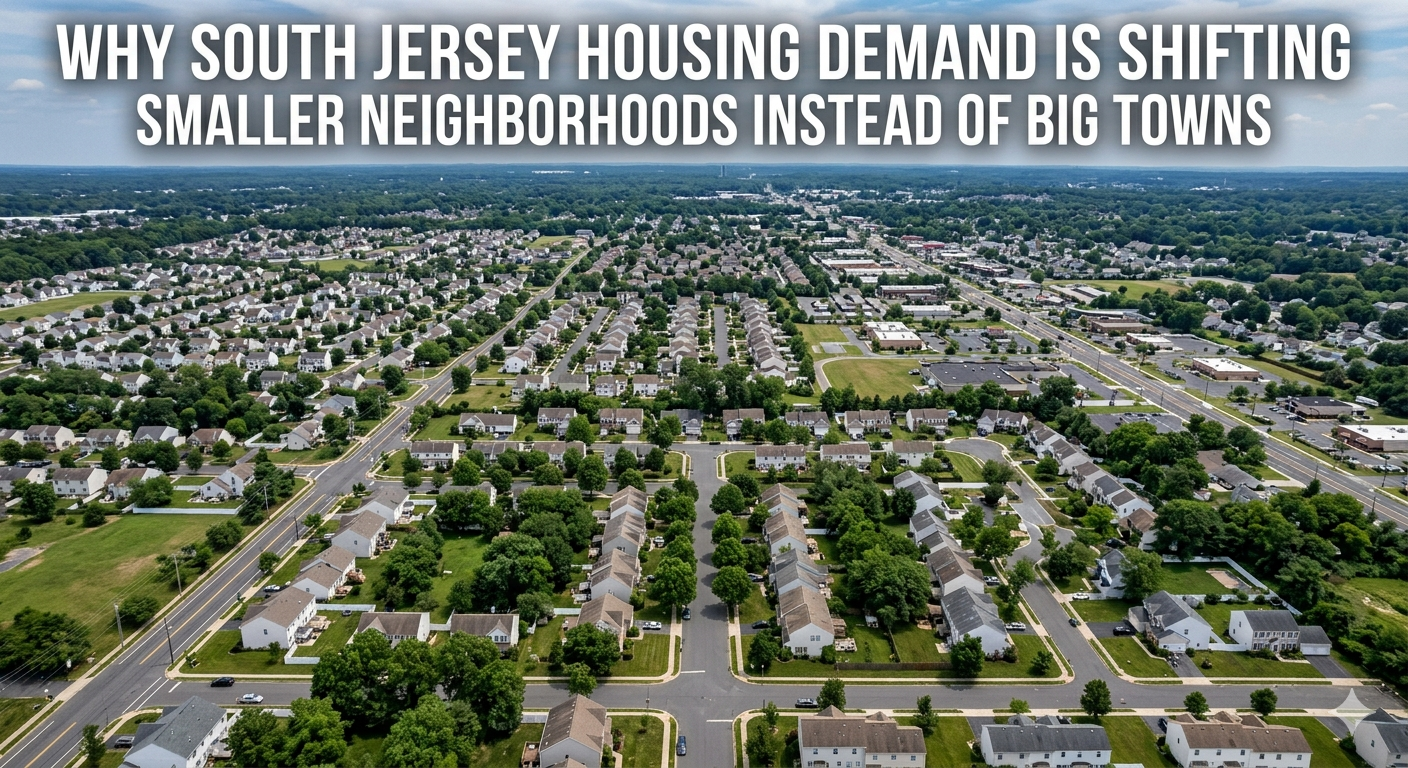
For years, “big-name towns” in South Jersey carried most of the real estate demand.
Buyers chased:
- The most recognizable school districts
- The busiest downtowns
- The largest suburban hubs
But in 2026, a quiet shift is happening.
👉 Demand is moving away from big towns—and toward smaller, more defined neighborhoods.
Not smaller homes. Not cheaper homes.
Smaller communities.
As Mary Murphy of The Murphy Group explains:
“Buyers aren’t just choosing towns anymore. They’re choosing the exact neighborhood experience they want every day.”
🧠 The Key Shift: From Town-Level to Neighborhood-Level Thinking
Traditionally, buyers searched like this:
👉 “What town should I live in?”
Now the mindset is:
👉 “What specific neighborhood fits my lifestyle best?”
That shift is changing demand patterns across South Jersey in a major way.
📈 Why Smaller Neighborhoods Are Gaining Popularity
1. Buyers Want a Stronger Sense of Community
Smaller neighborhoods often feel more personal and connected.
Buyers are drawn to:
- Familiar faces
- Less traffic
- Quiet streets
- Visible community presence
It feels more “lived in” and less anonymous than large suburban hubs.
2. Big Towns Feel Overwhelming to Today’s Buyers
Larger towns often come with:
- Higher traffic volume
- More commercial sprawl
- Less defined neighborhood identity
- Longer commute patterns within the town itself
For many buyers, that scale feels less manageable than it used to.
3. Remote Work Changed Daily Geography
With hybrid and remote work now common, buyers are no longer anchored to large employment hubs within town centers.
Instead, they prioritize:
- Daily livability
- Walkable pockets
- Peaceful residential areas
- Lifestyle over commute optimization
That shift naturally favors smaller, quieter neighborhoods.
4. Buyers Want Predictability in Their Environment
Smaller neighborhoods often offer:
- Consistent home styles
- Stable upkeep standards
- Clear boundaries and identity
- Fewer unknown variables
That predictability increases buyer confidence.
5. Emotional Connection Happens Faster
In smaller communities, buyers often form emotional impressions more quickly.
They notice:
- Tree-lined streets
- Familiar neighborhood rhythms
- Slower pace of life
- Strong visual cohesion
That emotional clarity accelerates decision-making.
🏡 What Buyers Are Choosing Instead of Big Towns
1. Pocket Neighborhoods Inside Larger Regions
Instead of focusing on entire municipalities, buyers are targeting specific subdivisions or enclaves.
2. Established Residential Communities
Neighborhoods with long-standing identity and consistent upkeep are outperforming broader town averages.
3. Lifestyle-Focused Micro-Markets
Areas near parks, trails, or small local commercial strips are gaining traction.
4. Quiet Residential Streets Over Busy Centers
Buyers increasingly prefer peace over proximity to town activity.
⚠️ Why Big Towns Still Matter—But Differently
Big towns aren’t losing value—but their role is changing.
They now function more as:
- Regional anchors
- Convenience hubs
- Reference points for location
But buyers are making final decisions at the neighborhood level, not the town level.
🧠 The Psychology Behind the Shift
This trend is driven by a simple emotional preference:
👉 “I want to feel like I know where I live.”
Smaller neighborhoods offer:
- Familiarity
- Identity
- Comfort
- Simplicity
Large towns can sometimes feel too broad to create that same emotional connection.
💼 How The Murphy Group Helps Buyers Navigate This Shift
At The Murphy Group, understanding hyper-local demand is essential.
Their approach includes:
- Identifying high-performing micro-neighborhoods within broader towns
- Helping buyers focus on lifestyle fit—not just location names
- Analyzing which pockets are appreciating fastest
- Positioning listings based on neighborhood identity and appeal
- Using local data to uncover hidden demand shifts
“The town matters less than the street you live on,” Mary says. “That’s where buyers are focusing now.”
📊 The Bottom Line
South Jersey housing demand is no longer centered on big towns alone.
Instead, it is shifting toward:
- Smaller neighborhoods
- Stronger community identity
- Better lifestyle alignment
- More predictable daily living
Because today’s buyers aren’t just choosing where to live.
👉 They’re choosing how it feels to live there every day.
📲 Want to Know Which South Jersey Neighborhoods Are Quietly Outperforming?
The Murphy Group helps buyers and sellers identify the exact neighborhoods driving demand—so every decision is backed by local insight and real market behavior.
👉 Start here: www.mgsells.com

Mary Murphy
Team Leader | The Murphy Group | eXp Realty, LLC | PLACE
or another way