

Categories
South Jersey Real Estate, Burlington County, Camden County, Gloucester County, Home Buying Guides, Housing Guide, Real Estate Guides, New Jersey Real EstatePublished May 5, 2026
Why Some Buyers Prioritize Neighborhood Feel Over Home Features

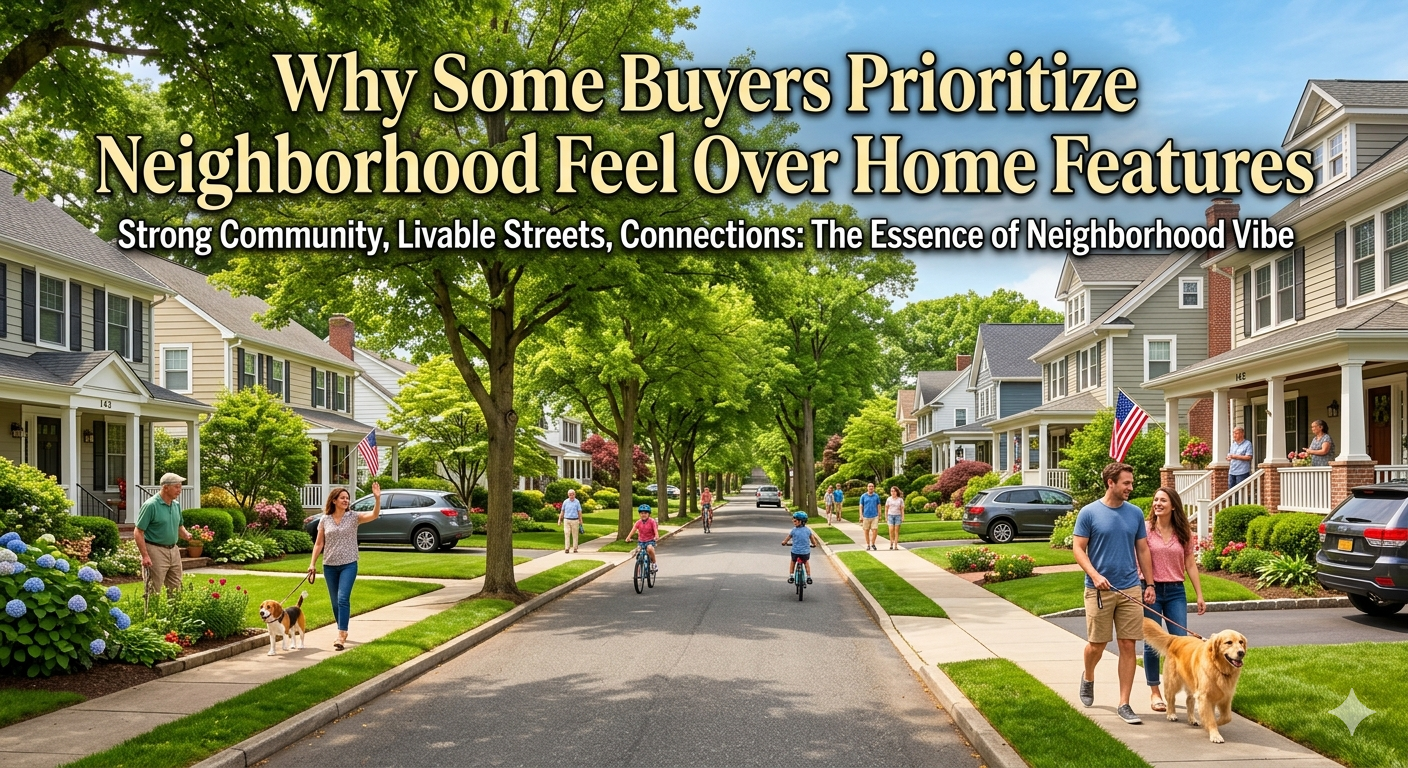
For decades, home buying followed a simple formula:
- Bedrooms
- Bathrooms
- Square footage
- Upgrades
But that checklist is no longer enough.
In today’s New Jersey market, many buyers are starting their decision in a different place:
👉 The neighborhood—not the house.
And in some cases, they’re choosing a slightly less updated home in a better-feeling community over a renovated property in a location that doesn’t “feel right.”
As Mary Murphy of The Murphy Group explains:
“Buyers can renovate a house. What they can’t change is the neighborhood experience.”
🧠 What “Neighborhood Feel” Really Means
Neighborhood feel isn’t just about appearance—it’s about experience.
It includes:
- Street activity and traffic flow
- Noise levels and overall quietness
- How homes are maintained
- Walkability and daily convenience
- Sense of community and safety perception
It’s the emotional impression a buyer gets the moment they enter an area.
📈 Why Neighborhood Is Becoming the Priority
1. Lifestyle Happens Outside the Front Door
Buyers are thinking beyond the property line.
They want to know:
- Can I walk here comfortably?
- Do people spend time outside?
- Does this area feel lived-in and cared for?
A great home in a poor-feeling neighborhood often loses out to a good home in a great one.
2. Long-Term Value Is Tied to Location
Even buyers focused on upgrades understand one thing clearly:
👉 You can change a home. You can’t change its surroundings.
Neighborhood perception influences:
- Resale potential
- Demand over time
- Price stability
3. Remote Work Has Changed Daily Experience
With more flexibility in work, people spend more time in their neighborhoods during the day.
That increases awareness of:
- Daytime quiet vs noise
- Walkability during breaks
- Access to amenities
- Overall livability outside commuting hours
4. Emotional Comfort Matters More Than Ever
Buyers often describe neighborhood feel in emotional terms:
- “It feels peaceful here.”
- “It feels active and alive.”
- “It just feels right.”
That emotional reaction often outweighs technical features inside the home.
🏡 What Buyers Look For in a “Good Feel” Neighborhood
1. Consistency in Home Presentation
Well-maintained homes across the street signal stability and pride of ownership.
2. Walkability and Accessibility
Even simple access to:
- Parks
- Local shops
- Sidewalks
can significantly improve perception.
3. Balanced Activity Levels
Buyers want a “just right” environment:
- Not too busy
- Not too isolated
- Comfortable daily rhythm
4. Community Presence
Visible signs of community life—like neighbors outside, maintained yards, or local events—build trust in the area.
⚠️ Why Great Homes Can Still Lose Buyers
1. Mismatch Between Home and Surroundings
A fully renovated home in a less desirable area can feel like an “island,” reducing buyer confidence.
2. Perceived Noise or Traffic Issues
Even if a home is well-insulated, external noise can affect emotional response.
3. Lack of Walkability
Buyers may see a home as less appealing if daily life requires constant driving.
4. Unclear Neighborhood Identity
Areas that feel inconsistent or undefined can make buyers hesitate.
🧠 The Psychology Behind the Shift
Buyers are no longer just purchasing property.
They are buying:
👉 How it feels to live there every day.
And neighborhood feel is often the first and strongest signal of that experience.
A home may be objectively perfect—but if the surrounding area doesn’t align emotionally, buyers hesitate.
💼 How The Murphy Group Positions Neighborhood Value
At The Murphy Group, neighborhood feel is treated as a core part of the home’s value—not just background context.
Their approach includes:
- Highlighting lifestyle and community in listing descriptions
- Using photography that captures surrounding streets and environment
- Educating buyers on long-term neighborhood trends
- Positioning homes within their broader community story
- Helping sellers understand how location perception impacts pricing
“A home doesn’t exist in isolation,” Mary says. “It’s part of a living environment—and buyers feel that immediately.”
📊 The Bottom Line
In New Jersey real estate, home features still matter—but they’re no longer the only deciding factor.
Buyers are increasingly prioritizing:
- Neighborhood feel
- Daily livability
- Emotional comfort
- Long-term stability
Because while finishes can be changed…
👉 The feeling of a neighborhood cannot.
📲 Want to Buy or Sell in the Right Neighborhood?
The Murphy Group helps buyers and sellers across New Jersey understand not just homes—but the communities around them—so every decision aligns with long-term lifestyle goals.
👉 Start here: www.mgsells.com

Mary Murphy
Team Leader | The Murphy Group | eXp Realty, LLC | PLACE
or another way