

Categories
NJ Mortgage, Burlington County, Camden County, Gloucester County, Home Buying Guides, Home Buying Tips, South Jersey Real EstatePublished June 22, 2026
Why More Buyers Are Prioritizing Lower Monthly Living Costs Over Bigger Homes

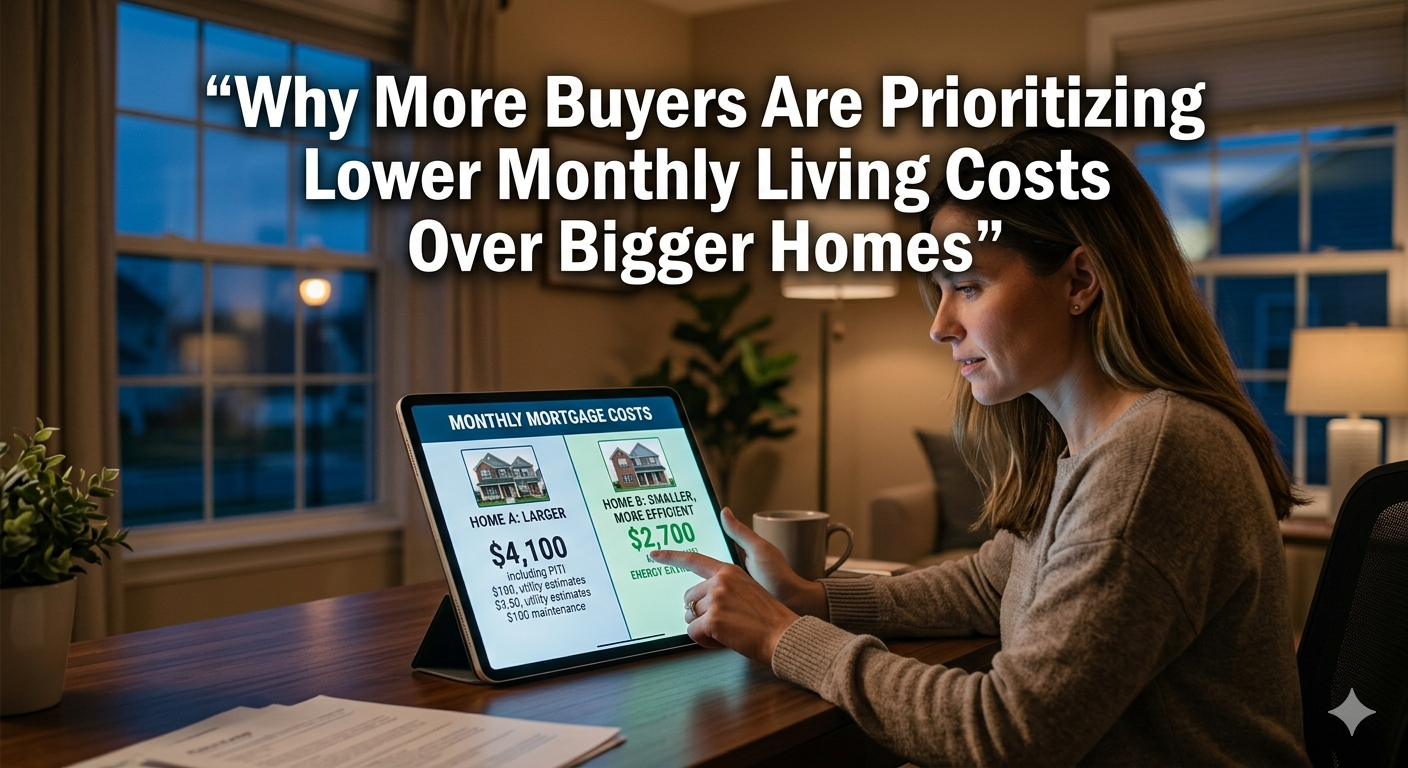
For years, the natural assumption in real estate was simple:
👉 Bigger home = better home.
But that equation has changed.
In today’s South Jersey market, many buyers are making a different trade-off:
They’re choosing lower monthly living costs over more square footage.
This shift isn’t about settling—it’s about strategy. Buyers are becoming more focused on long-term financial comfort than maximizing size.
As Mary Murphy of The Murphy Group explains:
“Buyers are no longer asking how big they can go. They’re asking how comfortably they can live month to month.”
🧠 The Monthly Payment Has Become the Real Price Tag
In past markets, buyers focused on purchase price first.
Today, the first question is often:
👉 “What will my monthly payment be?”
That includes:
- Mortgage principal and interest
- Property taxes
- Insurance
- Utilities
- Maintenance expectations
The total monthly picture now defines affordability more than the listing price alone.
🏡 1. Bigger Homes Come With Higher Hidden Costs
Even if the purchase price difference seems manageable, larger homes often bring ongoing expenses that add up quickly:
- Higher heating and cooling costs
- More maintenance and repairs
- Increased property taxes
- Larger insurance premiums
- Greater furnishing and upkeep costs
Buyers are increasingly factoring these into their decisions before they ever make an offer.
⚡ 2. Energy Costs Are Reshaping Home Size Decisions
Utility costs have become a major consideration.
A larger home often means:
- More square footage to heat and cool
- Less energy efficiency in older layouts
- Higher monthly variability depending on season
Many buyers now prefer smaller, more efficient homes that offer predictable monthly expenses.
🧠 3. Financial Flexibility Matters More Than Extra Space
Buyers today are balancing homeownership with other financial goals:
- Savings and emergency funds
- Retirement contributions
- Travel and lifestyle spending
- Education costs
- Debt management
Choosing a lower monthly payment often creates more long-term financial flexibility than stretching for a larger home.
🏠 4. Smaller Homes Are Being Designed Better Than Before
A key reason this shift is happening is that smaller homes are no longer seen as a compromise.
Modern layouts often provide:
- Open, functional living spaces
- Multi-purpose rooms
- Better flow and usability
- Less wasted square footage
A well-designed 1,600 sq. ft. home can feel more livable than a poorly designed 2,400 sq. ft. home.
📍 5. Location Still Matters More Than Size
Many buyers are choosing:
👉 A smaller home in a better neighborhood
over
👉 A larger home in a less desirable location
That trade-off reflects a broader shift toward prioritizing:
- Commute convenience
- School districts
- Neighborhood feel
- Long-term resale strength
Location stability often outweighs interior size.
🧠 6. Interest Rates Have Changed Buyer Psychology
With higher borrowing costs than in previous years, monthly payments are more sensitive to rate changes.
Even small differences in interest rates can significantly affect:
- Buying power
- Loan approval range
- Monthly affordability
This makes buyers more cautious about stretching into larger homes.
🏡 7. Lifestyle Has Shifted Toward “Right-Sizing”
Instead of upgrading to the biggest possible home, many buyers are now “right-sizing.”
That means:
- Enough space for comfort
- Efficient layouts
- Less unused square footage
- Easier upkeep
The goal is livability, not excess.
🧠 8. Predictability Is More Valuable Than Expansion
Bigger homes often introduce uncertainty:
- Higher repair costs
- Unexpected maintenance
- Increased utility fluctuations
Smaller or more efficient homes offer more predictable monthly budgeting, which buyers increasingly value.
📈 What This Means for the South Jersey Market
Homes that perform well in this environment often:
- Offer efficient layouts
- Minimize wasted space
- Highlight energy efficiency
- Reduce maintenance concerns
- Fit comfortably within monthly budgets
Meanwhile, oversized homes with high carrying costs may take longer to sell unless priced competitively.
💼 How The Murphy Group Helps Buyers and Sellers Navigate This Shift
At The Murphy Group, understanding affordability trends is central to strategy.
Their approach includes:
- Helping buyers evaluate true monthly costs, not just purchase price
- Positioning listings based on affordability appeal
- Advising sellers on features that reduce perceived ownership cost
- Highlighting efficiency and usability in marketing
- Aligning home size with current buyer expectations
“The best home for a buyer isn’t always the biggest one,” Mary says. “It’s the one that fits their life without financial stress.”
📊 The Bottom Line
More South Jersey buyers are prioritizing lower monthly costs over bigger homes because:
- Monthly affordability now drives decisions
- Utility and maintenance costs matter more
- Financial flexibility is a top priority
- Smaller homes are more efficient than before
- Location outweighs square footage
- Interest rates have reshaped borrowing power
And in today’s market:
👉 The most valuable home isn’t always the largest—it’s the one that supports the most sustainable monthly lifestyle.
📲 Thinking About Buying or Selling in South Jersey?
The Murphy Group helps clients balance home size, lifestyle needs, and monthly affordability so every decision aligns with long-term goals.
👉 Start here: www.mgsells.com

Mary Murphy
Team Leader | The Murphy Group | eXp Realty, LLC | PLACE
or another way