

Categories
Home Buying Tips, South Jersey Real Estate, plumbing inspection, basement renovations, home inspectionPublished November 9, 2026
What Happens When a South Jersey Home Has a Basement Bathroom?

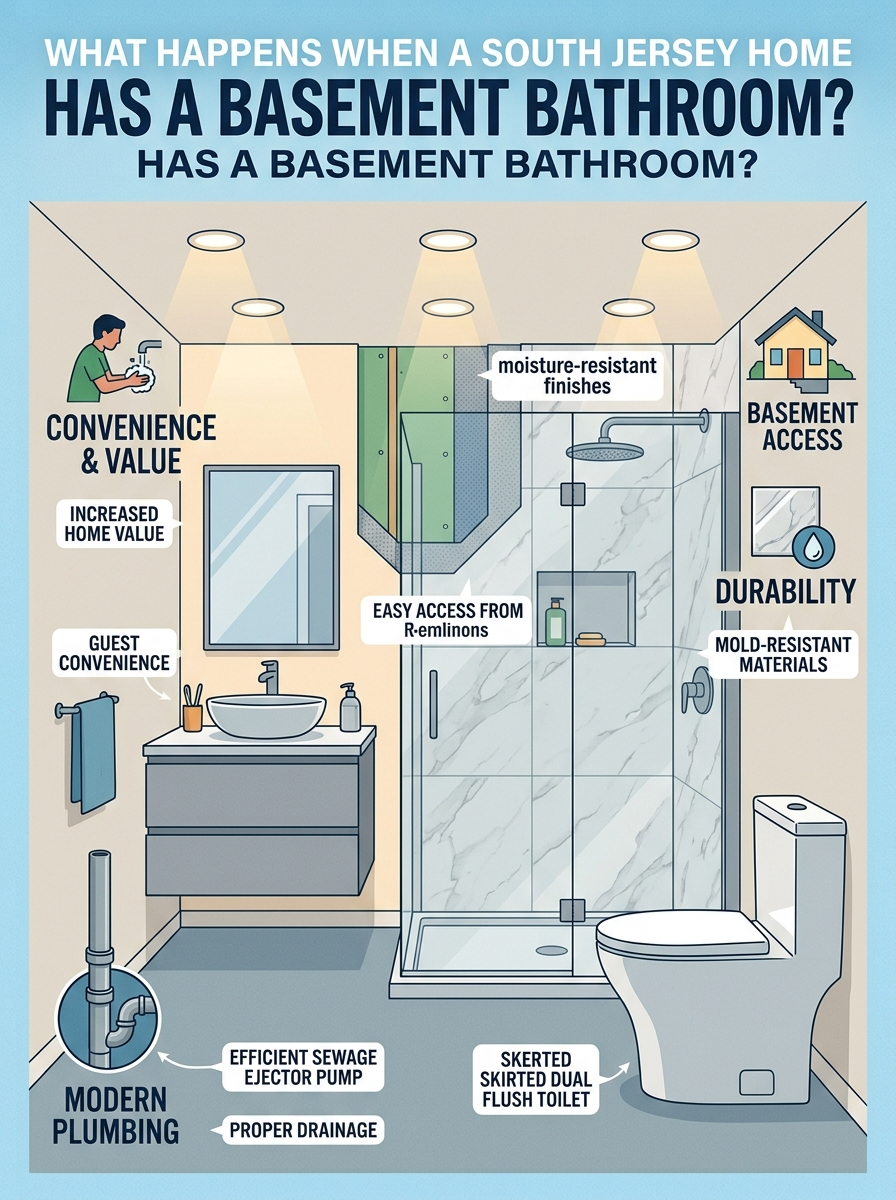
A basement bathroom can be one of those features that makes a South Jersey home feel especially convenient.
Whether it includes a simple half-bath, a full bathroom with a shower, or a more elaborate setup near a finished recreation room, having a bathroom downstairs can make entertaining, hosting overnight guests, and spending time in the basement much easier.
But there's more to consider than the convenience of having an extra toilet and shower.
Because basement bathrooms sit below ground level—and sometimes below the home's main sewer connection—they can involve specialized plumbing, drainage systems, moisture protection, and maintenance considerations that buyers may not immediately recognize.
As Mary Murphy of The Murphy Group explains:
"A basement bathroom can add everyday convenience and make a lower-level space more functional. But buyers should understand how it was installed, how it drains, and whether the surrounding basement is properly protected against moisture."
Before purchasing a South Jersey home with a basement bathroom, here's what you should know.
🏡 1. Why Some Homes Have Basement Bathrooms
Basement bathrooms are often installed to make lower-level living spaces more practical.
They can serve several purposes, including:
- Providing convenient access to a bathroom during gatherings
- Supporting a finished basement or recreation room
- Making a guest area more comfortable
- Reducing the need to travel upstairs
- Providing additional convenience for households with multiple occupants
In some South Jersey homes, particularly those with finished basements, a bathroom is part of a larger renovation intended to create more usable space.
However, a bathroom downstairs does not automatically mean the basement is approved for use as a separate living area or bedroom. Buyers should evaluate the entire space independently.
🚿 2. Understand Whether It's a Half-Bath or Full Bathroom
Not all basement bathrooms offer the same functionality.
A half-bath generally includes a toilet and sink, while a full bathroom may also include a shower or bathtub.
The distinction matters because additional fixtures can mean more plumbing connections, drainage requirements, ventilation considerations, and potential maintenance.
When touring the property, check:
- Whether the bathroom has a toilet, sink, shower, or bathtub
- Whether all fixtures operate properly
- Whether hot and cold water are available
- Whether the shower has adequate water pressure
- Whether drains empty without unusual delays
- Whether there are signs of leaks around fixtures
A bathroom that looks attractive during a showing should still receive a closer inspection before closing.
🔧 3. Find Out How the Basement Bathroom Drains
One of the most important questions involves how wastewater leaves the basement.
In many homes, gravity allows wastewater to flow from upper-level bathrooms toward the sewer connection. A basement bathroom may sit below that connection, making gravity drainage difficult or impossible.
Depending on the home's plumbing design, wastewater may be handled through:
- Gravity drainage: Used when the fixtures are positioned high enough relative to the sewer connection for wastewater to flow naturally.
- Sewage ejector pump: Collects wastewater in a sealed basin and pumps it upward into the home's drainage system.
- Macerating or grinder system: Uses a specialized unit to break down waste and move it through an appropriate discharge connection.
Not every basement bathroom requires a pump. The correct arrangement depends on the home's elevation, plumbing layout, and connection to the sewer or septic system.
Ask the seller or listing agent whether the bathroom uses an ejector or grinder system. If it does, have a qualified plumber inspect the installation and operation.
⚙️ 4. Check Whether a Sewage Ejector Pump Is Installed
If the basement bathroom relies on a sewage ejector pump, that equipment deserves particular attention.
The pump is responsible for moving wastewater from a lower-level basin into the home's drainage system. If it stops working, the bathroom may become unusable, and wastewater could potentially back up.
During the inspection process, ask about:
- The pump's age and service history
- Whether the basin is properly sealed
- Whether the system has an alarm
- Whether the pump activates and operates correctly
- Whether there is an accessible electrical connection
- Whether the discharge piping appears properly installed
- Whether the system has experienced previous failures or backups
A sewage ejector pump is different from a sump pump.
A sump pump manages groundwater that collects around or beneath the foundation. A sewage ejector pump handles wastewater from plumbing fixtures. They serve different purposes and should not be confused.
If the bathroom has a pump, ask the inspector or plumber to explain what it serves and what maintenance it requires.
💧 5. Look for Signs of Basement Moisture
A basement bathroom introduces another important consideration: moisture.
Basements are naturally more exposed to groundwater and humidity than many areas of a home. Plumbing fixtures, shower enclosures, and additional water connections can create more opportunities for leaks if they are not properly maintained.
During your walkthrough, look for:
- Water stains on walls or ceilings
- Damp flooring near the toilet or shower
- Peeling paint or bubbling wall finishes
- Musty odors
- Visible mold-like growth
- Soft or deteriorating baseboards
- Cracks or water marks around the foundation
- Signs of previous water intrusion
Pay attention to the area surrounding the bathroom, not just the fixtures themselves.
A recently remodeled bathroom can look excellent while concealing older moisture problems behind finished walls or flooring.
If anything raises concern, consider additional evaluation by an appropriate basement waterproofing or moisture specialist.
🌬️ 6. Evaluate Ventilation and Bathroom Airflow
Proper ventilation helps manage humidity, odors, and condensation.
This is particularly important in basement bathrooms because they may have limited access to natural airflow.
Check whether the bathroom has:
- An operable window, where provided
- A properly installed exhaust fan
- An exhaust duct that discharges outdoors
- Adequate airflow after showering
- No persistent damp or musty smell
An exhaust fan that simply moves humid air into an enclosed ceiling or another interior space may not solve the moisture problem.
Have a qualified professional evaluate the ventilation arrangement if its operation or discharge location is unclear.
🧱 7. Inspect the Flooring, Walls, and Ceiling
The materials surrounding a basement bathroom can reveal how well the space was designed to handle moisture.
Look closely at:
Flooring
- Is the floor suitable for a potentially humid environment?
- Are there loose tiles, lifted vinyl, or damaged grout?
- Is the floor sloped or uneven around the shower?
Walls
- Are there signs of water damage?
- Does the finish appear consistent?
- Are there gaps around plumbing penetrations?
Ceiling
- Are there stains beneath upstairs plumbing?
- Is there adequate access to important plumbing components?
- Are there signs of previous repairs?
Also consider the ceiling height and overall comfort of the room. A bathroom may be functional but still feel cramped if the ceiling is unusually low or mechanical equipment takes up much of the available space.
📋 8. Verify Whether the Bathroom Was Properly Permitted
This is one of the most important steps for South Jersey buyers.
A basement bathroom may look professionally installed, but appearance alone does not establish whether the work was completed with the required permits and inspections.
Depending on the scope of the project, installation may involve plumbing, electrical, mechanical, and building work.
New Jersey's Uniform Construction Code regulates construction and alterations, and the applicable permit requirements depend on the work performed. The New Jersey Department of Community Affairs identifies plumbing, electrical, and other construction requirements within its adopted codes.
Before moving forward, ask:
- Was a permit obtained for the bathroom installation?
- Which municipality issued the permit?
- Were the required inspections completed?
- Are permit records available?
- Were plumbing and electrical work performed by qualified professionals?
- Were any corrections required during inspection?
You can contact the local municipal construction office to ask about available records.
If permits cannot be located, do not automatically assume the work is unsafe or illegal. Instead, ask your real estate professional and qualified contractors how to investigate the situation and what additional verification may be appropriate.
Unpermitted work can create questions about safety, future renovations, insurance, and resale.
🚽 9. Determine Whether the Home Uses Public Sewer or Septic
South Jersey properties do not all use the same wastewater system.
Some homes connect to public sewer, while others rely on private septic systems.
That distinction can affect how a basement bathroom is evaluated.
For homes connected to public sewer, a plumber can assess the bathroom's drainage arrangement and connection to the home's existing plumbing.
For homes with septic systems, buyers should ask whether the system was designed or approved to accommodate the additional fixtures and expected wastewater use.
Important questions include:
- Is the property connected to public sewer or private septic?
- Does the septic system have adequate approved capacity?
- Were any required approvals obtained when the bathroom was installed?
- Is there documentation of the system's condition and maintenance?
- Has the septic system experienced backups or other problems?
Do not assume that adding a bathroom is automatically acceptable simply because the existing plumbing works.
For a septic property, have the appropriate septic professional and local authority verify the relevant requirements.
⚠️ 10. Watch for Signs of Plumbing Problems
A basement bathroom can reveal plumbing problems that might not be obvious during a quick showing.
Pay attention to how the fixtures operate.
Potential warning signs include:
- Gurgling sounds from drains
- Slow-draining sinks or showers
- Toilets that struggle to flush
- Sewage odors
- Water backing up into a shower or floor drain
- Repeated clogs
- Unusual noises from a pump
- Evidence of previous sewage backups
These symptoms do not automatically mean the home has a major plumbing failure. However, they deserve professional attention before closing.
A licensed plumber can evaluate the drainage system, pump equipment, venting, and visible plumbing connections.
💰 11. Understand the Potential Maintenance Costs
A basement bathroom can be a valuable convenience, but it may also introduce additional maintenance responsibilities.
Depending on the installation, future expenses could involve:
- Sewage ejector pump repairs or replacement
- Plumbing leak repairs
- Toilet and fixture maintenance
- Shower and waterproofing repairs
- Exhaust fan replacement
- Drain cleaning
- Moisture management
- Electrical repairs involving bathroom equipment
The actual costs vary considerably depending on the equipment, accessibility, age, and condition of the installation.
For buyers, the best approach is to understand what equipment is present, request available maintenance records, and obtain professional estimates for any identified concerns.
A bathroom that has been properly installed and maintained may require little attention. An older or poorly maintained system could create unexpected expenses.
🏠 12. Does a Basement Bathroom Increase a Home's Resale Value?
A basement bathroom can make a home more appealing, particularly when it supports an attractive finished basement.
Buyers may appreciate having a bathroom near:
- A family recreation room
- A home theater
- A workout area
- A guest space
- A hobby or entertainment room
However, a basement bathroom does not automatically increase a property's value by a fixed amount.
Its contribution depends on factors such as:
- Overall home condition
- Quality of installation
- Functionality and layout
- Permit and inspection history
- Basement condition
- Buyer demand in the local market
- Comparable properties in the neighborhood
A professionally installed bathroom that complements a finished basement may strengthen the home's appeal.
On the other hand, questionable plumbing, moisture concerns, or incomplete documentation could make buyers more cautious.
The goal is not simply to have an additional bathroom. It is to have one that works reliably and fits the property's overall condition and market position.
🔍 13. What Buyers Should Ask During the Home Inspection
When evaluating a South Jersey home with a basement bathroom, consider discussing these questions with your home inspector and, when appropriate, a licensed plumber.
Plumbing and drainage
- How does the bathroom drain?
- Does it rely on an ejector or grinder pump?
- Are there signs of leaks, backups, or improper drainage?
Moisture and ventilation
- Are there signs of water intrusion?
- Does the bathroom have adequate ventilation?
- Are the walls and flooring in good condition?
Permits and installation
- Are records available for the bathroom installation?
- Were required inspections completed?
- Are there visible concerns that require further evaluation?
Septic or sewer
- Is the home connected to public sewer or a septic system?
- If septic, has the system been evaluated for the additional fixtures?
Maintenance
- How old is the equipment?
- Are service records available?
- Are repairs or replacements recommended?
A general home inspection is useful, but specialized plumbing, sewer, septic, or moisture concerns may require additional professional evaluations.
💼 How The Murphy Group Helps Buyers Evaluate Homes With Basement Bathrooms
At The Murphy Group, helping buyers understand a property's overall condition means looking beyond attractive finishes and additional amenities.
A basement bathroom can be a wonderful feature, but buyers should understand how it fits into the home's plumbing, maintenance needs, and long-term ownership costs.
The Murphy Group helps clients:
- Identify questions to raise during property showings
- Understand the importance of plumbing and permit records
- Coordinate appropriate inspection considerations
- Evaluate how finished basement features contribute to overall appeal
- Consider potential maintenance expenses before making an offer
- Make informed decisions based on the property's complete condition
"The details behind a home's features matter just as much as the features themselves," Mary says. "We want buyers to feel confident about what they're purchasing, not just excited about what they see."
📊 The Bottom Line
A basement bathroom can make a South Jersey home more functional, comfortable, and appealing.
But before purchasing a property with one, buyers should understand:
- How the bathroom drains
- Whether a sewage ejector pump is involved
- Whether the basement has moisture concerns
- Whether ventilation is adequate
- Whether required permits and inspections were obtained
- Whether the property uses public sewer or septic
- What maintenance the plumbing system may require
A basement bathroom should be evaluated as part of the home's overall plumbing and basement condition—not simply as an extra fixture.
The best basement bathrooms are not just convenient. They're properly installed, well-maintained, and supported by a drainage system that works reliably.
📲 Thinking About Buying a Home in South Jersey?
Whether you're considering a finished basement, an additional bathroom, or a property with features that require closer inspection, The Murphy Group can help you navigate the buying process with greater confidence.
👉 Start here: www.mgsells.com

Mary Murphy
Team Leader | The Murphy Group | eXp Realty, LLC | PLACE
or another way