

Categories
HVAC, Gloucester County, Home Buying Guides, home buying costs, Home Buying Tips, Camden County, Burlington County, South Jersey Real Estate, Real Estate Guides, New Jersey Real EstatePublished October 6, 2026
What a South Jersey Home’s Utility Bills Can Tell You Before You Buy

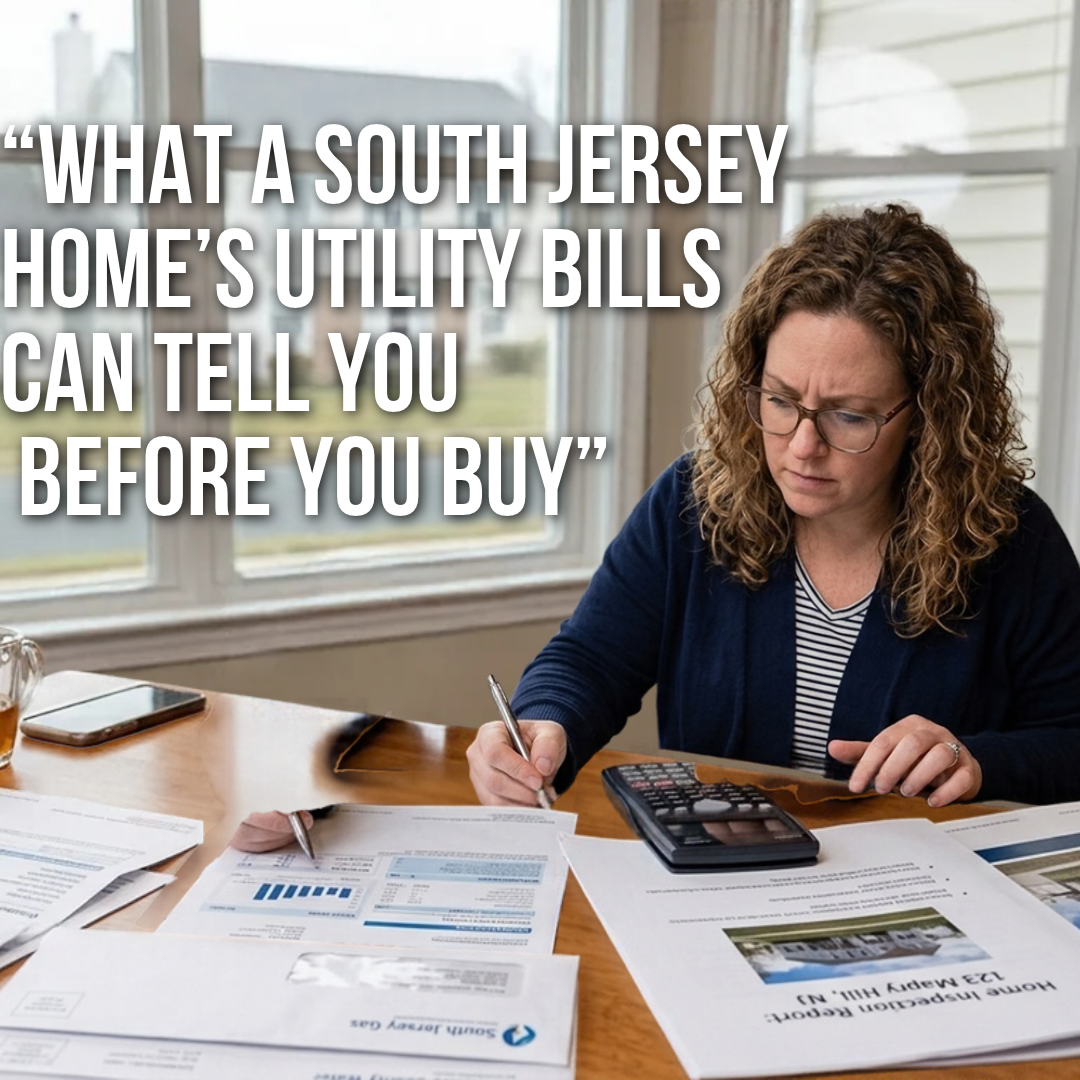
When buyers evaluate a South Jersey home, they usually focus on the numbers they can see immediately:
- Purchase price
- Property taxes
- Mortgage payment
- Insurance
- HOA fees, if applicable
But there is another number that can reveal a surprising amount about a property:
The utility bill.
A home's monthly electricity, heating, and water costs can provide clues about how efficiently the property operates—and what it may actually cost to live there after closing.
Two homes with similar prices can have very different monthly ownership costs.
One might have newer windows, efficient HVAC equipment, good insulation, and moderate utility consumption.
Another might be larger, older, poorly insulated, or equipped with aging systems that require substantially more energy to heat and cool.
And sometimes, the difference has nothing to do with the home itself.
The previous owners may have had a different household size, thermostat preferences, work schedule, pool, electric vehicle, or other energy-intensive habits.
As Mary Murphy of The Murphy Group explains:
“The purchase price tells you what it costs to buy the home. Looking at the home's ongoing expenses can help buyers understand what it may cost to actually live there.”
That is why utility history can be a valuable part of the buyer's due diligence process.
It shouldn't be treated as a guarantee of future costs—but it can help buyers ask better questions before making one of the largest financial decisions of their lives.
🔥 1. Heating Costs Can Reveal a Lot About the Home
South Jersey experiences significant seasonal temperature changes, so heating can represent a major portion of annual household energy consumption.
Utility records may help buyers understand how much energy the property typically requires during colder months.
Look for patterns such as:
- Large increases during winter
- Consistently high heating costs
- Significant differences between mild and cold months
- Unusually high fuel consumption
High winter costs don't automatically mean something is wrong.
A larger home will naturally require more energy than a smaller one.
However, unusually high usage may prompt questions about:
- HVAC efficiency
- Insulation
- Windows
- Air leakage
- Ductwork
- Heating system age
- Thermostat settings
The goal isn't simply to find the lowest bill.
It's to understand why the bill is what it is.
❄️ 2. Summer Cooling Costs Tell Another Part of the Story
The same principle applies to air conditioning.
A home that becomes expensive to cool during the summer may have characteristics worth investigating.
Potential factors include:
- Older HVAC equipment
- Poor insulation
- Older windows
- Significant sun exposure
- Large additions
- High ceilings
- Air leakage
- Inefficient ductwork
Again, context matters.
A large South Jersey home with multiple floors will naturally use more energy than a smaller ranch-style property.
But if two comparable homes have dramatically different summer usage, the difference may be worth investigating.
🪟 3. Windows and Insulation Can Affect Energy Consumption
Buyers often notice cosmetic improvements immediately.
New countertops.
Fresh flooring.
Updated bathrooms.
But insulation and windows are much less visible—and can have a meaningful impact on energy use.
Older or inefficient windows may contribute to:
- Heat loss during winter
- Heat gain during summer
- Drafts
- Greater HVAC demand
Insulation plays a similar role.
Ask whether the property has had insulation upgrades and whether improvements were made in areas such as:
- Attic
- Walls
- Basement
- Crawl spaces
- Exterior walls during renovations
Utility bills won't tell you exactly where energy is being lost, but they can help identify a reason to investigate further.
⚙️ 4. HVAC Systems Can Be Hidden Drivers of Utility Costs
The heating and cooling system is one of the most important pieces of the home's operating picture.
Buyers should consider:
- Age of the system
- Type of system
- Maintenance history
- Efficiency
- Number of HVAC units
- Number of zones
- Condition of ductwork
- Replacement history
A newer, properly maintained system may operate differently from an aging system approaching the end of its useful life.
That's why utility history becomes especially useful when combined with inspection findings and maintenance records.
💧 5. Water Bills Can Reveal More Than Water Usage
Water consumption can also tell buyers something about how the property is used.
Higher water bills may be associated with:
- Larger households
- Frequent outdoor watering
- Irrigation systems
- Pools
- Older plumbing fixtures
- Leaks
- More frequent occupancy
If the home has a large yard, ask whether irrigation is connected to the home's water supply.
If the property has a pool, ask about filling, maintenance, and other related water usage.
A high bill isn't necessarily a problem.
But an unexplained change in water usage deserves a question.
🌊 6. Irrigation and Landscaping Can Increase Seasonal Costs
A home with an attractive, extensively landscaped yard may have higher operating costs than a property with a simpler outdoor setup.
Consider:
- Irrigation systems
- Lawn size
- Garden beds
- Outdoor faucets
- Automatic watering schedules
- Seasonal landscaping requirements
During warmer months, water usage can increase significantly if irrigation is extensive.
Buyers who love a large landscaped property should consider both the enjoyment and the ongoing cost of maintaining it.
🏊 7. Pools Can Change the Utility Picture
A pool can be a major lifestyle benefit, but it can also introduce additional operating expenses.
Depending on the property, buyers may need to consider:
- Pool pumps
- Pool heaters
- Filtration systems
- Lighting
- Water usage
- Seasonal opening and closing
- Maintenance equipment
Electricity usage may increase during the months when the pool is operating.
A pool therefore shouldn't be evaluated solely as a feature that adds appeal.
Buyers should also understand what it adds to the property's annual ownership costs.
🔌 8. Electric Vehicles and Major Electrical Loads Matter
Modern homes can have significantly different electricity consumption depending on how the household uses the property.
For example, buyers may want to ask whether the previous occupants used:
- An EV charger
- Electric appliances
- Pool equipment
- Workshop equipment
- Home office equipment
- Multiple refrigerators or freezers
- Electric heating systems
- Other major electrical loads
EV charging is especially important to understand.
A household that regularly charges an electric vehicle at home may have noticeably higher electricity usage than a household without one.
That doesn't mean the property itself is inefficient.
It simply means the historical utility bill may reflect the previous owner's lifestyle.
The same applies to homes with extensive electric appliances, workshops, home offices, pool equipment, or other high-demand systems.
Lifestyle can significantly influence utility consumption.
🏡 9. Home Size Matters When Comparing Utility Bills
A 2,000-square-foot home and a 4,000-square-foot home should not be expected to have identical utility costs.
Larger homes generally have:
- More space to heat
- More space to cool
- More lighting
- More appliances
- More plumbing fixtures
That's why buyers should avoid looking at a utility bill in isolation.
Instead, compare the cost with the property's:
- Square footage
- Number of occupants
- Number of floors
- Heating system
- Cooling system
- Age
- Insulation
- Major appliances
The question isn't:
“Is this bill high?”
It's:
“Is this bill reasonable for this particular property and how it was being used?”
🧺 10. Appliances Can Affect Electricity Usage
Major household appliances can contribute to ongoing electricity consumption.
Buyers may want to ask about the age and efficiency of:
- Refrigerators
- Freezers
- Dishwashers
- Washers and dryers
- Ovens
- Water heaters
Older appliances aren't necessarily inefficient enough to justify immediate replacement.
But if a home has several older, energy-intensive appliances, buyers may want to factor potential replacement costs into their long-term ownership plans.
🚿 11. Water Heaters Deserve Attention
Water heating can represent a meaningful portion of household energy use.
Ask:
- Is the water heater gas or electric?
- How old is it?
- What size is it?
- Has it been serviced?
- Is it adequate for the household?
- Is there evidence of leakage or corrosion?
A household with several occupants may naturally consume more hot water than a smaller household.
Again, the goal is to understand the property's system—not simply judge the previous owner's utility bill.
☀️ 12. Solar Panels Can Make Utility History More Complicated
If a property has solar panels, buyers should understand how the system affects the utility records.
Questions may include:
- Are the panels owned or leased?
- Is there a financing agreement?
- How much electricity does the system typically produce?
- Is there net metering or another utility arrangement?
- Are there transfer requirements?
- What warranties remain?
- Who is responsible for maintenance?
A low electricity bill may look attractive, but buyers should understand why it is low and what obligations come with the solar system.
🧑💻 13. Home Offices Can Increase Electricity Usage
Remote work can change the home's energy profile.
A household working from home may use additional electricity for:
- Computers
- Monitors
- Lighting
- Printers
- Networking equipment
- Heating or cooling occupied rooms throughout the day
Someone who works from home five days a week may use the property very differently from someone who leaves for work every morning.
This is another reason utility history should be interpreted in context.
🏡 14. Additions Can Change the Home's Energy Profile
A home with an addition may have different heating and cooling demands than the original structure.
Pay attention to:
- Sunrooms
- Finished attics
- Converted garages
- Finished basements
- Enclosed porches
- Large additions
Ask whether these spaces are fully conditioned and how they are connected to the home's HVAC system.
An addition that was properly designed and insulated may perform very well.
Another space that was added without comparable insulation or HVAC planning may create additional energy demands.
🌞 15. Orientation and Shade Can Influence Energy Use
The home's relationship with the sun can affect heating and cooling demands.
Consider:
- Window orientation
- Large south- or west-facing windows
- Mature trees
- Shade from neighboring properties
- Roof exposure
- Outdoor shading
A home that gets beautiful afternoon sunlight may also experience more summer heat gain.
Again, this isn't automatically good or bad.
It depends on the home's design and efficiency.
📅 16. One Month of Bills Doesn't Tell the Whole Story
Utility costs fluctuate.
That's why buyers should ideally review a longer period of history when available.
A single unusually high bill could result from:
- Extreme weather
- Guests
- Vacation schedules
- Equipment problems
- Temporary changes in occupancy
A longer history can reveal patterns that one month cannot.
Look for:
- Winter averages
- Summer averages
- Year-to-year changes
- Unusual spikes
- Consistent trends
Patterns are generally more informative than isolated numbers.
👨👩👧 17. Occupancy Makes Comparisons Tricky
Utility bills reflect the people living in the house—not just the house itself.
A family of five may use substantially more water than a single occupant.
Someone who keeps the thermostat at 72°F may use more energy than someone who prefers 66°F.
Likewise, someone working from home all day may consume more electricity than someone who is away most weekdays.
That's why utility history should be treated as context, not a guaranteed future bill.
🚨 18. Unusual Spikes Can Be Worth Investigating
If utility records show a sudden increase, ask why.
Possible explanations include:
- Equipment failure
- Leak
- Major weather event
- Change in occupancy
- Pool operation
- Irrigation
- Construction
- New appliance or system
An unexplained spike isn't automatically a red flag.
But it can be a useful question for the seller, agent, inspector, or appropriate service professional.
💰 19. Utility Costs Should Be Part of the Affordability Conversation
A buyer may qualify for a mortgage based on the home's purchase price.
But qualification isn't the same as comfortable ownership.
Monthly housing costs can include:
- Mortgage
- Property taxes
- Insurance
- HOA fees, if applicable
- Utilities
- Maintenance
- Repairs
A home with a slightly higher purchase price but lower operating costs may compare differently from a less expensive property with substantially higher ongoing expenses.
🔍 20. Utility Bills Can Help You Ask Better Inspection Questions
Utility history shouldn't replace a professional home inspection.
Instead, it can make the inspection process more targeted.
For example:
High winter energy use + older HVAC
→ Ask about system age, service history, efficiency, and insulation.
High water usage + large yard
→ Ask about irrigation and outdoor water use.
High electricity usage + older windows
→ Ask about the home's insulation and energy efficiency.
Unusual utility spike
→ Ask what changed during that period.
The bill provides a clue.
The inspection and professional evaluation provide more of the explanation.
📋 Questions Buyers Can Ask About Utility Costs
Before buying, consider asking:
Energy
- Is historical electricity usage available?
- What heating fuel does the home use?
- How old are the HVAC systems?
- Are there multiple heating or cooling zones?
Water
- Is there a history of water usage?
- Is irrigation installed?
- Is there a pool?
- Have there been known leaks?
Efficiency
- When were the windows replaced?
- Has insulation been upgraded?
- Are major appliances newer?
- Have there been energy-efficiency improvements?
Special Systems
- Are there solar panels?
- Is there an EV charger?
- Is there a pool heater?
- Is there an irrigation system?
Patterns
- Are there unusual spikes in historical usage?
- Were there major changes in occupancy or equipment?
🧠 Don't Treat a High Utility Bill as an Automatic Dealbreaker
A high bill can mean many different things.
It could reflect:
- A large house
- More occupants
- A pool
- Extensive landscaping
- High thermostat settings
- An EV
- Older equipment
- Poor insulation
Likewise, a low utility bill doesn't automatically prove that a home is highly efficient.
The previous owner may simply have used very little energy.
The better approach is to ask:
“Why are the bills what they are?”
That question leads to much better due diligence.
💼 How The Murphy Group Helps Buyers Look Beyond the Purchase Price
At The Murphy Group, helping buyers evaluate a home means looking beyond the number on the listing.
That can include discussing:
- Utility history
- Property taxes
- Insurance
- HOA costs
- Maintenance
- Major systems
- Energy efficiency
- Overall cost of ownership
Mary Murphy explains:
“The purchase price tells you what it costs to buy the home. The monthly ownership picture tells you what it may feel like to live there.”
Understanding that distinction can help buyers make more confident decisions.
📊 The Bottom Line
A South Jersey home's utility bills can provide useful clues about the property's real-world operating costs.
They may help buyers understand:
- Seasonal heating and cooling demands
- Energy consumption patterns
- HVAC performance questions
- Insulation and window concerns
- Water usage
- Pool and irrigation costs
- The impact of household lifestyle
- Potential long-term ownership expenses
But utility bills are only one piece of the puzzle.
The smartest approach is to combine utility history with:
Inspection + maintenance records + system age + property condition + lifestyle needs.
Because buying a home isn't just about asking:
“Can I afford the purchase price?”
It's also about asking:
“Can I comfortably afford the home once I live in it?”
📲 Thinking About Buying a South Jersey Home?
The Murphy Group helps buyers look beyond the listing price and evaluate the broader ownership picture—including property condition, location, utilities, insurance, taxes, and long-term costs.
👉 Start here: www.mgsells.com

Mary Murphy
Team Leader | The Murphy Group | eXp Realty, LLC | PLACE
or another way