

Categories
Burlington County, Camden County, Gloucester County, Home Buying Tips, Home Buying Guides, New Jersey Real Estate, Real Estate Guides, South Jersey Real Estate, South Jersey Market TrendsPublished September 14, 2026
The Hidden Costs That Can Turn an Affordable South Jersey Home Into an Expensive One

A home can look affordable on paper.
The listing price fits the budget.
The monthly mortgage estimate looks manageable.
The neighborhood checks the right boxes.
Then the real costs start adding up.
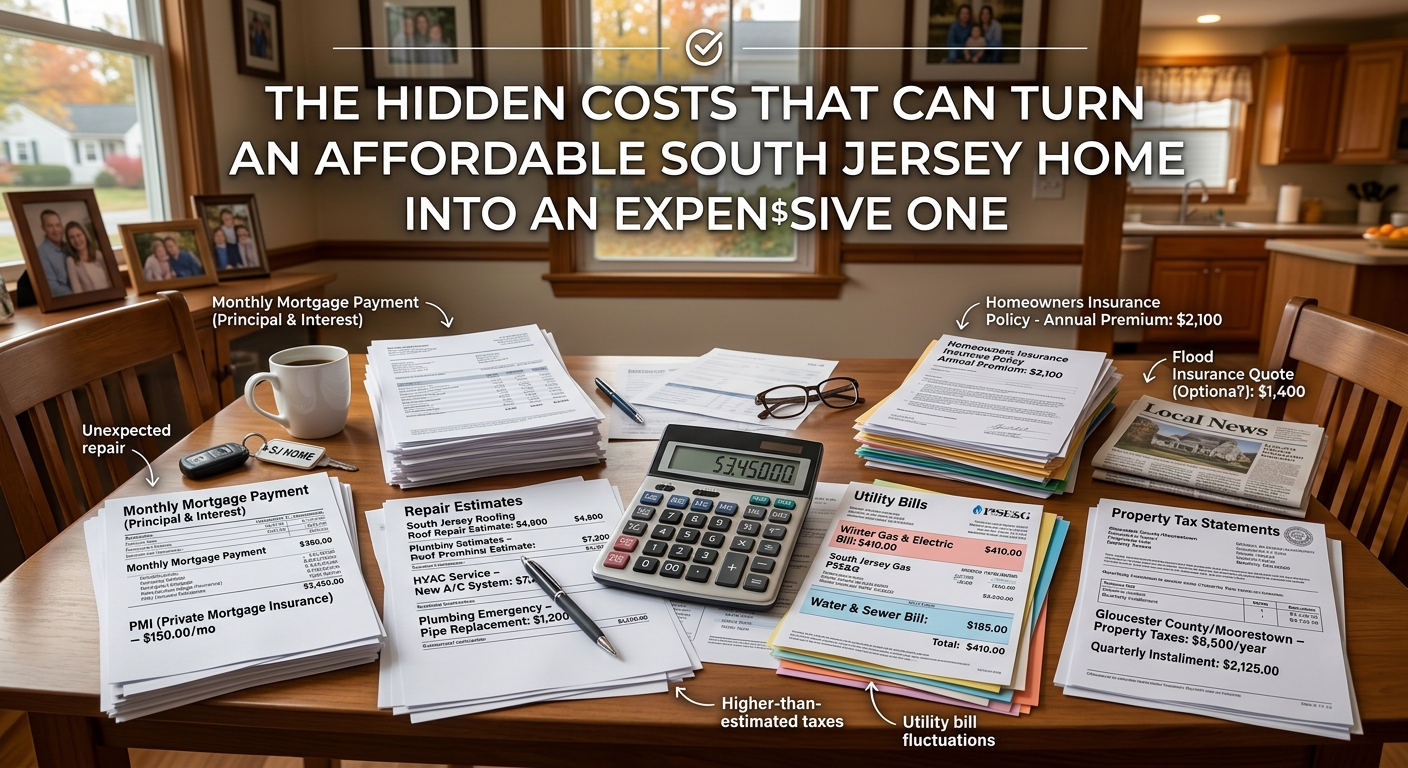
Property taxes, insurance, maintenance, utilities, repairs, closing costs, and improvements can significantly change the true cost of owning a home.
For South Jersey buyers, understanding those expenses before making an offer can be just as important as finding the right purchase price.
As Mary Murphy of The Murphy Group explains:
“The purchase price is only one part of the financial picture. Buyers need to understand what the home could realistically cost them after they move in.”
💰 The Purchase Price Is Only the Beginning
One of the easiest mistakes buyers can make is treating the listing price as the total cost of the home.
It isn't.
The actual financial commitment can include:
- Down payment
- Mortgage principal and interest
- Property taxes
- Homeowners insurance
- Closing costs
- Utilities
- Maintenance
- Repairs
- HOA fees, when applicable
- Future improvements
A home that costs less upfront can sometimes become more expensive to own than a slightly higher-priced property with fewer ongoing expenses.
🏠 1. Property Taxes Can Change the Monthly Equation
Property taxes are one of the most important recurring expenses for New Jersey homeowners.
Two homes with similar sale prices can have very different monthly ownership costs depending on their individual tax bills.
That's why buyers shouldn't compare homes based only on:
Purchase price.
They should also compare:
Purchase price + taxes + insurance + expected maintenance.
A lower-priced home isn't necessarily the better financial choice if its ongoing expenses are substantially higher.
🛡️ 2. Homeowners Insurance Can Add More Than Buyers Expect
Insurance is another expense that can be overlooked during the early stages of a home search.
Premiums can vary based on factors such as:
- Location
- Property characteristics
- Age and condition of the home
- Roof age
- Claims history
- Coverage requirements
- Weather and environmental risks
For buyers, getting an insurance estimate before becoming too emotionally attached to a property can prevent an unpleasant surprise later.
🔧 3. Older Systems Can Create Immediate Expenses
A home may look beautifully maintained while still having aging mechanical systems.
Buyers should pay attention to the approximate age and condition of:
- HVAC systems
- Water heaters
- Roof
- Electrical systems
- Plumbing
- Windows
- Appliances
None of these automatically means a home is a bad investment.
The issue is timing.
If several major systems are approaching the end of their useful lives at the same time, a seemingly affordable home can require significant capital after closing.
🌧️ 4. Drainage and Water Issues Can Become Expensive
Water is one of the most important things buyers should evaluate around a property.
Potential concerns include:
- Poor grading
- Basement moisture
- Standing water
- Inadequate drainage
- Aging gutters
- Downspouts directing water toward the foundation
- Previous water intrusion
Some problems may be relatively inexpensive to address.
Others can require substantial work.
A professional inspection can help buyers understand what they're dealing with before making a final decision.
⚡ 5. Energy Costs Add Up Every Month
A home with an attractive purchase price can become less affordable if it is expensive to heat, cool, or operate.
Buyers should consider:
- Heating type
- HVAC efficiency
- Insulation
- Window condition
- Home size
- Seasonal utility costs
A larger home isn't automatically a better value if its operating costs are significantly higher.
This is especially important when comparing older homes with newer or recently updated properties.
🧹 6. Maintenance Is a Permanent Cost of Homeownership
Homeownership doesn't end when the closing documents are signed.
There are ongoing tasks such as:
- Lawn care
- Tree maintenance
- Gutter cleaning
- HVAC servicing
- Pest prevention
- Exterior maintenance
- Seasonal preparation
- Appliance replacement
Individually, these expenses may not seem significant.
Over several years, however, they can become a meaningful part of the household budget.
🌳 7. Landscaping and Trees Can Be Beautiful—And Expensive
Mature trees and established landscaping can add tremendous appeal to a South Jersey property.
But they can also create maintenance responsibilities.
Large trees may require:
- Trimming
- Storm cleanup
- Professional inspections
- Removal when necessary
Likewise, extensive landscaping can require ongoing irrigation, seasonal maintenance, and replacement costs.
The goal isn't to avoid attractive outdoor features.
It's to understand their long-term financial impact.
🏡 8. A Finished Basement Isn't Always a Finished Budget
Finished basements can add valuable living space.
But buyers should look beyond the finished walls.
They may need to consider:
- Moisture management
- Sump pumps
- Drainage
- HVAC
- Electrical systems
- Flooring replacement
- Permit history where applicable
A finished basement can be a major advantage—but it should still be evaluated as part of the home's overall condition.
🚗 9. Commuting Costs Can Change What “Affordable” Means
A home that costs less but requires a substantially longer commute may not actually feel less expensive over time.
Buyers should consider:
- Gas
- Tolls
- Vehicle maintenance
- Parking
- Time spent commuting
This is particularly important when comparing communities across South Jersey.
A slightly higher-priced home closer to work, major routes, or daily necessities could potentially create meaningful savings and convenience over the long term.
🏘️ 10. HOA Fees and Community Costs Matter
Some South Jersey communities have homeowners associations or other recurring community-related expenses.
Before purchasing, buyers should understand:
- Monthly or annual fees
- What the fees cover
- Rules and restrictions
- Potential assessments
- Amenities included
A home with a lower purchase price but significant recurring community costs may not be the bargain it initially appears to be.
🔨 11. Cosmetic Updates Can Quickly Consume a Budget
Buyers sometimes think:
“We'll just update it after we move in.”
But seemingly simple projects can add up quickly.
A buyer may want to:
- Repaint the entire house
- Replace flooring
- Update lighting
- Replace countertops
- Modernize bathrooms
- Improve landscaping
- Replace older appliances
None of these projects is necessarily urgent.
But when several are combined, the renovation budget can become substantial.
📋 12. Closing Costs and Prepaid Expenses Need to Be Budgeted
The money needed to buy a home isn't limited to the down payment.
Depending on the transaction, buyers may also encounter costs associated with:
- Lender fees
- Appraisal
- Inspection
- Title-related services
- Attorney fees
- Recording
- Prepaid taxes
- Insurance
- Escrow funding
Exact costs vary by transaction, loan, property, and service providers.
That's why buyers should work with their lender and real estate professionals to understand the expected cash needed before closing.
🧠 13. The Cheapest Home Isn't Always the Best Value
This is one of the most important distinctions buyers can make.
Affordable and good value are not always the same thing.
A $400,000 home requiring $50,000 of immediate improvements may have a very different financial profile from a $425,000 home that has recently received major updates.
The better question isn't:
“Which home has the lowest price?”
It's:
“Which home gives me the best combination of purchase price, condition, ongoing costs, and long-term value?”
🔍 14. The Inspection Can Reveal the Real Financial Picture
A home inspection isn't designed to predict every future expense.
But it can help buyers identify conditions that deserve closer attention.
That may include:
- Aging systems
- Roof concerns
- Electrical issues
- Plumbing problems
- Structural observations
- Water intrusion
- Safety concerns
- Deferred maintenance
The inspection period can therefore be an important opportunity to understand what you're buying—not simply a formality before closing.
📊 A Better Way to Compare South Jersey Homes
Instead of comparing homes based solely on listing price, buyers can create a broader ownership-cost checklist.
Consider:
Upfront costs
- Down payment
- Closing costs
- Immediate repairs
- Moving expenses
Monthly costs
- Mortgage
- Property taxes
- Insurance
- HOA fees
- Utilities
Future costs
- Roof
- HVAC
- Water heater
- Appliances
- Exterior maintenance
- Major improvements
This approach gives buyers a much clearer picture of affordability.
💼 How The Murphy Group Helps Buyers Look Beyond the Listing Price
At The Murphy Group, the goal isn't simply to help buyers find a home that fits a purchase-price range.
It's to help them understand the bigger picture.
That means encouraging buyers to consider:
- Total monthly ownership costs
- Property condition
- Potential maintenance needs
- Location and commuting factors
- Insurance considerations
- Long-term resale potential
- The difference between a low price and strong value
“A smart purchase isn't always the home with the lowest asking price,” Mary says. “It's the home that makes sense financially and personally for the buyer's long-term plans.”
📈 The Bottom Line
A South Jersey home can look affordable at first glance and still become expensive after closing.
The hidden costs may come from:
- Property taxes
- Insurance
- Aging systems
- Maintenance
- Utilities
- Repairs
- Renovations
- HOA expenses
- Commuting
- Unexpected ownership costs
The key is to look beyond the listing price.
Because the true cost of a home isn't simply what you pay to buy it.
It's what it costs to own, maintain, and live in it over time.
📲 Thinking About Buying a Home in South Jersey?
The Murphy Group helps buyers evaluate more than just the asking price—so they can make informed decisions based on value, condition, location, and the bigger cost of homeownership.
👉 Start here: www.mgsells.com

Mary Murphy
Team Leader | The Murphy Group | eXp Realty, LLC | PLACE
or another way