

Categories
Home Buying Guides, Home Buying Tips, Real Estate Guides, New Jersey Real Estate, Real Estate Market Insights, South Jersey Market Trends, South Jersey Real EstatePublished January 20, 2026
South Jersey Housing Supply Explained in Plain English

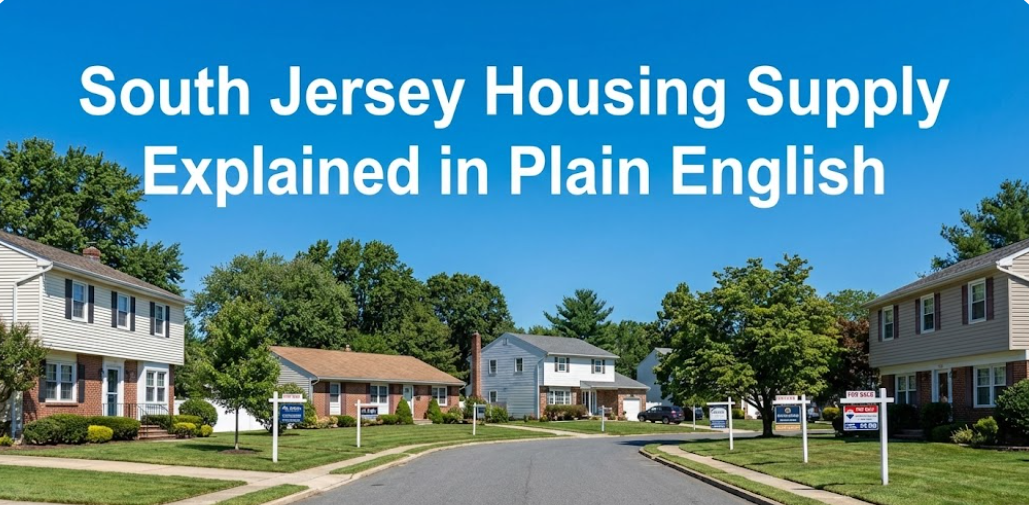
If you’ve been house hunting or thinking about selling in South Jersey, you’ve probably heard phrases like:
- Low inventory
- Limited supply
- Seller’s market
But what does housing supply actually mean — and why does it matter so much?
Mary Murphy of The Murphy Group explains it simply:
“Housing supply is just how many homes are available compared to how many people want to buy them. When supply is tight, competition goes up. When supply grows, buyers gain leverage.”
Let’s break it down — no jargon required.
🏠 1. What Is Housing Supply?
Housing supply refers to the number of homes actively available for sale at a given time.
In plain terms:
- High supply = lots of homes to choose from
- Low supply = very few options
South Jersey has experienced low housing supply in many towns over the past few years, especially for move-in-ready homes.
📉 2. Why South Jersey’s Supply Is So Tight
Several factors are keeping inventory low:
- Homeowners holding onto low mortgage rates
- Limited new construction in established towns
- Strong demand from first-time and move-up buyers
- Fewer sellers downsizing than expected
Mary notes:
“Many homeowners don’t want to sell because they can’t replace what they have at the same cost. That keeps listings scarce.”
📊 3. What ‘Months of Supply’ Really Means
You may hear agents talk about months of supply — here’s the simple version:
- It measures how long it would take to sell all homes currently on the market
- 0–3 months: Seller’s market
- 4–6 months: Balanced market
- 6+ months: Buyer’s market
Most South Jersey towns are still hovering in seller’s market territory, though conditions vary by price point.
💰 4. How Low Supply Affects Prices
When supply is low and demand is high:
- Prices tend to rise
- Homes sell faster
- Multiple offers are more common
Mary explains:
“Low supply doesn’t automatically mean overpricing — it means buyers are competing for fewer homes, which naturally pushes values higher.”
🤝 5. What This Means for Buyers
For buyers, limited supply can mean:
- Fewer choices
- Strong competition on well-priced homes
- Less room for negotiation
That said, buyers still have opportunities — especially when they’re prepared and act quickly.
“The best buyers aren’t waiting for more listings,” Mary says.
“They’re focused on being ready when the right home appears.”
🏡 6. What This Means for Sellers
For sellers, low supply often creates advantages:
- Strong buyer demand
- Faster sales timelines
- Competitive pricing environments
However, pricing still matters.
“Even in a low-supply market, buyers won’t overpay for homes that aren’t positioned correctly,” Mary notes.
🔮 7. Is More Supply Coming?
Gradual increases in listings are possible as:
- Interest rates stabilize
- New construction slowly enters the market
- Life changes prompt more homeowners to sell
But a sudden flood of inventory is unlikely.
“South Jersey isn’t underbuilt overnight,” Mary explains.
“Supply changes tend to be slow and local.”
📲 Expert Guidance Makes the Difference
Understanding housing supply helps buyers and sellers make smarter decisions — without fear or confusion.
Mary Murphy and The Murphy Group help South Jersey clients interpret market data, navigate competition, and time their moves strategically.
Start your South Jersey home journey with clear guidance today:
www.mgsellsarizona.com

Mary Murphy
Team Leader | The Murphy Group | eXp Realty, LLC | PLACE
or another way