

Categories
New Jersey Real Estate, Short-Term Rentals, Home Buying Guides, Real Estate GuidesPublished January 20, 2026
Short-Term Rental Rules in South Jersey Towns

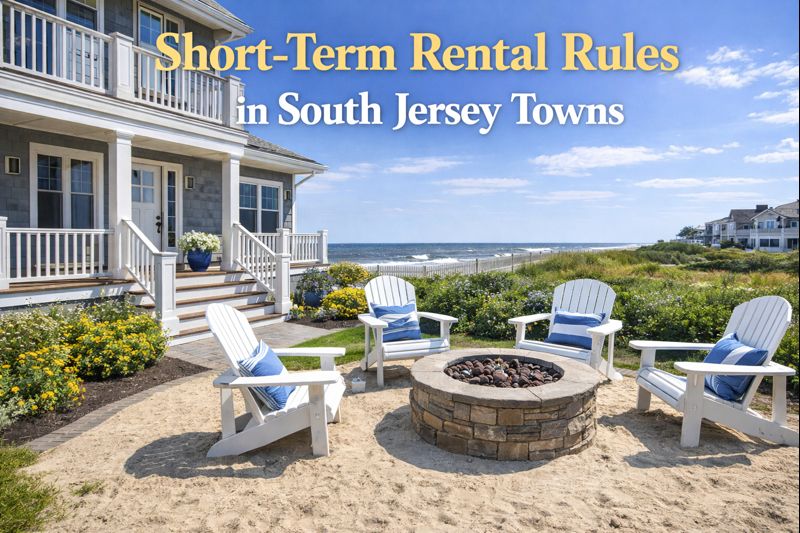
Short-term rentals have become increasingly popular across South Jersey — especially in shore towns and desirable suburban areas. But before buying or converting a home into a vacation rental, it’s critical to understand local short-term rental regulations.
Rules can vary dramatically from town to town.
Mary Murphy of The Murphy Group explains:
“Short-term rentals are highly regulated in many South Jersey municipalities. Buyers should never assume Airbnb-style rentals are allowed without verifying local ordinances first.”
Here’s what buyers, investors, and homeowners need to know.
🏡 1. Why Short-Term Rental Rules Vary by Town
In New Jersey, short-term rentals are regulated at the municipal level, not statewide. This means each town sets its own rules regarding:
- Minimum rental periods
- Permit and licensing requirements
- Occupancy limits
- Parking regulations
- Noise and nuisance enforcement
Some towns welcome short-term rentals, while others restrict or prohibit them entirely.
📋 2. Common Requirements in South Jersey Towns
Many South Jersey municipalities require short-term rental owners to:
- Obtain a rental permit or license
- Pass safety and zoning inspections
- Register annually with the town
- Pay local occupancy or tourism taxes
- Designate a local contact person
💬 “Permits and renewals are often overlooked,” Mary notes.
“Missing paperwork can lead to fines or rental shutdowns.”
🚫 3. Towns With Stricter Restrictions
Some South Jersey towns impose tighter rules, such as:
- Minimum stay requirements (e.g., 7 or 30 days)
- Caps on the number of rental days per year
- Restrictions on non-owner-occupied rentals
- Limits on short-term rentals in certain zoning districts
These rules are especially common in residential neighborhoods where towns want to limit transient occupancy.
⚖️ 4. Penalties for Non-Compliance
Operating a short-term rental without proper approval can result in:
- Fines and penalties
- Revocation of rental permits
- Cease-and-desist orders
- Legal action from municipalities
Mary advises:
“Enforcement has increased significantly. Towns are actively monitoring online rental platforms.”
💼 5. What This Means for Buyers and Investors
For buyers considering short-term rental income, regulations impact:
- Investment viability
- Expected rental income
- Financing and insurance options
- Long-term resale value
“We always research local rental ordinances before advising clients on investment properties,” Mary explains.
“It’s essential to understand what’s allowed today — and what could change.”
💡 6. Best Practices Before Buying a Short-Term Rental
Buyers should:
✔ Review municipal codes and zoning ordinances
✔ Contact the local zoning or licensing office
✔ Confirm HOA or condo association rules
✔ Understand tax and insurance requirements
✔ Work with a knowledgeable local agent
“The right due diligence upfront prevents costly surprises later,” Mary emphasizes.
📲 Expert Guidance for South Jersey Buyers & Investors
Short-term rentals can be a powerful investment strategy in South Jersey — when done correctly. Understanding town-specific rules is key to protecting your investment.
Mary Murphy and The Murphy Group help buyers and investors evaluate short-term rental opportunities, navigate local regulations, and make informed decisions across South Jersey.
Start your South Jersey property search with expert insight today:
www.mgsellsarizona.com

Mary Murphy
Team Leader | The Murphy Group | eXp Realty, LLC | PLACE
or another way