

Categories
New Jersey Real Estate, Real Estate Guides, gas prices, Housing Guide, Home Selling Tips, Home Buying Tips, Home Buying GuidesPublished April 27, 2026
From Gas Prices to Home Prices: How Global Tensions Are Impacting NJ Real Estate

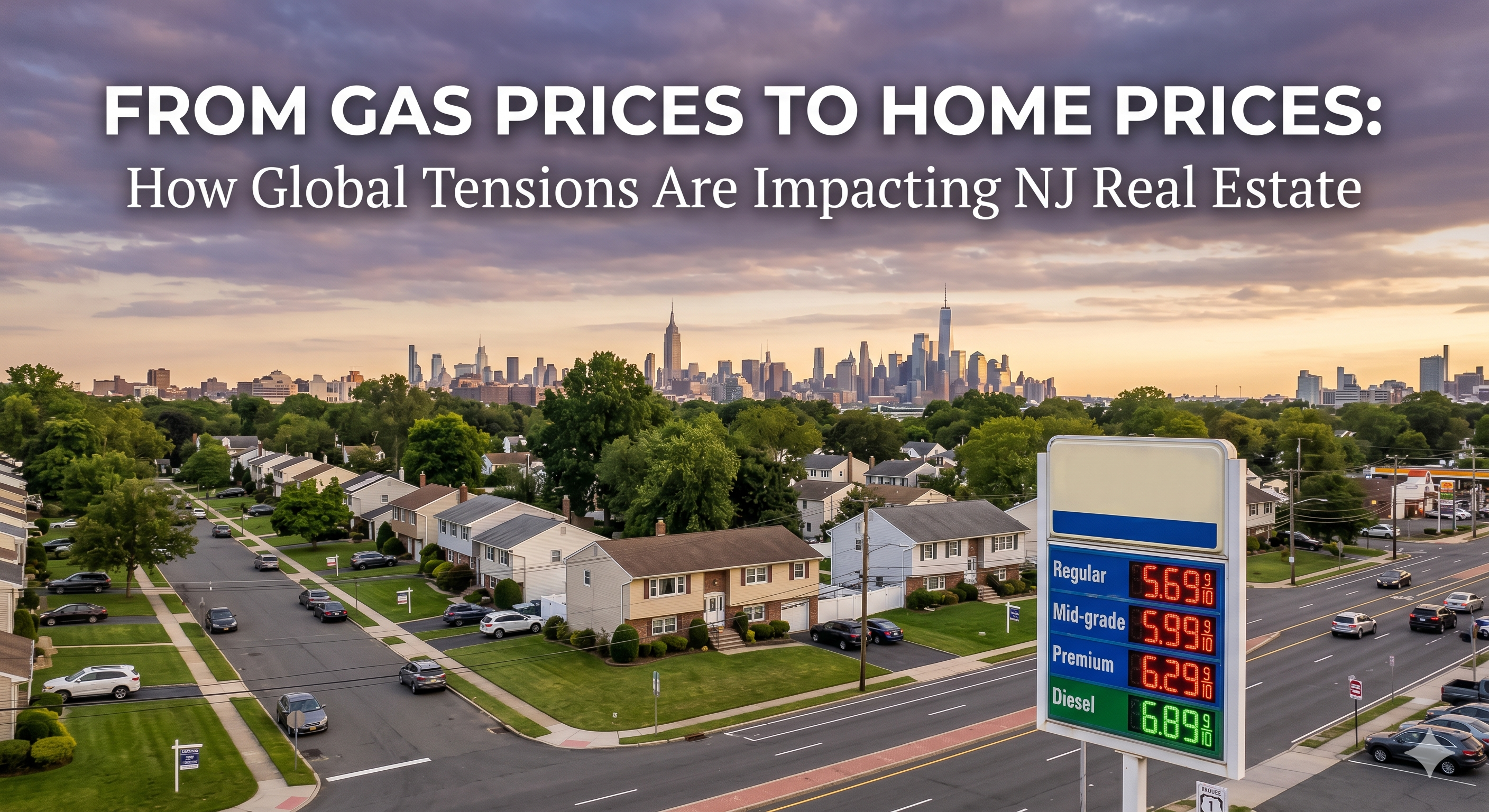
Most buyers don’t connect global events to local home prices.
But in reality, they’re closely linked.
From international conflicts affecting fuel supply to shifts in energy markets, global tensions are quietly influencing what buyers in New Jersey can afford—and what they’re willing to pay attention to.
And while it may not be obvious at first glance, these ripple effects are showing up in everyday real estate decisions.
As Mary Murphy of The Murphy Group explains:
“Buyers may not talk about global markets directly, but they feel the impact in their monthly costs—and that changes how they approach buying a home.”
⛽ The Gas Price Connection to Housing Decisions
When global tensions impact oil and gas markets, the effects extend far beyond the pump.
In New Jersey, rising transportation and energy costs influence:
- Commute tolerance
- Monthly household budgets
- Perceived affordability of certain towns
- Long-term cost expectations
A home that once felt comfortably within budget can suddenly feel tighter when fuel and utilities rise.
🧠 How Buyers Are Adjusting Their Behavior
1. Commute Distance Matters More
Buyers are more sensitive to:
- Long daily drives
- Toll-heavy routes
- Traffic-dependent commutes
Even desirable homes may be skipped if the commute feels too costly over time.
2. “Total Monthly Cost” Thinking
Instead of focusing only on mortgage payments, buyers now consider:
- Fuel costs
- Utility bills
- Heating and cooling expenses
- Property taxes
This creates a more holistic—and stricter—budget filter.
3. Suburban Trade-Offs Are Being Re-Evaluated
In New Jersey, buyers often trade location for space.
But rising energy and fuel costs are causing some to reconsider:
4. Energy Efficiency Becomes a Value Driver
Homes with:
- Gas heating
- Efficient HVAC systems
- Updated insulation
- Smart energy features
are becoming more attractive because they reduce long-term uncertainty.
📉 The Hidden Impact on Home Prices
Global tensions don’t just affect buyer behavior—they can subtly influence pricing dynamics:
- Buyers become more selective
- Demand shifts toward “cost-efficient” homes
- Some segments experience slower absorption
- Price sensitivity increases in commuter-heavy areas
Even if home values remain stable, buyer urgency can fluctuate based on perceived affordability.
🏡 What This Means for New Jersey Sellers
In today’s environment, sellers need to recognize that buyers are thinking beyond the listing price.
They’re asking:
- How much will it cost me to live here every month?
- Will commuting or utilities stretch my budget?
- Is this home efficient enough long-term?
If those answers aren’t clear, hesitation grows—even for otherwise strong properties.
⚠️ Why Some Homes Lose Buyers in This Climate
1. High Commute Dependency
Homes far from job centers may face more scrutiny when fuel costs rise.
2. Lack of Efficiency Messaging
If energy-saving features aren’t highlighted, buyers may assume higher ongoing costs.
3. Unclear Utility Expectations
Older homes without updated systems can feel riskier in uncertain energy markets.
4. Perceived “Future Cost Pressure”
Even if current prices are fair, buyers may mentally discount offers due to anticipated expenses.
💼 How The Murphy Group Helps Sellers Adapt
At The Murphy Group, market strategy goes beyond local trends—it accounts for global influences shaping buyer psychology.
Their approach includes:
- Positioning homes around total cost-of-living value
- Highlighting energy efficiency and system upgrades
- Framing location benefits in relation to commute savings
- Educating buyers through clear, transparent marketing
- Adjusting listing strategy based on macroeconomic conditions
“We help sellers tell the full story of value,” Mary says. “Not just what a home costs—but what it costs to live in it.”
📊 The Bigger Picture
Real estate in New Jersey is no longer influenced only by local demand.
It is shaped by:
- Global energy markets
- Transportation costs
- Economic uncertainty
- Buyer sensitivity to monthly expenses
These factors don’t replace traditional market drivers—but they quietly reshape them.
🚀 The Bottom Line
From gas prices to home prices, global tensions are now part of the real estate equation.
Buyers may not explicitly reference global events—but they feel them every time they fill their tank, pay a utility bill, or consider a long commute.
And those small shifts in perception can influence major buying decisions.
📲 Want to Position Your Home for Today’s Market Conditions?
The Murphy Group helps New Jersey sellers adapt to changing economic realities—so their homes stay competitive, desirable, and well-positioned.
👉 Start here: www.mgsells.com

Mary Murphy
Team Leader | The Murphy Group | eXp Realty, LLC | PLACE
or another way