

Categories
Real Estate Guides, New Jersey Real Estate, Home Buying Guides, Home Buying Tips, Housing GuidePublished April 27, 2026
Can You Still Afford to Commute? How Fuel Costs Are Shifting Buyer Preferences in NJ

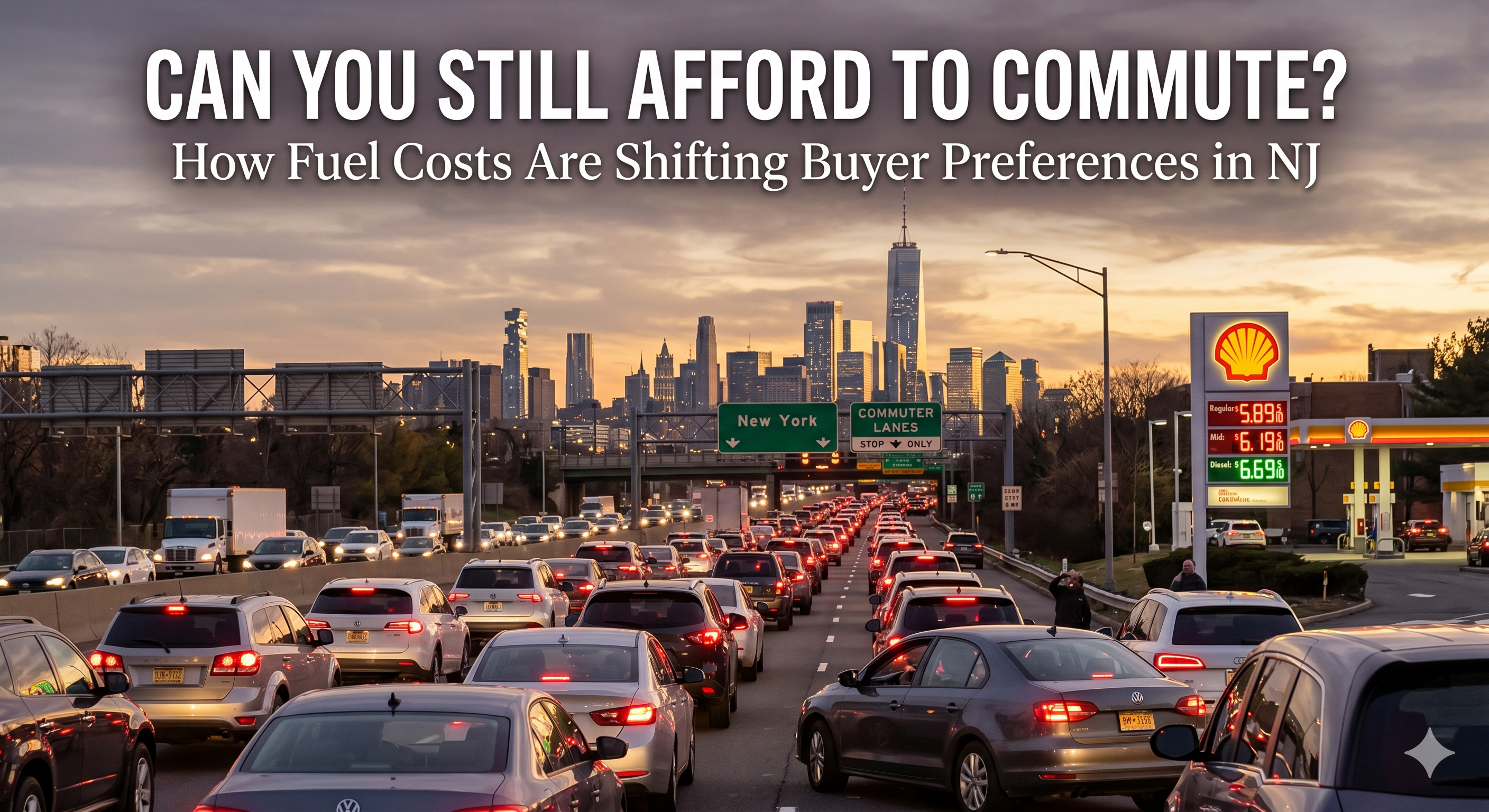
For decades, New Jersey homebuyers made a familiar trade:
👉 More house for a longer commute.
But that equation is starting to change.
As fuel prices fluctuate and daily commuting becomes more expensive, buyers are beginning to rethink how far they’re willing to live from work. And in many cases, the answer is: not as far as before.
As Mary Murphy of The Murphy Group explains:
“Commute distance used to be a lifestyle choice. Now it’s becoming a financial decision. Buyers are factoring fuel costs into their housing decisions more than ever.”
⛽ The Hidden Cost of “Just a Few More Miles”
On paper, an extra 10–20 miles from a job center might not seem like much.
But buyers are now breaking it down differently:
- Weekly fuel consumption
- Monthly commuting costs
- Toll expenses (common in NJ commuting routes)
- Vehicle wear and maintenance
Suddenly, the “cheaper home farther out” isn’t as cheap as it looks.
📊 Why Commuting Is Being Re-Evaluated
1. Fuel Prices Add Up Fast
Even small increases in fuel costs multiply quickly over:
- Daily commutes
- Multi-vehicle households
- Long-term ownership
Buyers are realizing that commuting can quietly become a major monthly expense.
2. Remote and Hybrid Work Changed Expectations
Even as some workers return to offices, hybrid schedules have changed behavior:
- Fewer people commute five days a week
- Buyers prioritize flexibility over distance
- “Occasional commute” still influences location decisions
This shift makes proximity more valuable than before.
3. Time Is Now Part of the Equation
Fuel cost isn’t the only factor—time matters too.
Buyers are increasingly asking:
- How long will I spend in traffic weekly?
- Is that time worth the savings in home price?
- What is my quality of life trade-off?
Long commutes are no longer automatically accepted.
🏡 How This Is Reshaping NJ Buyer Preferences
1. Stronger Demand for Commuter Hubs
Towns with direct access to major transit routes, highways, or rail lines are seeing stronger interest.
Buyers are prioritizing:
- Train-accessible communities
- Highways with predictable commute times
- Proximity to job centers in NYC and Philadelphia corridors
2. “Middle Ring” Suburbs Are Gaining Attention
Instead of pushing farther out, many buyers are staying in mid-distance suburbs where:
- Commutes are manageable
- Home prices are still relatively competitive
- Lifestyle balance feels sustainable
3. Energy-Efficient, Lower-Commute Homes Are Favored
Homes that reduce total monthly cost—both utilities and transportation—are becoming more attractive.
4. Longer Commutes Require Bigger Trade-Offs
Buyers willing to commute farther now expect more in return:
- Larger homes
- More land
- Lower taxes or better value
If those trade-offs don’t feel balanced, they walk away.
⚠️ Why Some Homes Lose Buyers Today
Even great homes can lose interest if commuting feels unrealistic.
1. “Too Far From Everything” Perception
Distance from major job centers can quickly reduce urgency.
2. Unpredictable Traffic Routes
In New Jersey, congestion patterns matter as much as distance.
If the commute feels unreliable, buyers hesitate.
3. Rising Total Monthly Cost
When fuel + tolls + time are combined, buyers may rethink affordability altogether.
4. Better Alternatives Nearby
Competing listings closer to job hubs can win even if they’re smaller or slightly more expensive.
🧠 The Psychology Behind Commute Decisions
Buyers aren’t just thinking about geography—they’re thinking about lifestyle control.
They’re asking:
- Do I want to spend hours each week in traffic?
- Is the extra space worth the daily cost?
- Will I still feel comfortable with this commute a year from now?
In many cases, the emotional answer is now outweighing the financial one.
💼 How The Murphy Group Helps Buyers and Sellers Navigate This Shift
At The Murphy Group, commute analysis is now part of the broader home strategy conversation.
Their approach includes:
- Evaluating homes based on real commute behavior patterns
- Positioning listings around accessibility and convenience
- Helping sellers highlight transit and highway advantages
- Advising buyers on total cost-of-living—not just purchase price
- Aligning lifestyle expectations with location reality
“A home isn’t just where you live anymore,” Mary says. “It’s how you live every day—including how you get to and from work.”
📈 The Bottom Line
Fuel costs may not appear directly in a listing—but they are shaping decisions behind the scenes.
In New Jersey’s competitive market, commuting is no longer just a routine.
It’s part of the affordability equation.
And for many buyers, that equation is changing where they choose to live.
📲 Want Help Finding a Home That Fits Your Lifestyle?
The Murphy Group helps buyers and sellers across New Jersey navigate real-world factors like commuting, cost of living, and long-term value.
👉 Start here: www.mgsells.com

Mary Murphy
Team Leader | The Murphy Group | eXp Realty, LLC | PLACE
or another way