

Categories
South Jersey Real Estate, fireplace inspection, Home Buying Tips, home inspection checklist, Burlington County, Camden County, Gloucester CountyPublished October 26, 2026
Buying an Arizona Luxury Home With a Private Elevator: What Buyers Should Evaluate

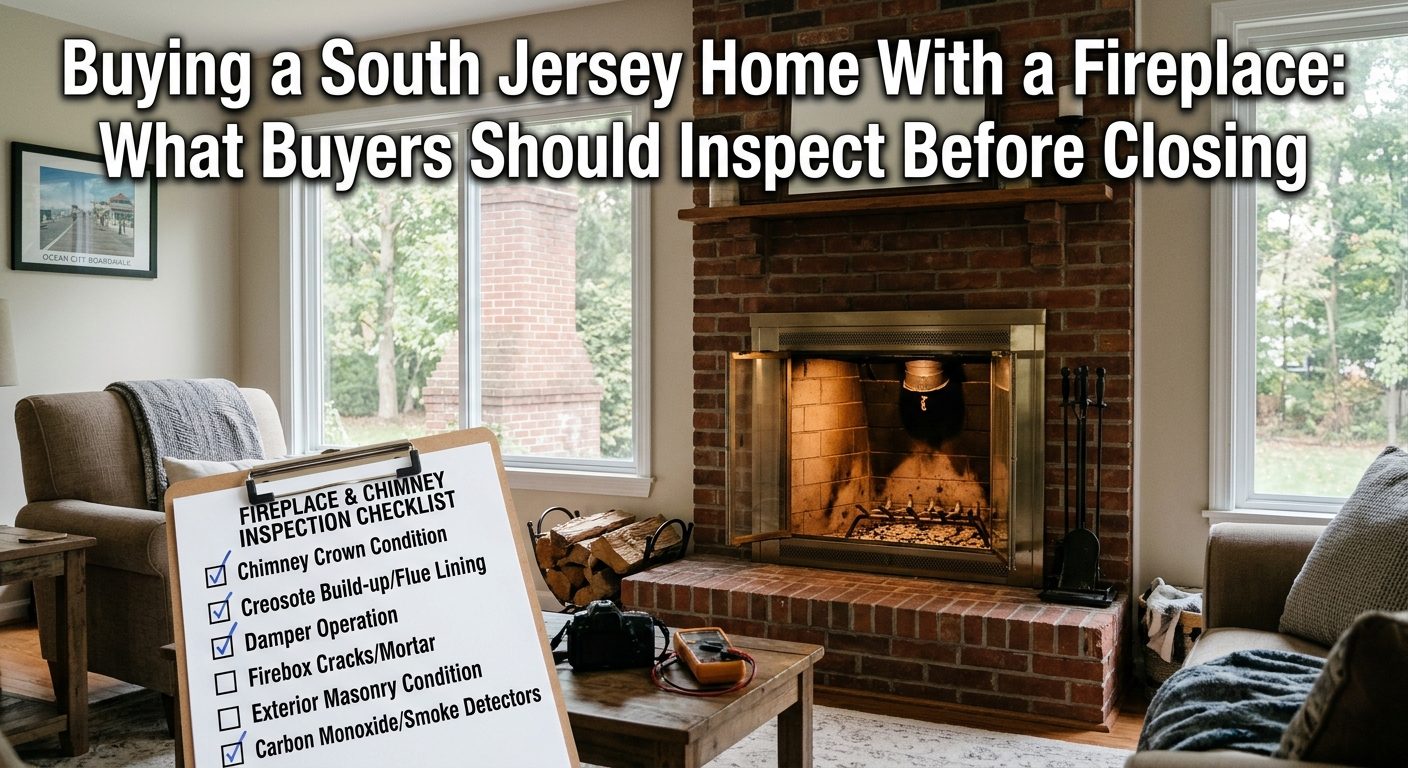
A fireplace can make a South Jersey home feel warm, inviting, and full of character. Whether it is a traditional brick fireplace in an older home, a wood-burning centerpiece in a family room, or a modern gas fireplace in a renovated property, it can be an appealing feature for buyers.
But a fireplace is more than a design element. Behind the mantel and firebox may be a chimney, flue, venting system, gas connection, or other components that need careful inspection before you commit to the purchase.
A fireplace that looks beautiful during a showing may still need cleaning, repairs, or a more detailed safety evaluation. And if it has not been used in years, you should not assume it is safe simply because it appears to be in good condition.
As Mary Murphy of The Murphy Group explains:
“A fireplace can add character and comfort to a home, but buyers should understand its condition and maintenance needs before making it part of their plans.”
If you are buying a home in Burlington, Camden, Gloucester, or another part of South Jersey, here is what to check before closing.
🔥 1. Identify What Type of Fireplace the Home Has
Start by confirming exactly what you are buying. Different fireplace types have different inspection and maintenance needs.
Common types include:
- Wood-burning masonry fireplace: Usually built with brick or stone and connected to a masonry chimney.
- Factory-built wood-burning fireplace: Uses a manufactured firebox and compatible chimney components.
- Gas fireplace: May use natural gas or propane and requires appropriate fuel connections and venting.
- Gas fireplace insert: Installed inside an existing fireplace opening.
- Electric fireplace: Uses electricity to create a flame-like visual effect and may provide supplemental heat.
- Pellet-burning appliance: Burns compressed pellets and requires a compatible venting system.
Ask the seller which type is installed, whether it is currently operational, and when it was last used or serviced. If the fireplace has been converted from one fuel type to another, ask for documentation of the work.
Why this matters: An inspection appropriate for a traditional wood-burning fireplace may not address all the safety concerns associated with a gas appliance or a factory-built system.
🧱 2. Arrange a Dedicated Fireplace and Chimney Inspection
A general home inspection is useful, but it should not automatically be treated as a comprehensive evaluation of the fireplace and chimney.
New Jersey's Home Inspection Advisory Committee includes fireplaces and solid-fuel-burning appliances among the components addressed by home inspection standards. However, a visual home inspection has limits, particularly when important areas are concealed or inaccessible.
For a home with a wood-burning fireplace or chimney, consider hiring a qualified chimney professional for a dedicated inspection. Ask what the inspection includes and whether a camera examination of the flue is appropriate.
A more detailed inspection may be especially important when:
- The fireplace has not been used for years.
- The home is older or has an uncertain maintenance history.
- There are signs of water intrusion or deterioration.
- The chimney has undergone repairs or modifications.
- The seller cannot provide recent service records.
- You intend to use the fireplace regularly after moving in.
The National Fire Protection Association's chimney standard describes different inspection levels based on the circumstances and condition of the system. A qualified professional can recommend the appropriate scope.
🧱 3. Examine the Chimney for Cracks and Deterioration
The visible chimney exterior can offer clues about its condition.
Look for concerns such as:
- Cracked or missing bricks
- Deteriorating mortar joints
- Loose masonry or damaged stonework
- A leaning or visibly unstable chimney
- Damaged chimney caps or crowns
- Water stains around the chimney
- White, powdery deposits on masonry that may indicate moisture movement
South Jersey homes experience seasonal temperature changes, rain, wind, and freeze-thaw cycles that can contribute to deterioration over time. Water entering the chimney can damage masonry and interior components.
Not every surface crack means a major structural problem, but visible damage should be evaluated rather than dismissed as cosmetic.
Ask the inspector or chimney specialist whether repairs are needed now, whether further evaluation is recommended, and whether any observed issue could affect safe operation.
🧰 4. Ask About the Flue and Chimney Liner
The flue carries smoke and combustion gases out of the home. Depending on the system, it may have a masonry lining, a metal liner, or another approved configuration.
A damaged, deteriorated, blocked, or improperly installed flue can create serious safety concerns. Some defects are not visible by looking into the fireplace from the living room.
Ask the specialist to assess, as applicable:
- Whether the flue appears continuous and in suitable condition
- Signs of cracking, gaps, or deterioration
- Creosote buildup in wood-burning systems
- Obstructions, debris, or evidence of animal nesting
- Whether the liner is suitable for the installed appliance
- Whether further camera inspection is recommended
If the seller says the fireplace was professionally cleaned, request the service date and report. Cleaning is useful maintenance, but it does not necessarily establish that every part of the chimney is structurally sound.
Important: Do not light a fire to test the fireplace before a qualified professional has addressed any suspected safety issues.
💧 5. Check for Water Leaks Around the Fireplace
Water intrusion is one of the issues buyers should investigate carefully because it can affect both the chimney and surrounding parts of the house.
Look for:
- Brown or yellow stains on ceilings near the chimney
- Peeling paint or bubbling plaster
- Damp or musty odors around the fireplace
- Rust on the damper or metal components
- Crumbling mortar or damaged interior masonry
- Water marks in the attic around the chimney penetration
- Signs of repeated patching around the chimney or roof
Possible causes include a damaged chimney cap, deteriorated crown, failed flashing, porous masonry, or other roof and drainage issues.
Ask whether the seller knows of any past leaks and whether repairs were completed. If moisture is suspected, a roofer, chimney professional, or other qualified contractor may need to identify the source before you can estimate the repair properly.
A cosmetic patch may hide a stain without addressing the underlying problem.
🚪 6. Test the Damper and Inspect the Firebox
For a traditional fireplace, the damper helps control airflow through the chimney when the fireplace is not in use. The firebox is the area where the fire burns.
During an inspection, have the appropriate professional check accessible components such as:
- Damper movement and condition
- Visible firebrick and mortar
- Cracks or gaps inside the firebox
- The smoke chamber and other accessible areas
- The hearth and surrounding materials
- Fireplace doors, screens, and other safety accessories
A damper that is stuck, damaged, or unable to close properly may affect operation and allow drafts or outdoor air into the home. Firebox damage can also indicate the need for repairs before use.
Avoid assuming that a new-looking mantel or recently painted surround means the fireplace itself has been maintained.
🌬️ 7. Confirm That the Fireplace Vents Properly
A fireplace must be able to exhaust smoke and combustion gases appropriately. Poor draft or venting problems may cause smoke to enter the living area or allow dangerous gases to accumulate.
Potential warning signs include:
- Smoke stains around the opening
- Strong soot odors when the fireplace is not in use
- Evidence that smoke has entered the room
- A history of smoke backing up into the house
- Visible blockages or damage to venting components
The causes can vary, including chimney obstruction, inadequate airflow, design issues, or a problem with the appliance or venting system.
Ask the specialist whether the system can be evaluated for proper operation and whether additional work is needed. Do not rely on a brief test fire during a showing as proof that the fireplace is safe.
🔥 8. If It Is a Gas Fireplace, Inspect the Appliance and Fuel Connections
Gas fireplaces have different risks from traditional wood-burning fireplaces. Buyers should confirm that the appliance, venting, and fuel connections are appropriate and in serviceable condition.
Ask a qualified gas-fireplace technician or other appropriately licensed professional to check, as applicable:
- The appliance's visible condition
- Gas connections and shutoff valve
- Ignition and control components
- Venting and termination
- Evidence of corrosion or damage
- The manufacturer's maintenance requirements
- Whether the model has been subject to a recall or requires specific service
Do not attempt to test for gas leaks with a flame or adjust gas connections yourself. If you smell gas, leave the area and contact the gas utility or emergency services from a safe location.
For a propane system, ask who supplies the fuel, whether a tank is leased or owned, and whether any separate tank-related agreement or inspection applies.
📋 9. Verify Permits for a New or Modified Fireplace
If the fireplace appears newly installed, renovated, or converted, ask for records showing what work was completed and whether required approvals were obtained.
This is especially important if the seller mentions that they:
- Added a fireplace during a renovation
- Converted a wood-burning fireplace to gas
- Installed a wood stove or insert
- Rebuilt or extended the chimney
- Replaced a liner or major venting component
- Changed the firebox or surrounding structure
New Jersey's Division of Fire Safety advises that new fireplaces and existing fireplaces require attention to applicable local permits and building and fire-code requirements. Requirements depend on the work performed and the applicable rules. Review the state's Fireplace and Chimney Safety Facts.
Contact the municipality's construction office if permit status is unclear. Ask whether records are available and whether any outstanding approvals or corrective work need to be resolved before closing.
🧯 10. Check Smoke Alarms and Carbon Monoxide Alarms
Fireplace safety does not end at the hearth. Smoke and carbon monoxide alarms are important protections in homes with fireplaces and other fuel-burning equipment.
Before closing, confirm that the home has appropriate, working alarms and ask whether any required compliance documentation has been obtained.
New Jersey's Division of Fire Safety advises homeowners to maintain smoke alarms on each level of a home, including the basement, and in bedrooms and outside separate sleeping areas. Carbon monoxide alarm requirements also apply in many homes, including those with fuel-burning appliances or attached garages. The exact requirements depend on the property's circumstances and applicable rules.
Review the state's guidance on smoke and carbon monoxide alarms.
Do not assume that a real estate transfer inspection or a seller's compliance certificate replaces a dedicated fireplace and chimney evaluation.
🏡 11. Look for Signs of DIY Repairs or Cosmetic Cover-Ups
A fireplace surround can be renovated to look modern without addressing issues hidden behind it.
During the walkthrough, note any signs that may deserve further investigation:
- Fresh paint over stained or damaged areas
- New trim covering cracks
- Loose or uneven hearth materials
- Recently replaced fireplace doors with no service records
- Unusual gaps around an insert
- Strong fragrance or air freshener near a soot odor
- Missing documentation for substantial work
These signs do not prove that a defect exists. They are reasons to ask questions and, when appropriate, request an expert evaluation.
If the seller recently completed repairs, ask for invoices, permits where applicable, product details, and any warranty information.
💵 12. Estimate Potential Repair and Maintenance Costs Before Closing
A fireplace can add enjoyment to a home, but repairs can range from routine maintenance to significant masonry or chimney work.
Possible expenses include:
- Professional cleaning
- Damper or firebox repairs
- Chimney cap or crown replacement
- Masonry repointing
- Flue or liner repairs
- Roof flashing repairs
- Gas appliance servicing
- More extensive chimney reconstruction
The actual cost depends on the fireplace type, the extent of the damage, access to the chimney, materials, and local contractor pricing. Obtain written estimates rather than relying on a broad online average.
If a specialist identifies a significant issue, discuss the findings with your real estate agent and attorney before closing. Depending on the contract and circumstances, you may be able to negotiate repairs, a credit, or another resolution. Your options are not automatic and may be limited by the purchase agreement and transaction timeline.
📄 13. Review the Seller's Maintenance History
A well-documented fireplace is easier to evaluate than one with an unknown history.
Ask the seller for:
- Dates of the most recent inspections
- Chimney cleaning and maintenance records
- Repair invoices
- Permits and approvals for installation or modifications
- Manuals and model information for gas or factory-built systems
- Warranty information
- Known problems, smoke incidents, or water leaks
- Instructions for safe operation
If records are missing, that does not automatically mean the fireplace is defective. It does mean you may need to rely more heavily on an independent inspection and your own budget for future maintenance.
📝 14. Include the Fireplace in Your Final Walkthrough
The final walkthrough is an opportunity to confirm the property's condition and check whether agreed-upon work has been completed. It is not a substitute for a professional inspection.
Before closing, confirm that:
- Any agreed fireplace repairs have been completed
- You have received relevant invoices or reports
- Required permits or approvals have been addressed, where applicable
- The fireplace and surrounding area have not sustained new visible damage
- You know how the appliance is operated and shut off
- Any access keys, remotes, manuals, or accessories included in the agreement are available
If new concerns arise, contact your agent and attorney promptly rather than assuming they can be handled after closing.
⚠️ 15. Common Mistakes Buyers Should Avoid
When purchasing a home with a fireplace, avoid these common oversights:
Assuming appearance equals safety. A clean firebox does not confirm that the flue and chimney are sound.
Relying only on the general home inspection. A dedicated chimney inspection may be appropriate, particularly for wood-burning systems or where the history is uncertain.
Ignoring water stains. Moisture may indicate an ongoing roof or chimney problem.
Skipping permit research. Recent installations and major modifications may require municipal records or approvals.
Treating a recent cleaning as a full inspection. Cleaning and condition assessment are different services.
Waiting until after closing to ask questions. It is generally easier to clarify inspection findings and negotiate possible solutions while the transaction is still underway.
💼 How The Murphy Group Helps Buyers Make Informed Decisions
At The Murphy Group, buying a home involves looking beyond its first impression and understanding the practical considerations that can affect ownership.
When a property has a fireplace, buyers should have a clear picture of its condition, maintenance history, and any repairs that may be needed. The right questions—and the right specialists—can help buyers make decisions with greater confidence.
The Murphy Group helps clients navigate the home-buying process by encouraging careful due diligence, coordinating questions with the appropriate professionals, and keeping property condition and long-term ownership considerations in view.
As Mary Murphy explains:
“The goal is not to avoid every home with a potential issue. It is to understand what you are buying, what it may need, and whether it fits your plans and budget.”
📊 The Bottom Line
A fireplace can be a wonderful feature in a South Jersey home, but buyers should look beyond its appearance before closing.
Pay particular attention to:
- Fireplace type and operating history
- Chimney and flue condition
- Signs of water intrusion
- Damper, firebox, and venting condition
- Gas connections and appliance components, if applicable
- Permits and documentation for major work
- Smoke and carbon monoxide alarms
- Maintenance records and potential repair costs
A fireplace should add comfort to your new home—not leave you with avoidable uncertainty. A thorough inspection and clear documentation can help you understand its condition before you finalize the purchase.
📲 Thinking About Buying a Home in South Jersey?
Whether you're considering a home with a traditional fireplace, a gas insert, or another special feature, The Murphy Group can help you navigate the buying process and identify the questions worth asking before closing.
👉 Start here: www.mgsells.com

Mary Murphy
Team Leader | The Murphy Group | eXp Realty, LLC | PLACE
or another way