

Categories
landlord responsibilities, buyer tips, Camden County, Burlington County, Home Buying Tips, investment property, South Jersey Real Estate, Housing Guide, Real Estate Guides, Real Estate Selling TipsPublished November 9, 2026
Buying a South Jersey Home With a Long-Term Tenant: What Should You Know?

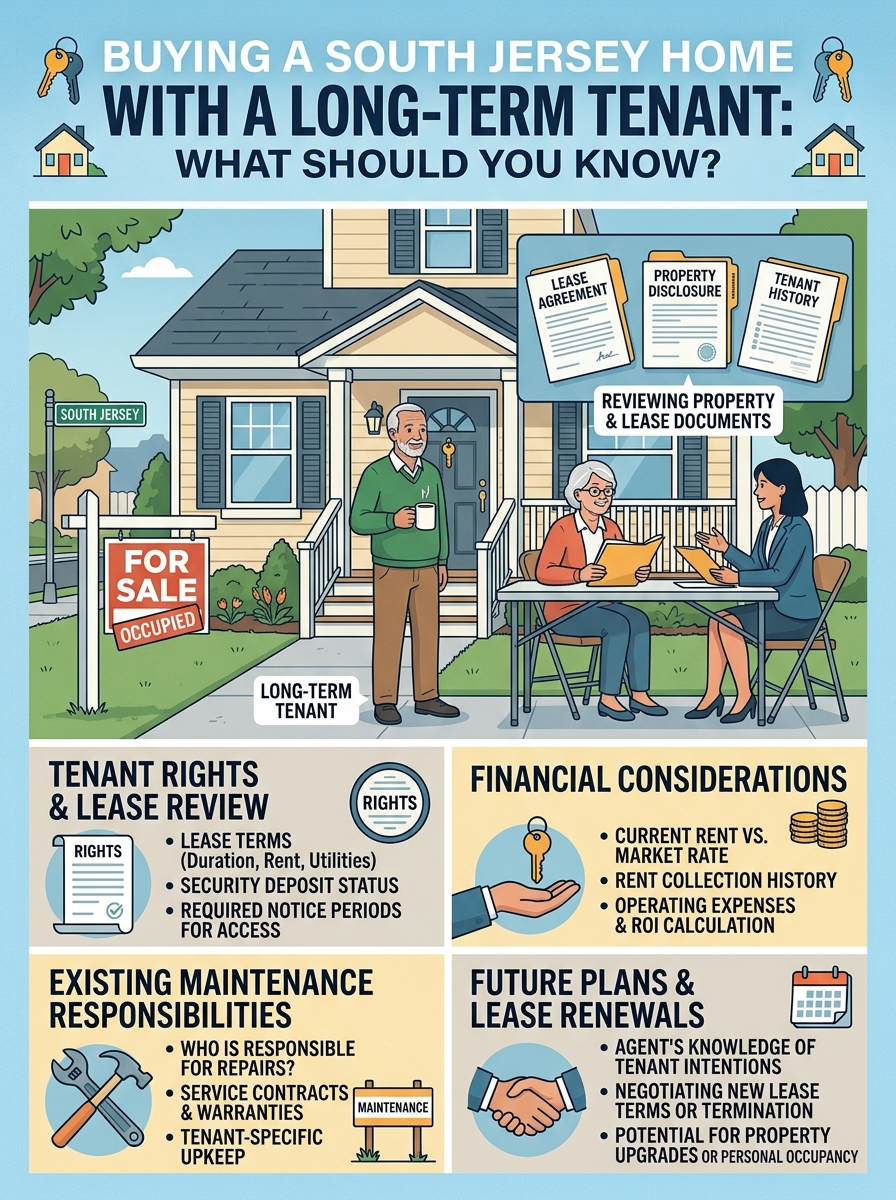
Finding a South Jersey home that already has a long-term tenant can be an interesting opportunity for buyers.
Instead of purchasing a vacant property and immediately searching for someone to rent it, you may be able to acquire a home with an existing occupant, an established rental arrangement, and income already coming in.
For investors, that can be appealing.
But purchasing an occupied property is very different from buying a home that will be available immediately after closing.
The existing tenant may have a lease, established rights, a security deposit, and an expectation that the rental arrangement will continue—even after ownership changes.
As Mary Murphy of The Murphy Group explains:
"A home with an existing tenant can offer an opportunity, but buyers need to understand the rental relationship they're inheriting. The purchase price is only one part of the decision. The lease, income, property condition, and tenant situation all matter."
Before making an offer on a tenant-occupied property in South Jersey, here are the important details to understand.
🏡 1. Understand What You're Actually Purchasing
When you purchase a home with a long-term tenant, you're acquiring more than the physical property.
You're also stepping into an existing landlord-tenant relationship.
That relationship may include:
- A written rental agreement
- A month-to-month tenancy
- An established rental payment schedule
- A security deposit
- Maintenance and repair responsibilities
- Existing agreements regarding utilities and property access
The first step is determining exactly what arrangement is currently in place.
Ask the seller for a complete copy of the lease and any written amendments, renewal agreements, or additional arrangements.
Do not rely solely on verbal explanations.
A tenant who has occupied the property for several years may have rights and protections that continue even if the original written lease has expired.
📄 2. Review the Existing Lease Before Making an Offer
The lease is one of the most important documents you'll review when purchasing a tenant-occupied property.
It explains the terms under which the tenant occupies the home and helps establish what responsibilities will transfer to the new owner.
Pay particular attention to:
- Monthly rent
- Lease expiration date
- Renewal provisions
- Security deposit amount
- Utility responsibilities
- Maintenance obligations
- Pet policies
- Parking arrangements
- Property access requirements
- Any special agreements between the landlord and tenant
Also determine whether the tenant is currently operating under a fixed-term lease or a month-to-month arrangement.
Why does this matter?
Because you may not have the flexibility to change the rental arrangement immediately after closing.
In New Jersey, a new owner generally takes the property subject to the existing lease terms. Even when a written lease has expired, a tenancy may continue on a month-to-month basis under the existing terms.
Have a New Jersey real estate attorney review the lease before you finalize the purchase.
💰 3. Verify the Actual Rental Income
A property advertised as having a long-term tenant may appear to offer immediate investment income.
However, buyers should verify the actual rental history instead of relying on the seller's projected numbers.
Request documentation showing:
- Current monthly rent
- Payment history
- Any outstanding balances
- History of late payments
- Existing rent credits or concessions
- Utility payments made by the tenant
- Any agreements for additional expenses
For example, a seller might advertise a property with monthly rent of $1,800.
That number alone does not tell you how profitable the investment will be.
You still need to account for:
- Property taxes
- Homeowners or landlord insurance
- Maintenance and repairs
- Utilities paid by the owner
- Property management
- Vacancy periods
- Capital improvements
- Potential legal and administrative expenses
The difference between rental income and actual operating expenses determines whether the property makes financial sense.
A long-term tenant can provide continuity, but rental income should always be evaluated against the property's complete ownership costs.
🧾 4. Find Out How Much the Security Deposit Is
The security deposit is another important detail that buyers should never overlook.
If the tenant paid a deposit to the previous owner, that deposit does not simply disappear when the property is sold.
New Jersey law establishes responsibilities for transferring security deposits when rental property changes ownership.
Under the state's Security Deposit Law, the former owner generally must transfer the deposit and applicable accrued interest to the new owner and notify the tenant. The new owner assumes responsibility for the deposit even if it was not properly transferred by the former owner.
Before closing, request:
- The original security deposit amount
- Documentation of any interest earned
- Records of the account holding the deposit
- Written confirmation of the transfer arrangement
- Any documentation of prior deductions or disputes
Make sure the purchase agreement and closing documentation clearly address the deposit.
You don't want to discover after closing that the tenant has a documented deposit claim that was never properly accounted for.
⚖️ 5. Understand New Jersey Tenant Rights
One of the biggest misconceptions buyers have is that purchasing a property automatically gives them the right to remove an existing tenant.
That is not necessarily true.
New Jersey has tenant protections under the Anti-Eviction Act, and many residential tenants cannot be removed simply because the property has been sold or a new owner wants different occupants.
The law generally requires a legally recognized reason and the appropriate court process before a protected tenant can be evicted.
This matters particularly when a buyer is purchasing a property with the intention of:
- Moving into the home
- Renovating the property
- Increasing the rent
- Changing the rental arrangement
- Selling the property again
Certain statutory exceptions may apply, including specific owner-occupancy situations involving houses or buildings with three or fewer residential units. However, these situations have legal requirements involving the type of ownership, notice, lease expiration, and the buyer's actual intention to occupy the property.
The important takeaway: Do not assume that a tenant can be required to leave simply because you purchased the home.
If you intend to occupy the property yourself, have a New Jersey landlord-tenant attorney evaluate the circumstances before signing a purchase agreement.
🏠 6. Determine Whether You Want an Investment Property or a Future Primary Residence
Your plans for the property should influence how you approach the purchase.
There is a major difference between buying a home to continue renting it and purchasing one because you eventually want to live there.
If you're buying as an investor:
You may be interested in:
- Keeping the existing tenant
- Maintaining rental income
- Improving the property gradually
- Increasing long-term investment value
- Managing the property yourself or hiring a professional
If you're buying as a future homeowner:
You need to consider:
- Whether the tenant has a fixed-term lease
- Whether the property can legally become available for your occupancy
- Whether the tenant has additional statutory protections
- Whether your intended move-in date is realistic
- Whether the purchase contract properly addresses possession
Never assume the property will be vacant at closing unless that requirement is clearly addressed in the purchase agreement and supported by a legally appropriate plan.
🔍 7. Inspect the Property Even If the Tenant Has Lived There for Years
A long-term tenant does not automatically mean a property has been well maintained.
In fact, a home that has been continuously occupied for many years may have maintenance issues that have accumulated gradually.
During the inspection process, pay attention to:
- Roof condition
- Heating and cooling systems
- Plumbing
- Electrical systems
- Windows and doors
- Basement moisture
- Foundation concerns
- Appliances included in the rental
- Exterior maintenance
- Signs of water damage
Ask the seller about previous repairs and request available maintenance records.
It is also important to coordinate property access properly. A tenant's occupancy does not eliminate their privacy rights, and inspections should be arranged in accordance with the lease and applicable notice requirements.
A professional inspection can help you understand what you're purchasing beyond the property's visible condition.
🧰 8. Review the History of Repairs and Maintenance
One of the most useful things a buyer can learn from a long-term rental property is how the previous owner managed it.
Ask for records involving:
- Plumbing repairs
- Roof replacements
- HVAC servicing
- Pest control
- Appliance replacements
- Water intrusion
- Electrical work
- General maintenance requests
Also ask whether the tenant has reported unresolved problems.
A seller may describe a property as well maintained, but maintenance records help establish what has actually been done.
If the tenant has occupied the home for ten or fifteen years, consider whether major systems and components may be approaching the end of their useful lives.
This information can help you prepare a more realistic ownership budget.
📍 9. Check Local Rental Registration and Inspection Requirements
New Jersey municipalities may have their own requirements for rental properties.
Depending on the municipality and property type, these may include:
- Rental registration
- Landlord registration
- Rental inspection programs
- Certificates or approvals required before occupancy
- Local property maintenance requirements
- Applicable zoning or occupancy restrictions
Requirements can differ between towns in Burlington, Camden, and Gloucester Counties.
Before closing, contact the appropriate municipal office to determine whether the property has outstanding rental-related requirements.
Ask whether:
- The property is currently registered as required
- Any inspections are overdue
- Open violations exist
- Outstanding permits or approvals need attention
- Additional requirements apply when ownership changes
Do not assume that a rental property that has been occupied for years is automatically current with every municipal requirement.
📊 10. Understand Whether Local Rent Control Rules Apply
Another important consideration is whether the municipality has rent-control regulations.
Some New Jersey municipalities have local rent-control ordinances that may limit how and when rent can be increased for covered rental properties.
The rules are not identical across the state.
Before purchasing, investigate:
- Whether the municipality has a rent-control ordinance
- Whether the property falls within its coverage
- Whether exemptions apply
- Whether previous rent increases were properly implemented
- Whether registration or annual filings are required
This can significantly affect your projected rental income.
A buyer who assumes they can immediately adjust the rent to market levels may discover that local rules impose additional restrictions.
Have your attorney or property management professional verify the applicable municipal requirements before relying on projected rent increases.
🤝 11. Understand the Relationship With the Existing Tenant
A long-term tenant can be an important part of a property's history.
They may have lived there for years, established routines, and developed expectations about how the property is maintained.
As the new owner, establishing clear and professional communication can make the transition easier.
Consider asking the seller to provide information about:
- The tenant's preferred communication method
- Maintenance request procedures
- Emergency contact arrangements
- Utility responsibilities
- Parking or storage agreements
- Existing maintenance concerns
You should also clarify who will collect rent after closing and how the tenant will receive the new owner's contact and payment information.
Avoid making promises about rent changes, repairs, or occupancy arrangements before reviewing the lease and applicable laws.
A respectful, organized transition benefits everyone involved.
🚪 12. Know the Rules for Entering an Occupied Property
Buyers sometimes assume that owning a rental property means they can enter whenever they want.
That is not how landlord-tenant relationships generally work.
A tenant's right to privacy continues after the property changes ownership.
The lease and applicable law should guide access for:
- Routine inspections
- Maintenance
- Repairs
- Contractor visits
- Property showings
- Emergency situations
Before closing, review the lease's access provisions and discuss the appropriate procedures with your attorney.
If you intend to make improvements, plan the work around lawful access requirements and the tenant's existing rights.
⚠️ 13. Consider the Risks of Buying a Property With an Existing Tenant
Although a tenant-occupied property may offer rental income, it also comes with responsibilities and potential challenges.
Some considerations include:
Uncertain payment history
A seller's stated rental income may not reflect the tenant's actual payment record.
Deferred maintenance
The property may need repairs that have not been addressed during the tenancy.
Existing lease restrictions
You may have limited flexibility to change rental terms during the lease.
Possession complications
If you intend to move in, the tenant's legal protections may affect your timeline.
Municipal compliance
Registration, inspection, and local rental requirements may create additional expenses.
Taxes, insurance, repairs, and management expenses can reduce the property's profitability.
These issues do not automatically make a tenant-occupied property a poor investment. They simply make due diligence especially important.
📋 14. A Buyer's Checklist Before Making an Offer
Before purchasing a South Jersey home with a long-term tenant, make sure you have reviewed the following:
Lease and occupancy
- Obtain a complete copy of the current lease.
- Confirm whether the tenancy is fixed-term or month-to-month.
- Review renewal provisions and additional agreements.
- Confirm the tenant's current occupancy status.
- Clarify whether the property is expected to remain occupied after closing.
Financial records
- Verify the current monthly rent.
- Review available payment records.
- Identify any unpaid rent or outstanding balances.
- Confirm the security deposit amount.
- Review operating expenses and maintenance costs.
Property condition
- Schedule a professional home inspection.
- Review maintenance and repair records.
- Evaluate major systems and appliances.
- Identify unresolved maintenance requests.
- Obtain estimates for significant repairs.
Legal and municipal requirements
- Have a New Jersey attorney review the lease.
- Verify applicable tenant protections.
- Check municipal rental registration requirements.
- Investigate local rent-control rules.
- Confirm security deposit transfer arrangements.
Your plans
- Determine whether you intend to rent or occupy the property.
- Establish a realistic timeline.
- Evaluate the property's long-term financial potential.
- Make sure the purchase agreement addresses tenant occupancy.
💼 How The Murphy Group Helps Buyers Navigate Tenant-Occupied Properties
At The Murphy Group, evaluating a property means looking beyond the listing price and the home's physical features.
A tenant-occupied property requires buyers to consider the financial, legal, and practical details that come with an existing rental arrangement.
The Murphy Group helps clients:
- Identify important questions to ask before making an offer
- Understand the significance of existing lease agreements
- Evaluate rental income and property condition
- Recognize potential maintenance and ownership expenses
- Coordinate appropriate inspection and due diligence steps
- Work with qualified professionals to clarify legal and municipal considerations
"The right property should make sense beyond the purchase price," Mary says. "Understanding the tenant situation, the property's condition, and your long-term plans helps buyers make more informed decisions."
📊 The Bottom Line
Buying a South Jersey home with a long-term tenant can offer an opportunity for investors and buyers interested in rental income.
However, the existing tenancy is an important part of the transaction.
Before moving forward, make sure you understand:
- The current lease and rental arrangement
- The tenant's legal protections
- The actual rental income and payment history
- The security deposit and transfer requirements
- The property's maintenance history
- Local rental registration and rent-control rules
- Whether your intended use aligns with the tenant's rights
A tenant-occupied home is not simply a property with someone living inside. It is a property with an existing legal and financial relationship that the buyer must understand before closing.
The more thoroughly you investigate that relationship, the better prepared you'll be for ownership.
📲 Thinking About Buying a Home in South Jersey?
Whether you're considering an investment property, a tenant-occupied home, or a property you eventually hope to make your own, The Murphy Group can help you navigate the real estate process with greater confidence.
👉 Start here: www.mgsells.com
🖼️ ALT Text (Featured Image)
Alt Text: A South Jersey residential rental home with a long-term tenant standing near the front entrance while a prospective buyer reviews property and lease documents, illustrating the considerations involved in purchasing an occupied home, overlaid with the text: “Buying a South Jersey Home With a Long-Term Tenant: What Should You Know?”

Mary Murphy
Team Leader | The Murphy Group | eXp Realty, LLC | PLACE
or another way