

Categories
homeowners insurance NJ, Burlington County, Camden County, Gloucester County, Home Buying Guides, Real Estate Guides, South Jersey Market Trends, South Jersey Real Estate, Home Buying TipsPublished September 30, 2026
Why Some South Jersey Homes Have Higher Property Insurance Costs Than Others

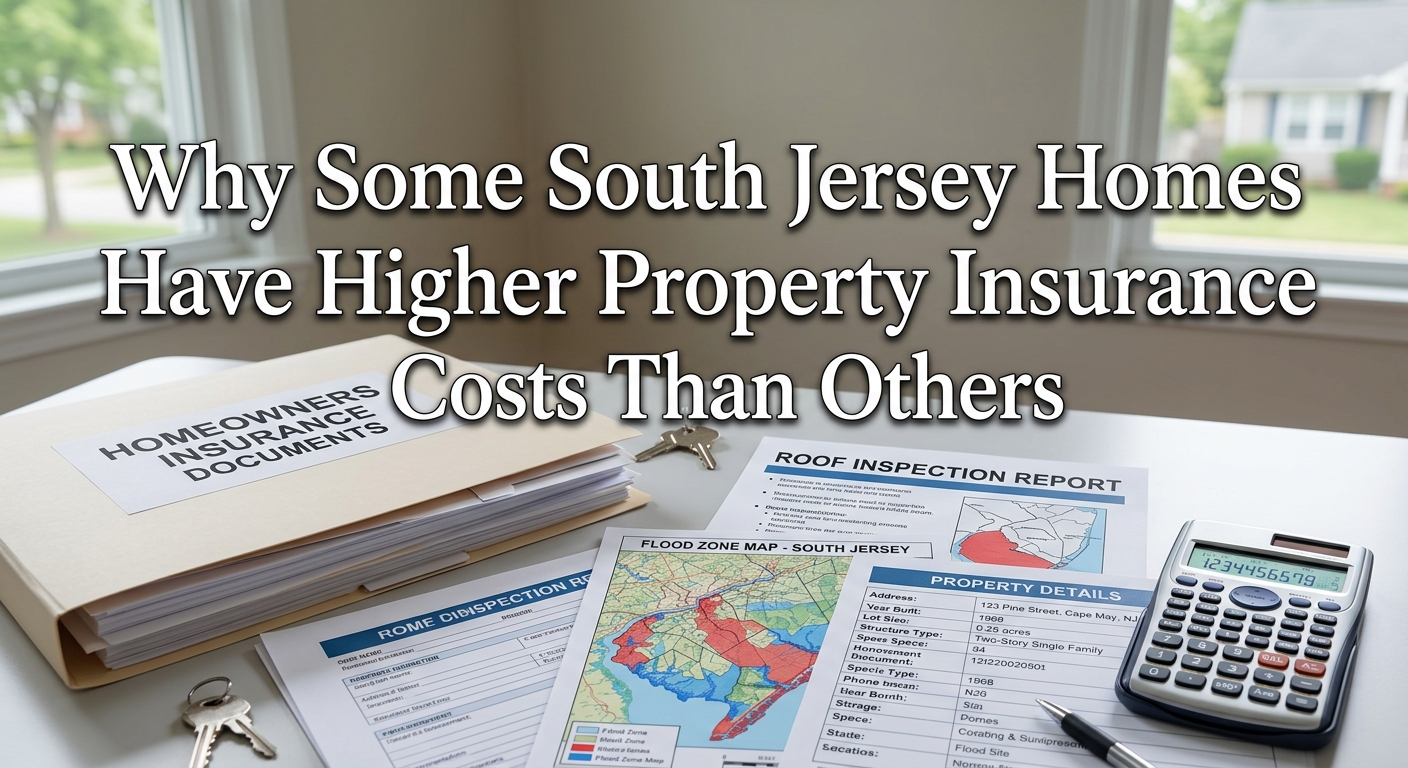
Two South Jersey homes can sell for nearly the same price and still have very different insurance costs.
One buyer might receive a relatively straightforward homeowners insurance quote.
Another buyer might discover a much higher premium, a larger deductible, additional coverage requirements, or difficulty finding the coverage they want.
Why?
Because insurance companies don't price homes based solely on their sale price.
They consider the property's characteristics, location, construction, age, potential risks, coverage needs, and other underwriting factors.
The New Jersey Department of Banking and Insurance notes that insurers can vary significantly in pricing and that quote information can include the home's construction, age, square footage, location, distance from fire protection, desired coverage, and deductibles.
For buyers, that creates an important lesson:
👉 The cost of insuring a home should be part of the home-buying decision—not something discovered after an offer is accepted.
As Mary Murphy of The Murphy Group explains:
“Two homes can look similar on a listing page but have very different ownership costs. Insurance is one of those expenses buyers should understand before they decide what a home is really going to cost them.”
🏡 1. The Age of the Home Can Affect Insurance Costs
South Jersey has a wide range of housing stock, from newer construction to homes that are decades or even centuries old.
Age alone doesn't automatically make a property expensive to insure.
But older homes can have older components that insurers may evaluate differently.
These can include:
- Electrical systems
- Plumbing
- Roofing
- Heating systems
- Windows
- Structural components
- Exterior materials
New Jersey's consumer home-buying guidance specifically identifies older wiring and plumbing as potential underwriting considerations.
A well-maintained older home with documented updates may present a very different insurance profile from an older property with several aging systems.
🏠 2. The Roof Can Make a Major Difference
The roof is one of the most important components protecting a home from weather-related damage.
Its:
- Age
- Material
- Condition
- Remaining useful life
- Installation history
can all become relevant when an insurer evaluates a property.
A buyer may see a beautiful home with updated flooring and a renovated kitchen.
But if the roof is nearing the end of its expected life, the insurance conversation may look very different.
That is why buyers shouldn't evaluate renovations only by what is visually appealing.
Some of the most important updates are the ones they barely notice.
⚡ 3. Electrical and Plumbing Systems Matter
A renovated kitchen doesn't necessarily mean the entire house has been modernized.
An older property may have:
- Updated kitchen finishes
- New flooring
- Fresh paint
while still retaining older electrical or plumbing components.
New Jersey's Department of Banking and Insurance specifically notes that older wiring and plumbing can be risk factors under insurers' underwriting guidelines.
This doesn't mean every older system creates an insurance problem.
It means buyers should find out what has actually been updated.
🔥 4. Distance From Fire Protection Can Matter
Location affects more than commute times and neighborhood convenience.
Insurance companies may also consider the property's proximity to fire protection.
New Jersey DOBI's home insurance guidance says insurers may request information about the distance from the nearest fire department and fire hydrant when preparing a quote.
This is one reason two properties in different locations can receive different insurance pricing even when their purchase prices are similar.
🌧️ 5. Flood Exposure Can Change the Insurance Picture
For South Jersey buyers, flood risk deserves special attention.
A property's proximity to waterways, drainage patterns, elevation, and mapped flood areas can affect the insurance conversation.
And there is an important distinction:
Standard homeowners insurance generally does not cover flood damage.
New Jersey DOBI advises consumers that flood insurance is separate from standard homeowners coverage.
That means a buyer evaluating a property with potential flood exposure should understand both:
- The homeowners insurance cost
- Any additional flood insurance considerations
A low-priced home can look affordable until the full insurance picture is calculated.
🌊 6. Being Near Water Doesn't Tell the Whole Story
Buyers sometimes make assumptions based solely on whether a property is near a river, creek, lake, or other waterway.
But insurance considerations are more nuanced.
Two properties in the same general area can have different characteristics.
For example:
- Different elevations
- Different foundations
- Different drainage
- Different flood-zone classifications
- Different construction
- Different prior claims
So buyers shouldn't rely on a simple rule such as:
“It's near water, so insurance will be expensive.”
Instead, they should obtain an actual insurance quote and investigate the property's specific risk profile.
🛢️ 7. Underground Oil Tanks Can Create Additional Questions
Oil-heated homes are part of South Jersey's housing landscape, particularly among older properties.
An underground heating oil storage tank can become an important due-diligence issue for both buyers and insurers.
New Jersey's home-buying guidance specifically identifies underground heating oil storage tanks among property risk factors that may require buyers to contact multiple insurers or satisfy additional underwriting requirements.
For a buyer considering an older South Jersey home, questions about the property's heating system and any existing or removed oil tank should be addressed early.
The issue isn't simply:
“Does the home have oil heat?”
It may also be:
“What is the history of the property's oil tank and heating system?”
🏊 8. Pools and Other Features Can Affect the Insurance Picture
A swimming pool can be a major lifestyle feature.
It can also introduce additional liability considerations.
New Jersey DOBI lists swimming pools among property characteristics that can be relevant to insurers' underwriting guidelines.
Other property features may also influence coverage needs, including:
- Detached garages
- Workshops
- Outbuildings
- Large decks
- Fences
- Specialty structures
- Certain recreational features
The presence of these features doesn't automatically mean a property will be expensive to insure.
But buyers should make sure the quote reflects the actual property.
🌳 9. Trees and Property Features Can Add Another Layer
Mature trees can be one of the most attractive features of a South Jersey property.
They can provide:
- Shade
- Privacy
- Character
- Landscaping value
But large or aging trees can also create maintenance and weather-related considerations.
Branches can damage roofs, vehicles, fences, and other structures during severe weather.
For buyers, the important question isn't whether a property has trees.
It's whether the landscaping is properly maintained and whether there are obvious hazards that should be addressed.
🧱 10. Construction Materials Matter
Insurance companies don't evaluate every home as though it were built the same way.
Construction can affect the risk profile and replacement considerations.
New Jersey DOBI's insurance guidance specifically asks applicants to provide information about what the house is made of, such as wood, brick, or other materials.
Buyers should therefore pay attention to:
- Exterior construction
- Roof material
- Foundation
- Attached structures
- Detached structures
- Overall building design
Again, there isn't a universal rule that one construction type is always cheaper to insure.
The property needs to be evaluated individually.
💨 11. Wind and Storm Coverage Can Affect Costs
New Jersey homeowners policies generally provide coverage for certain windstorm and hail losses, but policies can include specific deductibles or restrictions.
The state's extreme-weather guidance notes that some policies may have separate wind/hail deductibles and that hurricane deductibles may also apply.
That means buyers shouldn't ask only:
“What is the annual premium?”
They should also ask:
“What deductibles and exclusions apply?”
A lower premium isn't necessarily a better comparison if the coverage structure is substantially different.
💵 12. Replacement Cost Is Different From the Purchase Price
This is a major concept buyers sometimes overlook.
A home's market value and its insurance replacement cost are not necessarily the same number.
The purchase price reflects what the property is worth in the real estate market.
Replacement coverage is concerned with the cost of repairing or rebuilding covered property according to the policy terms.
Those numbers can differ substantially.
New Jersey DOBI recommends making sure the home is insured for its full replacement cost and notes that remodeling or new construction can increase replacement cost.
So a buyer shouldn't assume:
“I paid $450,000, so insurance should be based on $450,000.”
The insurance calculation is more complicated than that.
📋 13. Previous Claims Can Influence Underwriting
A property's insurance history can also matter.
A home that has experienced previous losses may receive additional scrutiny during the insurance process.
New Jersey's consumer home-buying guide specifically identifies a history of claims as one factor that may affect underwriting and notes that some properties with certain risk factors may need to contact multiple insurers.
This is another reason buyers shouldn't wait until the final stages of the transaction to explore insurance.
If a property presents underwriting challenges, finding that out early gives everyone more time to respond.
🏚️ 14. Renovations Can Help—or Create More Questions
A renovated property isn't automatically cheaper to insure.
But documented improvements can provide useful information about the home's current condition.
Buyers should find out whether major work has been completed on:
- Roof
- Electrical
- Plumbing
- HVAC
- Windows
- Exterior
- Foundation
- Additions
The more clearly the home's improvements are documented, the easier it can be for buyers and insurance professionals to understand what they're insuring.
The important thing is not simply that the listing says:
“Fully renovated.”
The question is:
“What was actually renovated, when, and how?”
🔍 15. Location Can Affect Insurance Even When the Homes Look Similar
Two homes can have similar:
- Square footage
- Bedrooms
- Bathrooms
- Purchase prices
and still have different insurance costs.
Why?
Because the insurance risk isn't necessarily identical.
One may have:
- Different flood exposure
- Different fire protection access
- Different construction
- Different roof condition
- Different claims history
- Different surrounding risks
That's why comparing insurance costs based on another home down the street isn't always reliable.
The quote needs to be based on the specific property.
📊 16. Insurance Companies Can Price the Same Home Differently
Another important point for buyers:
One insurance quote isn't necessarily the only possible quote.
New Jersey DOBI recommends comparison shopping and notes that insurance companies can vary significantly in both price and service. It also recommends comparing policies using the same deductibles and levels of coverage.
That means buyers should avoid comparing:
Company A: $1,800 premium with one deductible
against
Company B: $2,100 premium with a different deductible and coverage structure
without examining what each policy actually provides.
The lowest number isn't necessarily the best comparison.
🧾 17. Deductibles Can Change the Real Cost
A policy's premium is only one part of the equation.
The deductible matters too.
A higher deductible can affect the buyer's out-of-pocket responsibility when a covered loss occurs.
New Jersey DOBI specifically advises consumers to compare quotes using the same deductibles and coverage levels.
So when buyers receive an insurance quote, they should understand:
- Annual premium
- Deductible
- Coverage limits
- Exclusions
- Special deductibles
- Additional coverage
This creates a much more useful comparison.
🏠 18. Condo and Townhome Buyers Need to Look at the Association Too
Insurance isn't only a single-family-home issue.
For condos and some townhomes, buyers may also need to understand what the association's master policy covers and what the individual homeowner is responsible for.
That can include questions about:
- Exterior structures
- Roof
- Common areas
- Interior improvements
- Liability
- Association deductibles
- Additional assessments
The individual policy and association coverage should be understood together.
⚠️ 19. A Low Insurance Quote Isn't Automatically Better
Just as a low home price isn't necessarily a bargain, a low insurance premium isn't automatically the best option.
A buyer should ask:
What coverage am I receiving for that price?
Compare:
- Coverage limits
- Deductibles
- Exclusions
- Replacement-cost provisions
- Additional coverage
- Flood coverage
- Wind/hurricane provisions
The goal is not simply to minimize the insurance bill.
It's to understand the protection being purchased.
🧠 20. What Buyers Should Ask Before Making an Offer
Insurance should become part of the buyer's due-diligence checklist.
Before committing to a property, consider asking:
About the home
- How old is the roof?
- What type of construction is it?
- How old are the electrical and plumbing systems?
- What heating system does it use?
- Are there known water or drainage issues?
About the property history
- Have there been major insurance claims?
- Has the property experienced flooding or water damage?
- Is there an underground oil tank?
- Have major renovations been completed?
About coverage
- What does homeowners insurance cost?
- What deductible applies?
- Is flood insurance worth considering?
- Are there special wind or hurricane deductibles?
- Are detached structures adequately covered?
About comparison
- Have multiple insurance companies been contacted?
- Are the quotes based on the same coverage?
- Are the deductibles comparable?
Getting these answers early can prevent unpleasant surprises later.
💼 How The Murphy Group Helps Buyers Look Beyond the Listing Price
At The Murphy Group, understanding a home's affordability means looking beyond the number on the listing.
That includes helping buyers recognize questions that may affect the property's total ownership cost.
Their approach can include:
- Encouraging early insurance research
- Identifying property characteristics buyers should investigate
- Helping buyers compare homes beyond asking price
- Coordinating with appropriate professionals when insurance questions arise
- Helping clients understand how property condition and location fit into the bigger financial picture
As Mary Murphy explains:
“Buyers shouldn't look at insurance as a last-minute paperwork item. It's part of understanding what owning the home will really cost.”
📋 South Jersey Home Insurance Checklist
Before moving forward with a property, buyers can ask:
☐ What is the estimated homeowners insurance premium?
☐ What deductible applies?
☐ Is flood insurance a consideration?
☐ How old is the roof?
☐ What is the home's construction type?
☐ How old are the electrical and plumbing systems?
☐ What type of heating system does the property use?
☐ Is there an underground oil tank?
☐ Are there swimming pools, detached structures, or large decks?
☐ How close is the property to fire protection?
☐ Are there known drainage or water concerns?
☐ Does the property have a relevant claims history?
☐ Have major renovations been completed?
☐ Are multiple insurance quotes being compared using equivalent coverage?
📈 The Bottom Line
South Jersey homes can have very different property insurance costs even when their prices look similar.
The difference can come from:
- Home age
- Roof condition
- Construction
- Electrical and plumbing systems
- Fire protection access
- Flood exposure
- Oil tanks
- Pools and other property features
- Claims history
- Replacement-cost considerations
- Coverage and deductible choices
New Jersey's insurance regulators emphasize that consumers should compare policies carefully and understand both coverage and exclusions.
The most important takeaway for buyers is simple:
👉 Don't calculate affordability using the mortgage payment alone.
Property taxes, insurance, maintenance, utilities, and potential repairs can all contribute to the real cost of ownership.
And before assuming a South Jersey home fits your budget, get the insurance information for that specific property.
📲 Thinking About Buying a South Jersey Home?
The Murphy Group helps buyers look beyond the listing price and understand the factors that can affect the total cost of owning a home—from condition and location to taxes, insurance, and long-term considerations.
👉 Start here: www.mgsells.com

Mary Murphy
Team Leader | The Murphy Group | eXp Realty, LLC | PLACE
or another way