

Categories
Housing Guide, housing trend, Real Estate Market Insights, Real Estate Guides, South Jersey Real Estate, South Jersey Relocation Trends, Home Buying GuidesPublished June 3, 2026
Why similar homes in the same zip code are selling at very different speeds

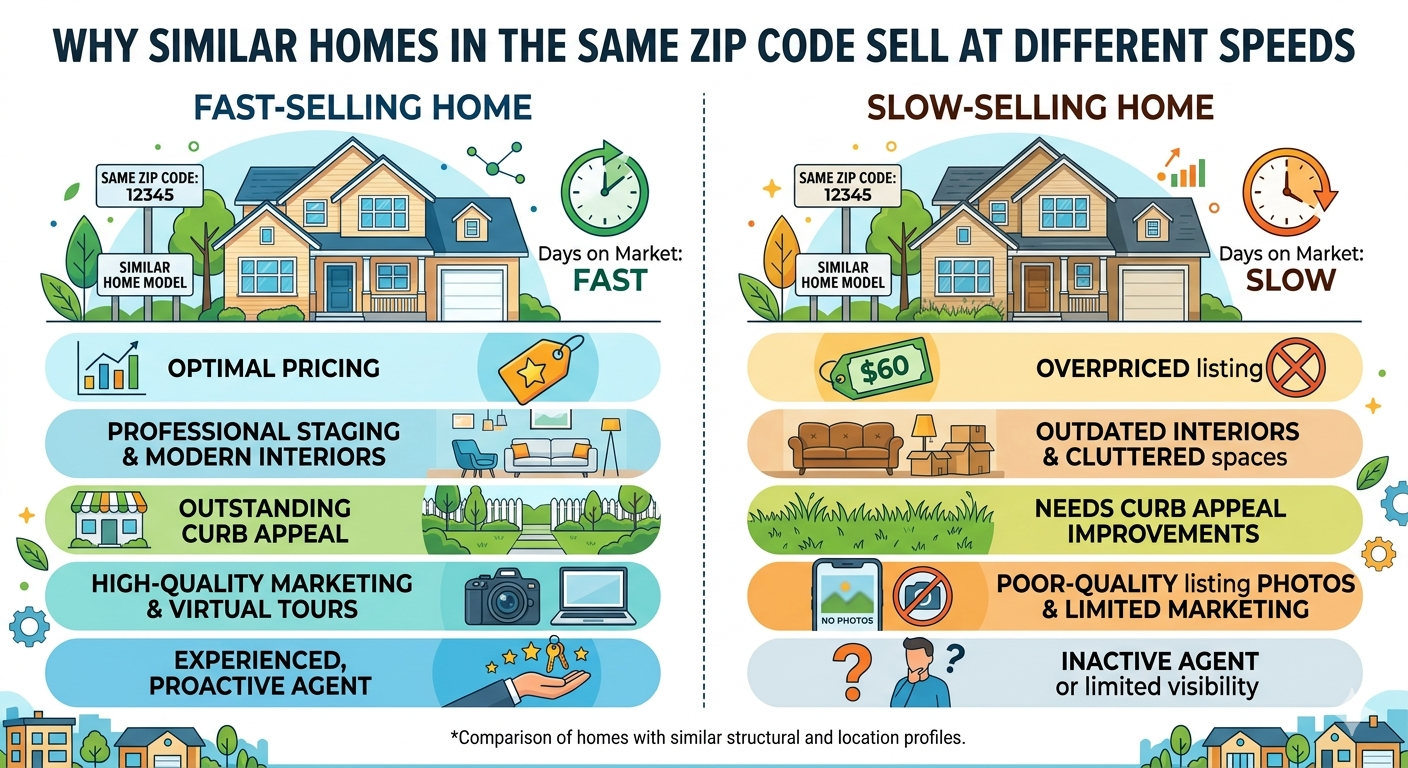
On paper, it doesn’t always make sense.
Two homes.
Same ZIP code.
Similar square footage.
Comparable pricing.
Yet one sells in days…
and the other sits for weeks or months.
So what’s going on?
In South Jersey’s 2026 market, time on market is no longer defined by location alone—it’s defined by how quickly buyers can process value, trust, and fit.
As Mary Murphy of The Murphy Group explains:
“In the same ZIP code, homes don’t compete equally. They compete on clarity, condition, and buyer confidence.”
🧠 The Key Truth: Buyers Don’t Shop by ZIP Code Anymore
ZIP codes used to be the primary filter.
Now buyers think in layers:
- Neighborhood
- Street
- Condition
- Price alignment
- Lifestyle fit
That means two homes in the same ZIP code may actually exist in completely different “buyer pools.”
📈 Why Some Homes Sell Faster Than Others
1. Pricing Alignment With Buyer Expectations
The biggest driver of speed is not price level—it’s price accuracy.
When a home is:
- Slightly overpriced → buyers hesitate
- Correctly priced → buyers act quickly
- Underpriced → competition accelerates
Even small misalignments can slow momentum dramatically.
2. Condition Creates Instant Yes or No Decisions
Buyers today make fast judgments based on perceived effort required.
Fast-selling homes usually feel:
- Move-in ready
- Clean and well-maintained
- Visually updated in key areas
Slower homes often require mental “repair budgeting,” which slows decisions.
3. Listing Presentation Changes Perception
In today’s market, most decisions begin online.
Homes with:
- Strong photography
- Clear room flow
- Good lighting
- Lifestyle-focused staging
tend to generate faster engagement and showings.
Poor presentation creates hesitation—even for great homes.
4. Micro-Location Inside the ZIP Code Matters More Than Ever
Even within the same ZIP code, buyers notice differences like:
- Proximity to busy roads
- School district boundaries
- Street appearance
- Nearby amenities
- Noise levels or traffic flow
Two homes can feel very different even a few blocks apart.
5. Buyer Confidence in the Listing Story
Fast-selling homes tell a clear story:
👉 “This is what you’re getting. It makes sense. It’s worth it.”
Slow-selling homes often create uncertainty:
👉 “Is this priced right? Does it need work? What am I missing?”
Uncertainty slows action more than almost anything else.
🏡 Why “Similar” Homes Are Not Actually Competing Equally
From a distance, homes may look similar:
- Same bed/bath count
- Similar square footage
- Comparable tax brackets
But buyers are not comparing spreadsheets—they are comparing experiences.
And experience differences can be subtle but powerful:
- Layout flow
- Natural light
- Renovation quality
- Outdoor usability
- Perceived upkeep
Those details change speed dramatically.
⚠️ The Silent Factor: Days 1–10 Matter Most
In today’s South Jersey market, the first days on market set the tone.
Fast early activity usually leads to:
- Stronger offers
- Faster contract timelines
- Less negotiation pressure
Slow early activity often signals:
- Overpricing concerns
- Buyer hesitation
- Need for adjustments
Once momentum is lost, recovery takes time.
🧠 The Psychology Behind Speed Differences
Buyers are constantly balancing:
- Fear of overpaying
- Fear of missing a good home
- Desire to avoid renovation surprises
- Need for lifestyle certainty
Homes that reduce those fears quickly move faster.
Homes that amplify them slow down.
💼 How The Murphy Group Diagnoses Speed Gaps
At The Murphy Group, analyzing why similar homes sell at different speeds involves more than surface-level comparisons.
Their approach includes:
- Micro-market pricing analysis within ZIP codes
- Buyer behavior tracking by neighborhood
- Presentation and perception audits
- Days-on-market trend interpretation
- Identifying hidden friction points in listings
“Speed isn’t random,” Mary says. “It’s a reflection of how quickly a home answers buyer questions.”
📊 The Bottom Line
In South Jersey’s 2026 market, homes in the same ZIP code can sell at very different speeds because:
- Buyers evaluate micro-locations, not just ZIP codes
- Pricing precision matters more than price level
- Presentation and condition drive urgency
- Buyer confidence determines action speed
And ultimately:
👉 Time on market is no longer about where a home is—it’s about how easily it can be understood.
📲 Want to Know Why Your Home Might Sell Faster—or Slower—Than Nearby Listings?
The Murphy Group helps South Jersey sellers understand exactly what drives demand, speed, and buyer response in today’s market.
👉 Start here: www.mgsells.com

Mary Murphy
Team Leader | The Murphy Group | eXp Realty, LLC | PLACE
or another way