

Categories
South Jersey Real Estate, South Jersey Market Trends, Gloucester County, Burlington County, Camden County, Housing Guide, Home Buying TipsPublished June 8, 2026
What makes buyers emotionally disconnect from a home after loving it

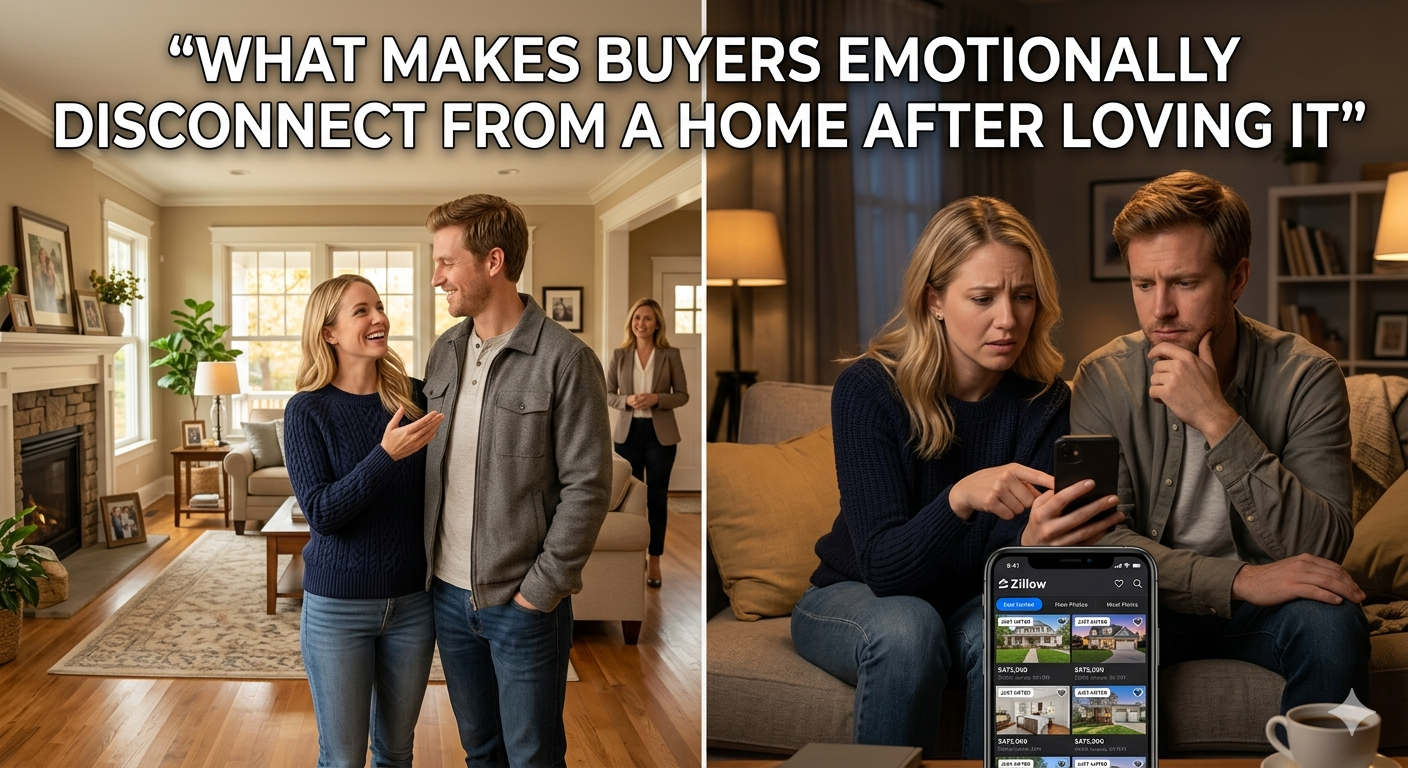
One of the most frustrating moments in real estate is when everything seems to be going right.
Buyers tour a home.
They love it.
They talk about it like it’s “the one.”
They imagine life there.
And then… something changes.
Interest fades.
Messages slow down.
Another home suddenly takes priority.
The emotional connection that felt so strong just days earlier seems to disappear.
As Mary Murphy of The Murphy Group explains:
“Buyers rarely lose interest for one dramatic reason. It’s usually a slow shift where excitement gets replaced by uncertainty.”
🧠 Emotional Disconnect Doesn’t Happen Suddenly
Buyers don’t typically wake up and decide they dislike a home.
Instead, emotional disconnect builds gradually through:
- Comparison
- Doubt
- External influence
- Information overload
- Cooling emotional momentum
What once felt like a clear “yes” becomes a hesitant “maybe.”
🏡 1. New Listings Interrupt Emotional Momentum
One of the most common causes of disconnection is continued searching.
Even after loving a home, buyers often:
- Keep browsing listings
- Attend additional showings
- Compare similar properties
When a new option feels slightly better, the emotional focus shifts.
The original home doesn’t change—but the perception of it does.
🧠 2. Distance Weakens Emotional Attachment
Time plays a major role in decision-making.
After a showing:
- Excitement is high
- Emotional clarity feels strong
- Confidence is immediate
But as time passes:
- Details blur
- Doubts emerge
- Comparison increases
Without reinforcement, emotional intensity naturally declines.
💰 3. Price Re-evaluation Creates Doubt
After leaving a home, buyers often revisit:
- Market conditions
- Comparable sales
- Budget alignment
- Interest rate impact
Even small shifts in perception can cause reconsideration.
The question becomes:
👉 “Is it really worth it?”
🧠 4. Outside Opinions Change the Narrative
Once a buyer shares excitement with others, new perspectives enter the decision.
Friends or family may ask:
- “Are you sure about that price?”
- “Did you check other areas?”
- “What about future resale value?”
Even neutral comments can introduce hesitation.
🏡 5. Mental “Flaw Magnification” After the Visit
During a showing, emotions are dominant.
Afterward, logic takes over—and logic replays details more critically:
- A small layout concern
- Minor cosmetic issues
- Slight uncertainty about upgrades
What was once overlooked becomes more noticeable in hindsight.
📍 6. Competing Homes Reset Expectations
If buyers see another home afterward that feels:
- More updated
- Better priced
- More spacious
- Better staged
it can reset their emotional baseline.
Suddenly, the original home feels less compelling—not because it changed, but because comparison did.
🧠 7. Lack of Urgency Reduces Commitment
If buyers don’t feel competitive pressure, emotional attachment weakens over time.
Without urgency:
- Decisions are delayed
- Interest cools naturally
- Other homes take priority
What felt like a strong connection becomes a flexible option.
⚠️ 8. Unanswered Questions Create Emotional Distance
Even small uncertainties can grow in the buyer’s mind:
- “How old is the roof again?”
- “What’s the noise like at night?”
- “Did we miss something?”
Uncertainty doesn’t always stop interest—but it weakens emotional conviction.
🧠 Why Emotional Disconnect Is So Common Today
In South Jersey’s 2026 market:
- Buyers have more listings to compare
- Decision timelines are longer
- Information is constantly accessible
- Alternatives are always one click away
That environment makes emotional consistency harder to maintain.
📈 The Key Pattern Behind It All
Buyers rarely lose interest because a home becomes less appealing.
They lose interest because:
👉 something else becomes more mentally available, more recently seen, or easier to compare.
Emotion shifts with attention.
💼 How The Murphy Group Helps Buyers Stay Confident
At The Murphy Group, guiding buyers is not just about finding homes—it’s about helping them evaluate emotional signals clearly.
Their approach includes:
- Helping buyers understand true value beyond comparison noise
- Reducing hesitation caused by over-analysis
- Identifying when a home genuinely fits long-term goals
- Keeping decisions aligned with both logic and emotion
- Supporting confidence through the offer process
“The goal isn’t just to find a home a buyer likes,” Mary says. “It’s to help them recognize when they’ve already found it.”
📊 The Bottom Line
Buyers emotionally disconnect from homes they once loved because of:
- Ongoing comparison with new listings
- Emotional cooling over time
- Outside influence and opinions
- Price re-evaluation
- Uncertainty and unanswered questions
And in today’s market:
👉 Emotional attachment is fragile—and easily replaced by the next best option seen.
📲 Thinking About Buying or Selling in South Jersey?
The Murphy Group helps clients navigate both emotional and market-driven decisions so strong opportunities aren’t lost to hesitation or comparison drift.
👉 Start here: www.mgsells.com

Mary Murphy
Team Leader | The Murphy Group | eXp Realty, LLC | PLACE
or another way