

Categories
Burlington County, Camden County, Gloucester County, South Jersey Real Estate, New Jersey Real Estate, NJ Housing, Home Buying Guides, Home Buying TipsPublished June 22, 2026
What Makes a Neighborhood Feel Like Home to Today's Buyers

In today’s South Jersey market, buyers don’t just evaluate homes—they evaluate neighborhoods.
And increasingly, the decision isn’t purely logical.
It’s emotional.
Before buyers analyze square footage, upgrades, or price per square foot, they often ask a quieter question:
“Can I see myself living here every day?”
That feeling—more than any single feature—is what determines whether a neighborhood feels like home.
As Mary Murphy of The Murphy Group explains:
“Buyers can change a house. What they can’t easily change is how a neighborhood makes them feel when they turn onto the street.”
🧠 “Home” Starts Before the Front Door
The emotional experience begins well before buyers step inside a property.
It starts with:
- The drive into the neighborhood
- The condition of surrounding homes
- The sound and pace of the area
- The overall sense of calm or activity
Within minutes, buyers are already forming a judgment: stay or move on.
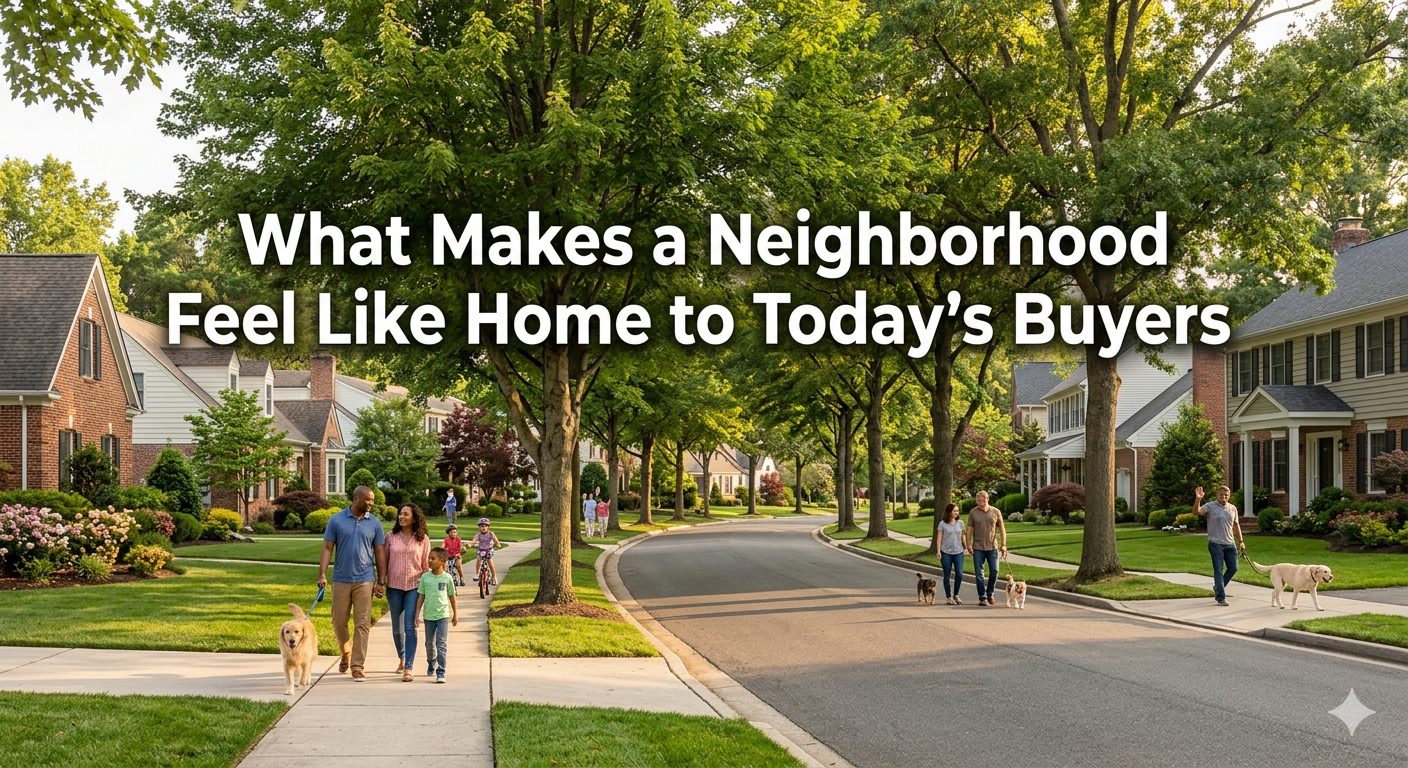
🌳 1. Tree-Lined Streets Create Instant Comfort
One of the strongest emotional signals for buyers is greenery.
Neighborhoods with mature trees often feel:
- Established
- Stable
- Peaceful
- Visually balanced
This creates an immediate sense of comfort that sets the tone for everything else.
Even modest homes feel more desirable in well-landscaped surroundings.
🏡 2. Pride of Ownership Builds Trust
Buyers naturally scan the surrounding homes for cues.
They notice:
- Well-kept lawns
- Fresh paint and exterior maintenance
- Clean driveways and sidewalks
- Consistent upkeep across properties
When a neighborhood shows pride of ownership, buyers feel more confident about long-term value and stability.
🚶 3. Walkability Adds Emotional Ease
The ability to walk through a neighborhood changes how it feels.
Access to:
- Parks
- Sidewalks
- Trails
- Nearby cafés or shops
creates a sense of convenience and lifestyle enjoyment that goes beyond the home itself.
Walkability often translates into emotional attachment.
🌅 4. Quiet Streets Feel Like a Reset Button
Many buyers are actively seeking peace in their daily environment.
Neighborhoods with:
- Low traffic
- Minimal noise
- Calm surroundings
help create a sense of relaxation and safety.
That feeling of “slowing down” is often interpreted as “this feels like home.”
🏫 5. Community Reputation Shapes Confidence
Even before interacting with neighbors, buyers absorb reputation signals.
They pay attention to:
- School district perception
- Community stability
- Local pride and engagement
- Long-term desirability
A strong community identity makes buyers more comfortable committing.
🧠 6. Familiarity Creates Instant Emotional Connection
Many buyers are drawn to neighborhoods that feel familiar—even if they’ve never lived there.
This can come from:
- Similar architectural styles
- Comfortable suburban layouts
- Familiar street patterns
- Recognizable home designs
Familiarity reduces uncertainty, which increases emotional comfort.
🛍️ 7. Everyday Convenience Reinforces Belonging
When essential destinations are nearby, the neighborhood feels more livable.
Buyers value proximity to:
- Grocery stores
- Schools
- Medical services
- Restaurants
- Commute routes
Convenience reinforces the feeling that life would run smoothly there.
🧠 8. Subtle Emotional Cues Matter More Than Features
Buyers often can’t articulate why a neighborhood feels right.
It’s usually a combination of:
- Lighting and atmosphere
- Cleanliness and upkeep
- Noise levels
- Street rhythm and pace
- Overall visual harmony
These subtle cues shape emotional response faster than any listing description.
⚠️ Why Some Neighborhoods Never Fully Connect
Even if homes are beautiful, buyers may hesitate when a neighborhood feels:
- Too chaotic or busy
- Inconsistent in upkeep
- Lacking visual cohesion
- Unfamiliar or uncertain
- Disconnected from daily needs
When emotional comfort doesn’t form quickly, buyers often move on.
📈 Why This Matters More in Today’s Market
In South Jersey’s 2026 housing landscape:
- Buyers are making faster decisions
- Competition still exists in desirable areas
- First impressions form in seconds
- Emotional response often precedes analysis
That means neighborhood feel can influence decisions before a showing is even scheduled.
💼 How The Murphy Group Helps Buyers Identify the Right Neighborhood Feel
At The Murphy Group, neighborhood evaluation is treated as seriously as the home itself.
Their approach includes:
- Helping buyers understand micro-neighborhood differences
- Identifying lifestyle fit beyond listing data
- Evaluating long-term neighborhood stability
- Guiding clients toward areas that match daily living preferences
- Highlighting emotional and practical factors together
“A home can be renovated,” Mary says, “but the feeling of a neighborhood is something buyers either connect with—or they don’t.”
📊 The Bottom Line
A neighborhood feels like home to today’s buyers when it offers:
- Tree-lined streets and visual comfort
- Pride of ownership
- Walkability and convenience
- Quiet, low-stress environments
- Strong community identity
- Familiar, welcoming atmosphere
- Everyday livability
And in today’s South Jersey market:
👉 Buyers aren’t just choosing homes—they’re choosing the daily experience of where those homes are located.
📲 Thinking About Buying or Selling in South Jersey?
The Murphy Group helps clients evaluate not just properties, but the neighborhoods that shape long-term happiness and value.
👉 Start here: www.mgsells.com

Mary Murphy
Team Leader | The Murphy Group | eXp Realty, LLC | PLACE
or another way