

Categories
Burlington County, Camden County, Gloucester County, South Jersey Real Estate, South Jersey Market Trends, home showings, home staging, Home Buying Tips, Home Buying Guides, New Jersey Real Estate, NJ Housing, Real Estate GuidesPublished June 17, 2026
What Makes a Home Feel Expensive to Buyers—Without Spending More Money

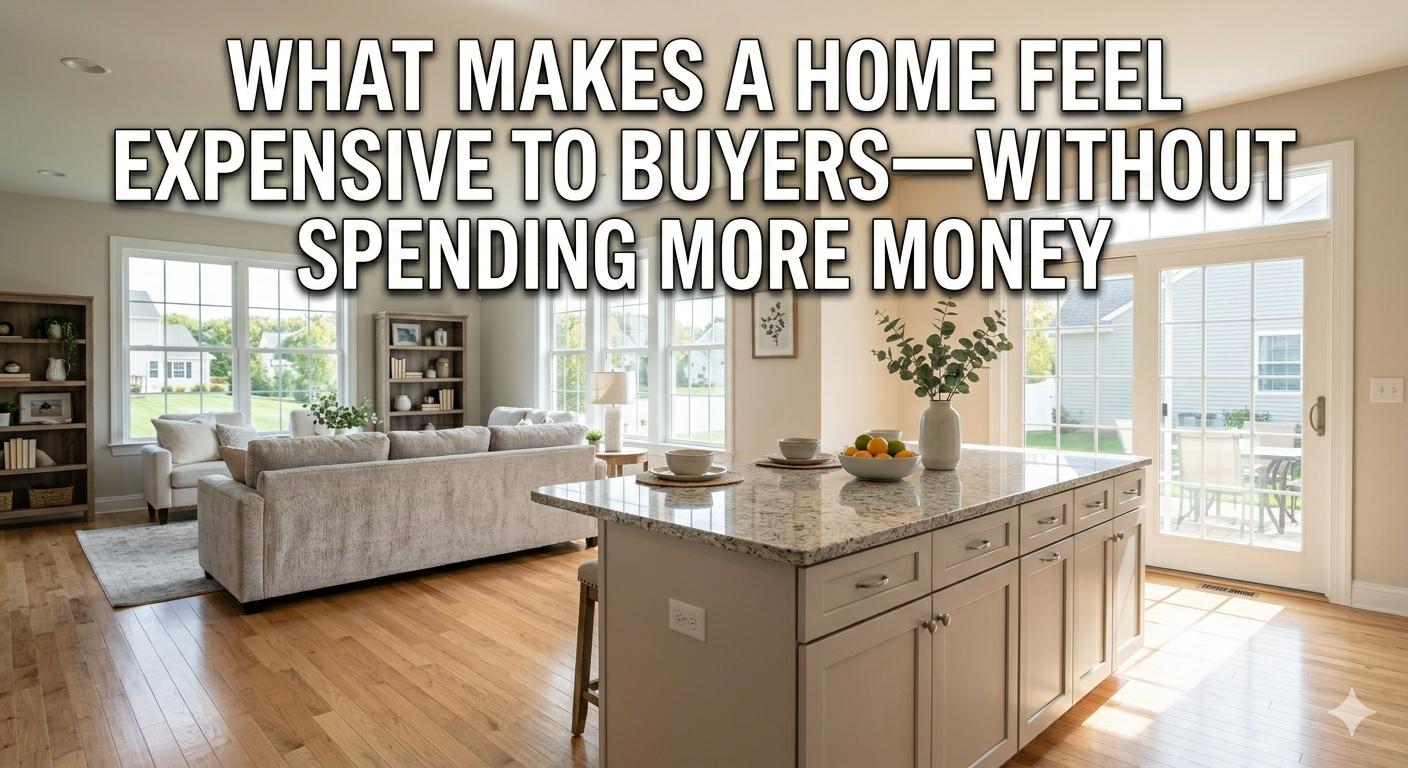
Two homes can have the same square footage, same layout, and even similar finishes—and still feel completely different in value.
One feels average.
The other feels expensive.
The difference is rarely about budget. It’s about perception.
In South Jersey’s 2026 market, buyers are making emotional value judgments within seconds of walking into a home—or even scrolling through listing photos.
As Mary Murphy of The Murphy Group explains:
“Luxury is often not about what was spent—it’s about what the buyer feels the moment they walk in.”
🧠 “Expensive” Is a Feeling Before It’s a Price Point
Buyers don’t calculate “expensive” logically at first.
They feel it through:
- Space perception
- Light and flow
- Quiet confidence in design
- Consistency of finishes
- Emotional comfort
A home can be affordable on paper but still feel high-end if the experience is right.
🌞 1. Natural Light Does More Than Any Upgrade
Light is one of the strongest signals of perceived value.
Homes feel more expensive when they have:
- Bright, consistent daylight
- Clear sightlines to windows
- Unblocked natural light flow
- Balanced interior brightness
Even simple homes feel elevated when light is intentional and abundant.
🧭 2. Layout Flow Creates a “Luxury Experience”
Luxury isn’t just visual—it’s spatial.
Buyers associate expensive homes with:
- Easy movement between rooms
- Logical transitions
- Open yet defined spaces
- No confusing dead ends
A smooth layout creates subconscious comfort, which translates into higher perceived value.
🛋️ 3. Fewer Visual Interruptions = Higher Perceived Value
Clutter, noise, and inconsistent design reduce perceived price.
Homes feel more expensive when:
- Colors are consistent
- Decor is minimal and intentional
- Surfaces are clean and uninterrupted
- Visual distractions are reduced
The brain interprets simplicity as sophistication.
🧠 4. Ceiling Height and Vertical Space Matter More Than Expected
Even when square footage is identical, vertical space changes perception.
Higher or visually emphasized ceilings create:
- Airiness
- Openness
- Architectural presence
Buyers often associate vertical space with higher-end construction.
🏡 5. Entry Experience Sets the Entire Price Perception
The first 10 seconds matter most.
A home feels more expensive when the entry includes:
- Clear, welcoming sightlines
- Clean and uncluttered staging
- Immediate natural light
- A sense of openness
If the entry feels right, buyers assume the rest of the home will match.
📍 6. Quietness and Sound Control Signal Quality
Sound is an underrated luxury cue.
Homes feel more expensive when they:
- Block outside noise
- Feel insulated and private
- Don’t echo or feel hollow
Even without visible upgrades, quietness signals construction quality.
🪟 7. Window Quality and Frame Consistency Matter
Buyers subconsciously evaluate:
- Window size balance
- Frame condition
- Natural alignment in rooms
- Visual symmetry
Well-proportioned windows create a sense of intentional design.
💡 8. Warmth Without Clutter Creates Emotional Luxury
A home doesn’t need to be large to feel high-end—it needs to feel intentional.
This includes:
- Soft lighting instead of harsh overhead light
- Warm but neutral tones
- Minimal but thoughtful décor
- Balanced furniture placement
The goal is emotional comfort without visual overload.
🧠 Why Buyers Equate “Calm” With “Expensive”
A major psychological pattern in real estate is this:
👉 Calm spaces feel more valuable.
When a home feels:
- Easy to understand
- Visually balanced
- Emotionally comfortable
buyers assign it a higher value perception—even without knowing why.
⚠️ What Actually Makes Homes Feel Less Expensive
It’s often not structural issues—it’s perception issues:
- Overcrowded rooms
- Poor lighting
- Inconsistent design styles
- Confusing layouts
- Visual clutter
- Lack of staging direction
These reduce perceived value instantly.
📈 Why This Matters More in Today’s Market
In South Jersey’s 2026 real estate environment:
- Buyers are scrolling faster than ever
- First impressions happen online
- Emotional decisions happen early
- Comparison is constant
That means perceived value is formed before price is fully processed.
💼 How The Murphy Group Helps Homes Feel More Valuable
At The Murphy Group, presentation is treated as strategy—not decoration.
Their approach includes:
- Optimizing lighting and photography flow
- Advising on staging that enhances spatial perception
- Reducing visual noise before listing
- Highlighting natural architectural strengths
- Aligning online and in-person experience for consistency
“We don’t change the home,” Mary says. “We change how clearly buyers understand its value.”
📊 The Bottom Line
A home feels expensive when it:
- Feels bright and open
- Has smooth, intuitive flow
- Uses clean, consistent design
- Creates emotional calm
- Reduces visual confusion
And most importantly:
👉 Perceived value is not about spending more—it’s about removing everything that interrupts how buyers experience the space.
📲 Thinking About Selling Your South Jersey Home?
The Murphy Group helps sellers position homes so they feel more valuable from the very first click to the final showing.
👉 Start here: www.mgsells.com

Mary Murphy
Team Leader | The Murphy Group | eXp Realty, LLC | PLACE
or another way