

Categories
Burlington County, Camden County, Gloucester County, Home Buying Guides, Home Buying Tips, New Jersey Real Estate, Real Estate Guides, South Jersey Real Estate, home inspection, real estate due diligencePublished October 12, 2026
What Happens When a South Jersey Home Has an Abandoned Septic System?

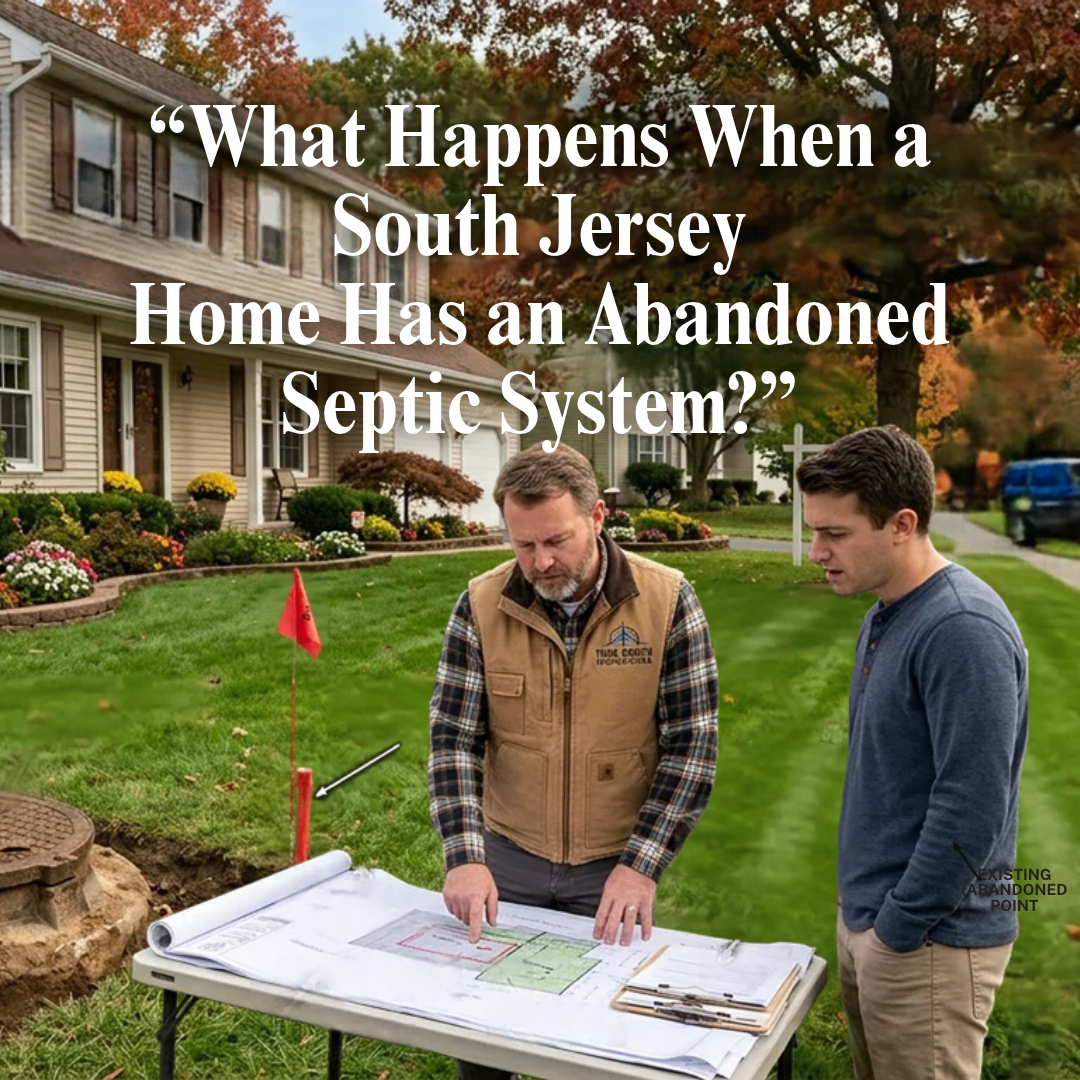
A home may look perfectly maintained, have an attractive yard, and appear ready for move-in—yet still have something buried underground that deserves a closer look.
An abandoned septic system is one example.
Many older South Jersey properties originally relied on private septic systems before connecting to public sewer service. Other properties may have replaced an aging septic system with a newer one while leaving the original tank or related components underground.
The problem isn't necessarily that an old septic system exists. The concern is whether it was properly decommissioned, whether its location is known, and whether it creates any safety, environmental, or future property-use concerns.
As Mary Murphy of The Murphy Group explains:
"When buyers discover an old septic system, the first step is to understand its history. Knowing whether it was properly abandoned and what remains underground can help buyers avoid unexpected complications after closing."
If you're considering a home in South Jersey with an abandoned septic system, here's what you should know before making an offer or moving toward closing.
🏡 1. What Is an Abandoned Septic System?
An abandoned septic system is a system—or part of a system—that is no longer being used to treat and dispose of wastewater from a property.
A conventional septic system generally includes a septic tank, a wastewater distribution system, and a soil absorption or disposal field.
When a property connects to public sewer service, or a septic system is replaced, some of the old components may remain underground.
These may include:
- An old septic tank
- A dosing tank
- A seepage pit or dry well
- A cesspool
- Underground pipes
- A former disposal field
The exact components depend on the property's age and the type of system previously installed.
Important distinction: A properly abandoned system is different from a septic system that has simply stopped being used without appropriate decommissioning. Buyers should establish which situation applies before assuming the issue has been resolved.
🔎 2. Why Would a South Jersey Property Have an Old Septic System?
There are several reasons a home may have an abandoned system.
The property connected to public sewer
A street may have gained public sewer service after the house was originally built. Once the home connected, its former septic system may have been taken out of service.
The original system was replaced
A previous owner may have installed a replacement septic system because the original one malfunctioned, reached the end of its useful life, or no longer met the property's needs.
The property underwent renovations
An addition, redevelopment project, or change in wastewater arrangements may have resulted in a new system or a different connection.
Records were never transferred to the current owner
The system may have been abandoned decades ago, and the current owner may have limited information about its location or decommissioning.
Older homes in established South Jersey communities may have complicated property histories, so buyers should not rely solely on a seller's recollection or the absence of visible signs in the yard.
⚠️ 3. What Are the Risks of an Abandoned Septic Tank?
An abandoned tank can create concerns if it has not been properly emptied, secured, and decommissioned.
Potential issues include:
- Ground instability: A deteriorated or inadequately filled underground tank may create a void or settlement area.
- Collapse hazards: A weakened tank or cover can present a serious fall or injury risk.
- Residual wastewater: An improperly abandoned tank may retain waste or other material.
- Uncertain underground conditions: Unknown pipes, tanks, or disposal areas may complicate landscaping, construction, or excavation.
- Environmental concerns: Improperly managed wastewater or a malfunctioning system may affect surrounding soil or groundwater.
These risks are not present to the same degree at every property. A properly decommissioned tank with documentation may present a very different situation from an old, unmarked tank whose condition is unknown.
If you suspect a buried tank, avoid opening it, entering it, or excavating around it yourself. Septic tanks can contain hazardous gases and other dangerous conditions, even when they are no longer in service.
📋 4. What Does New Jersey Require When a Septic System Is Abandoned?
New Jersey has specific standards governing the abandonment of individual subsurface sewage disposal systems.
Under N.J.A.C. 7:9A-12.8, septic tanks, dosing tanks, seepage pits, dry wells, and cesspools that are being abandoned in place must be emptied of waste and filled completely with gravel, stones, or soil material in a manner acceptable to the applicable administrative authority.
The regulation also addresses how removed materials and system components must be managed.
When abandonment occurs in connection with a public sewer hookup, the regulation assigns a role to the local plumbing inspector in ensuring that the system is abandoned in accordance with the requirements.
The applicable local authority should confirm the requirements and documentation for the particular property.
Reference: New Jersey Administrative Code § 7:9A-12.8 — Abandoned Systems.
Buyer takeaway: Do not assume that an old tank is compliant simply because it is no longer connected to the house. Ask for records demonstrating how the system was decommissioned and verify any outstanding questions with the appropriate local authority.
🏛️ 5. Which Local Office Should You Contact?
For most residential septic systems in New Jersey, local health departments or other designated local administrative authorities oversee system approvals and applicable requirements.
The New Jersey Department of Environmental Protection establishes statewide standards and provides guidance, while local authorities generally handle permitting and enforcement for ordinary residential systems.
Depending on the property and the circumstances, useful contacts may include:
- The municipal health department or Board of Health
- The municipal plumbing inspector
- The construction office
- The zoning office, if planned work or land use is involved
- The county or municipal records office
Start with the municipality where the property is located and ask which office maintains septic-system records and oversees abandonment.
You can also review the NJDEP's official guidance: New Jersey Septic Systems.
Because local procedures can differ, confirm which records, inspections, and approvals apply before assuming that a particular document is sufficient.
🗺️ 6. How to Find Out Where the Old Septic System Is Located
One of the first practical challenges is identifying the system's location.
The tank may be buried beneath a lawn, near an old driveway, behind a garage, or in an area that has been landscaped several times since the system was installed.
Start by requesting:
- Original septic plans, if available
- Permits for the original system
- Records of any replacement system
- Documentation of the public sewer connection
- Abandonment or inspection records
- Previous surveys or site plans
If the records are incomplete, a qualified septic professional may be able to help locate the tank and related components using appropriate equipment and methods.
Do not assume that the current septic field or sewer connection reveals the location of every older component.
Knowing where the system is located can help buyers evaluate safety, understand the property's history, and avoid accidentally disturbing buried infrastructure during future projects.
🧱 7. Could an Abandoned Tank Affect the Yard or Foundation?
It can, depending on the tank's condition, location, and how it was decommissioned.
A properly abandoned tank may have little practical effect on ordinary yard use. However, a tank that was left hollow, improperly filled, or structurally deteriorated may create a localized risk of settlement or collapse.
Pay attention to:
- Depressions in the lawn
- Areas where the ground appears to have sunk
- Cracks or uneven surfaces near a suspected tank
- Unexplained patches of unusually lush or sparse vegetation
- Evidence of previous excavation or repairs
These signs are not proof of an abandoned septic tank. Other drainage, soil, or landscaping issues can cause similar conditions.
If the suspected tank is close to the house, a driveway, a patio, or another structure, ask a qualified professional to evaluate whether its location and condition present a concern.
💧 8. Can an Abandoned Septic System Affect Soil or Groundwater?
Potentially, particularly if the former system malfunctioned, discharged untreated wastewater, or was abandoned without appropriate handling.
A septic system is designed to treat wastewater before it reaches the surrounding soil. When a system is malfunctioning, wastewater may escape in ways that create health or environmental concerns.
For a former system, buyers should determine whether there is any evidence of:
- Past sewage backup or discharge
- Persistent wastewater odors
- Known septic failure
- Contaminated soil
- Unresolved environmental complaints
- Previous corrective work
The presence of an abandoned tank does not automatically establish that the property is contaminated.
If the seller discloses a prior failure, spill, or environmental issue, request relevant records and determine whether additional assessment is appropriate.
For properties near wetlands, waterways, or other regulated areas, work involving a septic system or its disposal field may also trigger separate environmental permitting requirements.
Reference: NJDEP — Septic System Projects and Environmental Permits.
🚰 9. Confirm That the Home Is Properly Connected to Public Sewer—or Has a Compliant Current System
An abandoned septic system often suggests that another wastewater arrangement is in place, but buyers should verify this rather than make assumptions.
If the home is connected to public sewer, ask for available records confirming the connection and any required abandonment or inspection documentation.
If the home continues to use a different septic system, confirm which system serves the house and whether the necessary approvals and records are available.
Questions to ask include:
- Is the property connected to public sewer service?
- If so, when was the connection completed?
- Is the former septic system documented as abandoned?
- If the home still uses septic, which system is active?
- Are there records of the active system's inspection, maintenance, or repair?
- Has the local authority identified any outstanding issues?
A property with a properly abandoned old tank and a compliant active wastewater arrangement may be entirely suitable for purchase.
The priority is to establish exactly how wastewater is currently managed.
💰 10. What Could It Cost to Address an Improperly Abandoned System?
The cost depends on what remains underground and what corrective work is necessary.
Potential expenses may include:
- Locating the tank and related components
- Pumping and cleaning the tank
- Properly filling the tank in place
- Excavating and removing components
- Backfilling and restoring the yard
- Repairing disturbed landscaping or hardscaping
- Obtaining inspections or required approvals
- Conducting additional evaluations if contamination or structural problems are suspected
A straightforward decommissioning project may be substantially less complicated than a situation involving a damaged tank, difficult excavation, a paved-over location, or unresolved environmental concerns.
There is no reliable one-size-fits-all estimate without knowing the tank's location, construction, condition, and local requirements.
Before closing, request a written estimate from an appropriately qualified contractor if the work has not been completed or if the documentation is unclear.
This helps you distinguish a manageable corrective task from a potentially significant ownership expense.
🏡 11. Could an Abandoned Septic System Affect Future Renovations?
Yes. Even a properly decommissioned system may matter when you plan work that disturbs the area where the tank or disposal field is located.
Potential projects include:
- Building a home addition
- Installing a detached garage
- Constructing a patio or retaining wall
- Expanding a driveway
- Installing an in-ground pool
- Regrading the yard
- Planting trees or undertaking substantial landscaping
The practical implications depend on the location of the abandoned components, the scope of the proposed work, and any applicable construction or environmental requirements.
A properly filled tank is not automatically a barrier to every future project. However, buried components and disturbed ground may affect excavation, foundation design, or site planning.
If you have a specific renovation in mind, ask the relevant municipal office and a qualified contractor to assess the location before you purchase the property or finalize your plans.
📄 12. What Documents Should Buyers Request Before Closing?
Documentation helps establish what happened to the former septic system and whether the relevant work was completed.
Ask the seller or listing representative for any available:
- Original septic-system permits and plans
- Records of a replacement system
- Public sewer connection documentation
- Abandonment or decommissioning records
- Pumping and contractor invoices
- Inspection reports
- Municipal approvals or sign-offs
- Records of repairs or environmental assessments
Not every older property will have a complete historical file. Missing paperwork does not automatically prove that the system was abandoned improperly.
However, gaps in the records should be identified and investigated rather than ignored.
Where documentation is unavailable, ask the local authority what can be verified independently and what additional inspection or corrective action may be appropriate.
🔎 13. Should a Home Inspection Include the Abandoned System?
A standard home inspection can help identify visible concerns, but buyers should not assume that it establishes the condition of every underground septic component.
A buried tank may be outside the scope of a routine visual inspection, particularly if its location is unknown or there is no accessible documentation.
Depending on the situation, additional due diligence may involve:
- A septic-system professional
- A licensed plumber
- A qualified excavation contractor
- A structural professional if settlement or collapse is suspected
- An environmental professional if contamination is a concern
- The local health department or plumbing inspector
Ask the professionals what their inspection will cover and whether they can provide written findings.
If the system's status is uncertain, address that uncertainty during the due-diligence period instead of waiting until after closing.
⚠️ 14. What If the Seller Says the Tank Was Abandoned Years Ago?
A seller may remember that the property connected to sewer service decades ago or that a former septic tank was filled in during a renovation.
That information is useful, but it should be supported where possible.
Ask:
- Who performed the work?
- Approximately when was it completed?
- Was the tank emptied before being filled?
- What material was used?
- Were the necessary inspections or approvals obtained?
- Are there invoices, photographs, permits, or municipal records?
- Is the location of the tank known?
If the seller cannot provide records, the next step is to determine whether the municipality or a qualified professional can verify the system's status.
Avoid treating an undocumented history as proof of wrongdoing. Older properties often have incomplete records, and the appropriate response is to establish the facts.
🤝 15. Can an Abandoned Septic System Delay Closing?
It can, particularly if the system's status raises questions that must be resolved before the transaction can proceed.
Potential complications include:
- Uncertainty about whether the tank was properly decommissioned
- Missing municipal records
- Evidence of an unsafe or deteriorated tank
- Questions about the home's current wastewater connection
- Required corrective work
- Additional inspections or approvals
- Disagreements about who will pay for the work
Whether an issue must be resolved before closing depends on the property's circumstances, local requirements, lender or insurer concerns, and the terms of the purchase agreement.
If the concern arises during due diligence, communicate promptly with your real estate professional and attorney.
Depending on the agreement and findings, the parties may explore documentation, further evaluation, corrective work, or negotiated terms.
The key is to identify the issue early enough to understand its practical and financial implications.
📈 16. Does an Abandoned Septic System Affect Resale Value?
The effect depends on the condition of the system, the quality of the documentation, and whether any unresolved concerns remain.
A properly decommissioned tank with a verified sewer connection may have little impact on buyer confidence.
By contrast, an undocumented tank, a suspected collapse hazard, or an unresolved environmental concern may lead future buyers to request additional inspections or negotiate over the cost of corrective work.
When evaluating a property, consider whether the issue is:
- Fully documented and resolved
- Documented but still awaiting routine follow-up
- Poorly documented but potentially straightforward to verify
- Associated with structural, environmental, or compliance concerns
These situations should not be treated as equivalent.
A well-documented history can make it easier for future owners to understand the property and respond to questions during resale.
📝 17. A Practical Buyer Checklist
Before purchasing a South Jersey home with a suspected or confirmed abandoned septic system, use this checklist.
-
Confirm whether the home is connected to public sewer or uses another active wastewater system.
-
Ask the seller for the former system's history.
-
Request septic plans, permits, and abandonment records.
-
Contact the municipality's appropriate health or plumbing office.
-
Establish the location of the old tank and related components.
-
Determine whether the tank was emptied and properly filled or otherwise handled in accordance with applicable requirements.
-
Look for signs of settlement, water intrusion, or other visible concerns.
-
Arrange further evaluation if the condition or location is uncertain.
-
Obtain a written estimate for any necessary corrective work.
-
Review the findings with your real estate professional and attorney before closing.
This approach helps buyers make decisions based on verified information rather than assumptions about what may be buried underground.
💼 How The Murphy Group Helps Buyers Navigate Property Concerns
At The Murphy Group, buying a home involves more than comparing listing prices, layouts, and curb appeal. It also means understanding the property's history and identifying issues that could affect ownership.
When a home has an abandoned septic system, important considerations include:
- Reviewing available property and municipal records
- Identifying questions that require professional evaluation
- Understanding potential repair and decommissioning costs
- Evaluating how unresolved issues could affect the transaction
- Helping buyers coordinate appropriate due diligence
As Mary Murphy explains:
"The goal is to make sure buyers understand what they're purchasing. When a property has an unusual feature or a complicated history, asking the right questions early can help prevent avoidable surprises later."
The Murphy Group helps buyers approach property decisions with a clearer understanding of both the home's advantages and the issues that deserve further investigation.
📊 The Bottom Line
An abandoned septic system does not automatically make a South Jersey home a bad investment. Many properties have older systems that were replaced or decommissioned years ago.
What matters is whether the former system was handled appropriately, whether its location and history are understood, and whether any remaining concerns have been addressed.
Before buying, make sure you:
- Understand the property's current wastewater arrangement
- Verify the history of the former septic system
- Review available municipal records
- Confirm the location and condition of buried components
- Investigate any signs of settlement or environmental concerns
- Understand the cost of outstanding work
- Resolve material uncertainties before closing whenever possible
The smartest purchase is not necessarily a property without an old septic tank. It's a property whose history, current condition, and remaining responsibilities you understand before you commit.
📲 Thinking About Buying a Home in South Jersey?
Whether you're considering an older property, evaluating an unusual feature, or navigating questions during due diligence, The Murphy Group can help you look beyond the listing and make a more informed real estate decision.
👉 Start here: www.mgsells.com

Mary Murphy
Team Leader | The Murphy Group | eXp Realty, LLC | PLACE
or another way