

Categories
Burlington County, Camden County, Gloucester County, South Jersey Real Estate, New Jersey Real Estate, traffic noise NJ, home location, Real Estate GuidesPublished September 30, 2026
What Buyers Should Know About Homes Near Busy Roads in South Jersey

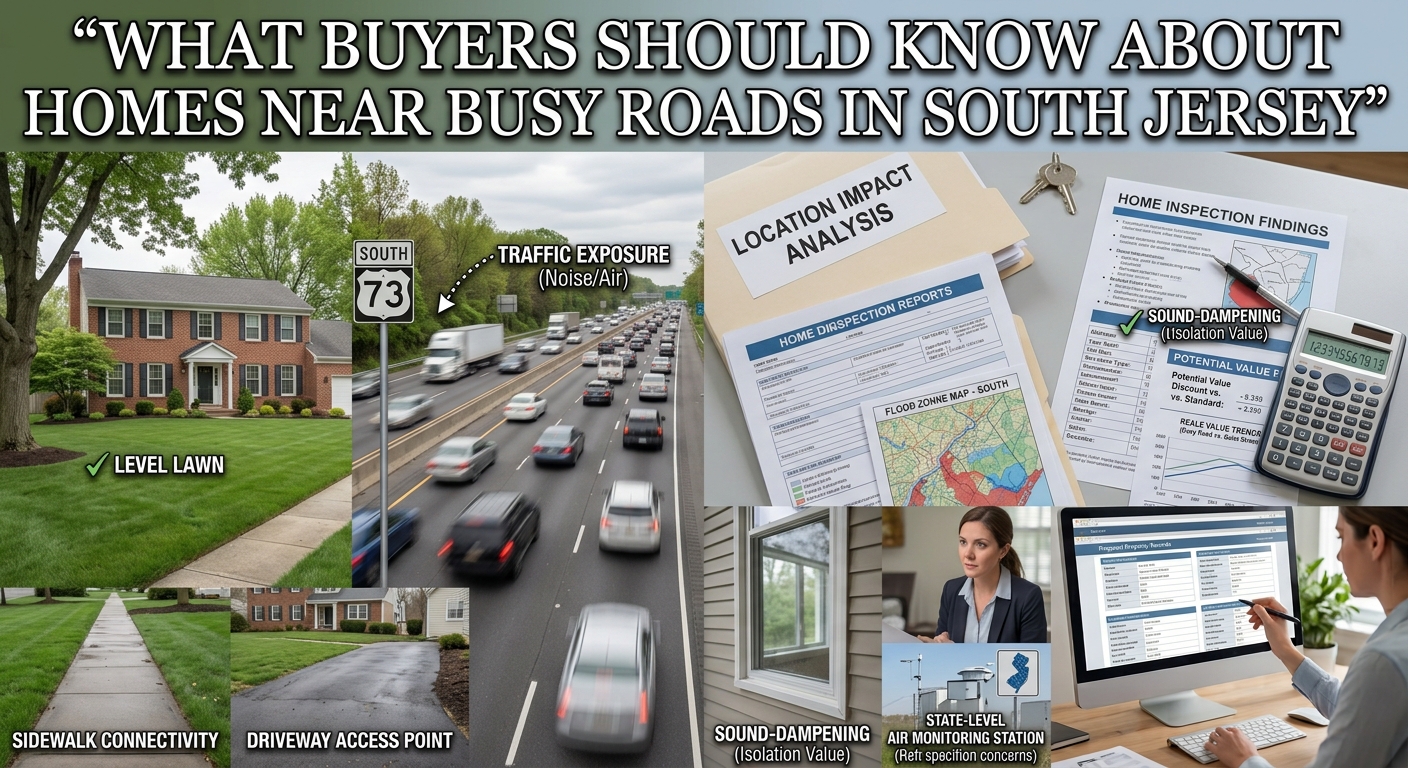
A South Jersey home can have the right price, attractive interior, updated kitchen, and plenty of space—but its location next to a busy road can introduce a completely different set of considerations.
For some buyers, proximity to a major road is convenient.
For others, traffic noise, visibility, pedestrian safety, driveway access, or difficulty backing out of the property may become daily frustrations.
The important thing is not to assume that every home near a busy road is a bad investment—or that the convenience automatically outweighs the drawbacks.
Instead, buyers should understand how the road affects the property and whether those effects fit their lifestyle.
As Mary Murphy of The Murphy Group explains:
“A home's location is something buyers experience every day. When a property is near a busy road, it's important to evaluate what that location actually feels like—not just what it looks like during a showing.”
🚗 1. What Counts as a “Busy Road”?
There isn't one universal definition.
A busy road could be:
- A major state or county route
- A heavily traveled local road
- A road near a commercial area
- A commuter route
- A street with significant rush-hour traffic
- A road serving a school, shopping center, or other major destination
Traffic patterns can also change throughout the day.
A road that seems quiet at 10:00 a.m. could feel very different at 7:30 a.m. or 5:30 p.m.
That's why buyers should evaluate the property at multiple times rather than relying on a single showing.
🔊 2. Traffic Noise Can Be More Noticeable Than Buyers Expect
One of the first considerations is sound.
During a quick daytime showing, buyers may notice only occasional traffic.
But noise can vary depending on:
- Time of day
- Vehicle volume
- Speed limits
- Trucks and buses
- Motorcycle traffic
- Emergency vehicles
- Road surface
- Traffic signals
- Weather conditions
A buyer who values a quiet backyard may experience the property very differently from someone who spends most of the day away from home.
🪟 3. Listen Inside the House—Not Just Outside
Buyers often focus on the backyard or front porch when evaluating traffic noise.
But interior sound levels matter too.
During a showing, pay attention to:
- Bedrooms facing the road
- Living rooms near the front of the house
- Windows with the windows closed
- Windows with the windows open
- Outdoor seating areas
- Finished basements
- Upper floors
A home's windows, insulation, construction, and orientation can affect how much exterior sound is noticeable inside.
🌙 4. Visit at Different Times of Day
One of the simplest ways to evaluate a busy-road property is to experience it more than once.
Consider visiting during:
Morning commute
Traffic volume may be significantly higher.
Afternoon
School pickup and local traffic can change the environment.
Evening commute
Traffic patterns may shift again.
Nighttime
Some roads become quieter, while others remain active.
A single showing provides only one snapshot.
🗺️ 5. Look Beyond the Property Line
The road itself isn't the only thing buyers should investigate.
Look at the surrounding area and consider:
- Nearby intersections
- Traffic lights
- Shopping centers
- Gas stations
- Restaurants
- Schools
- Industrial properties
- Public transportation
- Highway entrances
- Large parking lots
A home may not directly face a major roadway but could still experience increased traffic because of nearby activity.
🚦 6. Traffic Patterns Can Affect Daily Convenience
Busy roads aren't always negative.
In some cases, being near a major road can make everyday life easier.
Buyers may benefit from:
- Faster access to highways
- Shorter commutes
- Easier access to shopping
- Proximity to restaurants and services
- Convenient routes to employment centers
The key is determining whether the convenience outweighs the aspects of the location that matter less to that particular buyer.
🚙 7. Driveway Access Deserves Special Attention
One of the most overlooked issues is getting in and out of the property.
Buyers should consider:
- Can you comfortably turn into the driveway?
- Is there a center turn lane?
- Is there a traffic signal nearby?
- Is the driveway close to an intersection?
- Can you safely make a left turn during rush hour?
- Is backing out difficult?
- Is visibility limited by parked cars or landscaping?
A driveway that seems perfectly functional during a quiet showing may feel very different during heavy traffic.
🅿️ 8. Parking Can Become More Important
Homes near busy roads may have different parking dynamics than homes on quieter residential streets.
Buyers should evaluate:
- Garage availability
- Driveway width
- Number of parking spaces
- Street parking
- Visitor parking
- Overnight parking restrictions where applicable
This becomes particularly important for households with multiple vehicles or frequent guests.
👨👩👧 9. Families Should Consider Pedestrian Safety
For buyers with children, traffic volume and road configuration deserve additional attention.
Consider:
- Sidewalk availability
- Crosswalks
- Traffic speed
- Distance to nearby amenities
- Safe routes for walking or biking
- Visibility at intersections
A short distance on a map doesn't necessarily mean an easy or comfortable walking route.
🐕 10. Pets Can Change the Equation
Pet owners should also think about how the road affects daily routines.
A busy roadway may make:
- Fencing
- Leash use
- Gate placement
- Backyard supervision
more important considerations.
The backyard may be attractive, but buyers should evaluate whether it provides the level of security and separation they want for their pets.
🌳 11. Privacy Can Be Different Near a Busy Road
Traffic doesn't only affect noise.
It can also affect privacy.
A property directly facing a busy road may have:
- More passing visibility
- Less front-yard privacy
- More headlights at night
- Greater exposure to pedestrians or vehicles
Landscaping, fencing, setbacks, and the position of the house can influence how noticeable this is.
💡 12. Headlights Can Matter at Night
One issue buyers sometimes overlook is vehicle headlights.
Depending on the home's elevation and orientation, headlights from passing vehicles may be visible through:
- Front windows
- Side windows
- Bedrooms
- Living areas
This doesn't necessarily create a problem, but buyers who value dark bedrooms or strong nighttime privacy should experience the property after sunset.
🏡 13. The Home's Position on the Lot Matters
Two houses on the same road can have very different experiences.
One might sit farther back from the roadway with:
- Mature landscaping
- A long driveway
- Natural screening
- A detached garage
- Bedrooms positioned away from traffic
Another might sit close to the road with little separation.
The relationship between the home and the road can be just as important as the road itself.
🌲 14. Landscaping Can Help—But It Isn't a Complete Soundproofing Solution
Trees, shrubs, fencing, and other landscaping can improve privacy and visual separation.
They can make a property feel more buffered from traffic.
However, buyers shouldn't assume landscaping will eliminate road noise.
Before purchasing, experience the property under normal conditions rather than relying entirely on a seller's landscaping or future landscaping plans.
🏠 15. Window and Exterior Features May Influence Comfort
The home's construction can influence how much exterior activity is noticeable indoors.
Pay attention to:
- Window quality
- Window placement
- Exterior doors
- Insulation
- Wall construction
- Room orientation
A home with bedrooms positioned away from the roadway may feel very different from one where most living spaces face traffic.
📉 16. Resale Value Is Worth Considering
Buyers should also think beyond their own ownership period.
A busy-road location can affect the pool of future buyers.
Some buyers may prioritize:
- Quiet streets
- Large backyards
- Low traffic
- Walkability within residential neighborhoods
- Privacy
Other buyers may prioritize:
- Easy commuting
- Highway access
- Convenience
- Proximity to shopping and services
The future resale impact depends on the specific road, property, neighborhood, pricing, and buyer demand.
That's why buyers should evaluate the location as part of the property's long-term value proposition.
💰 17. Price Should Reflect the Location
A home near a busy road shouldn't automatically be considered overpriced or underpriced simply because of its location.
Instead, buyers should compare it with relevant properties that have similar:
- Neighborhood characteristics
- Home size
- Condition
- Lot characteristics
- Road exposure
- Amenities
The goal is to understand whether the asking price makes sense given the entire property—not just the interior.
🔎 18. Google Maps Can Reveal What a Showing Doesn't
Before making an offer, buyers can use mapping tools to investigate the surrounding environment.
Look for:
- Major roads
- Intersections
- Highway ramps
- Commercial areas
- Nearby development
- Traffic patterns
- Alternative routes
Satellite imagery can also help buyers understand the property's orientation and relationship to surrounding roads.
📜 19. Check for Planned Changes to the Area
A road's current traffic pattern isn't necessarily permanent.
Buyers may want to investigate whether there are known plans involving:
- Road widening
- New intersections
- Traffic improvements
- New commercial development
- Residential development
- Transportation projects
Potential changes can affect both convenience and the character of the surrounding area.
When something is particularly important to a purchase decision, buyers should verify it through appropriate municipal, county, or state sources rather than relying solely on assumptions.
🧾 20. Ask Questions During Due Diligence
A busy-road property deserves direct questions.
Buyers can ask:
- How long has the seller owned the property?
- Are there recurring traffic or noise concerns?
- Have there been driveway-access issues?
- Are there known drainage problems near the road?
- Have there been changes to traffic patterns?
- Are there known development plans nearby?
- What improvements have been made to the home?
- Are there any location-specific concerns the buyer should investigate?
The answers won't eliminate every uncertainty, but they can help buyers know what deserves further research.
🛠️ 21. Consider Maintenance and Exterior Exposure
Properties near heavily traveled roads can experience different exterior conditions depending on the location.
Buyers may want to pay attention to:
- Landscaping maintenance
- Exterior cleanliness
- Dust or debris
- Fence condition
- Driveway condition
- Front-yard wear
These aren't necessarily major concerns, but they can become part of the property's ongoing maintenance picture.
🧠 22. Don't Let One Showing Make the Decision
A beautifully staged home can make buyers focus heavily on the interior.
But location can't be staged away.
Before making an offer, step outside.
Stand quietly for several minutes.
Listen.
Watch traffic.
Look at the driveway
Walk toward the property boundaries.
Pay attention to how the road feels.
Then imagine experiencing that environment on an ordinary weekday—not just during a scheduled showing.
⚠️ 23. A Busy Road Isn't Automatically a Dealbreaker
This distinction is important.
A home near a busy road can still be the right property for a buyer.
It may offer:
- A better price
- A convenient commute
- A desirable interior
- A larger lot
- Excellent access to amenities
- A location that works well for the buyer's routine
The question isn't:
“Is a busy road bad?”
The better question is:
“How does this specific road affect this specific property—and does that fit my priorities?”
📋 South Jersey Busy-Road Buyer Checklist
Before making an offer, consider:
Traffic
- How busy is the road?
- Does traffic change significantly throughout the day?
- Are trucks or buses common?
Noise
- How does it sound indoors?
- How does it sound outside?
- What happens during rush hour?
Access
- Is entering and exiting the driveway easy?
- Are left turns difficult?
- Is visibility good?
Privacy
- How visible is the home?
- Are headlights noticeable at night?
- Does the backyard feel private?
Safety
- Are sidewalks available?
- How easy is it to walk or bike?
- Are there safe crossings nearby?
Resale
- How might future buyers perceive the location?
- Are comparable properties priced differently?
- Does the location offer meaningful convenience?
Future Changes
- Are there known transportation or development projects nearby?
- Could traffic patterns change?
💼 How The Murphy Group Helps Buyers Evaluate Location
At The Murphy Group, evaluating a home goes beyond the walls and finishes.
The team helps buyers consider the broader property experience, including:
- Road exposure
- Neighborhood context
- Commute considerations
- Property access
- Outdoor usability
- Resale considerations
- Comparable properties
- Potential location-related concerns
“A home can look perfect online,” Mary says. “But buyers should understand what living there will actually feel like on an ordinary day.”
📊 The Bottom Line
Buying a home near a busy road isn't necessarily about finding a property with no traffic.
It's about understanding the trade-offs.
A busy road can bring:
- Convenience
- Accessibility
- Shorter routes
- Nearby services
But it can also bring considerations involving:
- Noise
- Privacy
- Driveway access
- Traffic
- Pedestrian safety
- Outdoor enjoyment
- Future resale
The smartest approach is to evaluate the specific property, the specific road, and your own daily routine.
Because a location that works beautifully for one buyer may feel completely different to another.
📲 Thinking About Buying a Home in South Jersey?
The Murphy Group helps buyers look beyond the listing photos and understand the location, property characteristics, and practical considerations that can shape everyday homeownership.
👉 Start here: www.mgsells.com

Mary Murphy
Team Leader | The Murphy Group | eXp Realty, LLC | PLACE
or another way