

Categories
Burlington County, Camden County, Gloucester County, Home Buying Guides, Home Buying Tips, Housing Guide, housing trend, New Jersey Real Estate, NJ Housing, Relocation & Home Buying Guides, Real Estate Guides, South Jersey Real EstatePublished August 14, 2026
How Neighborhood Turnover Is Changing the Character of South Jersey Communities

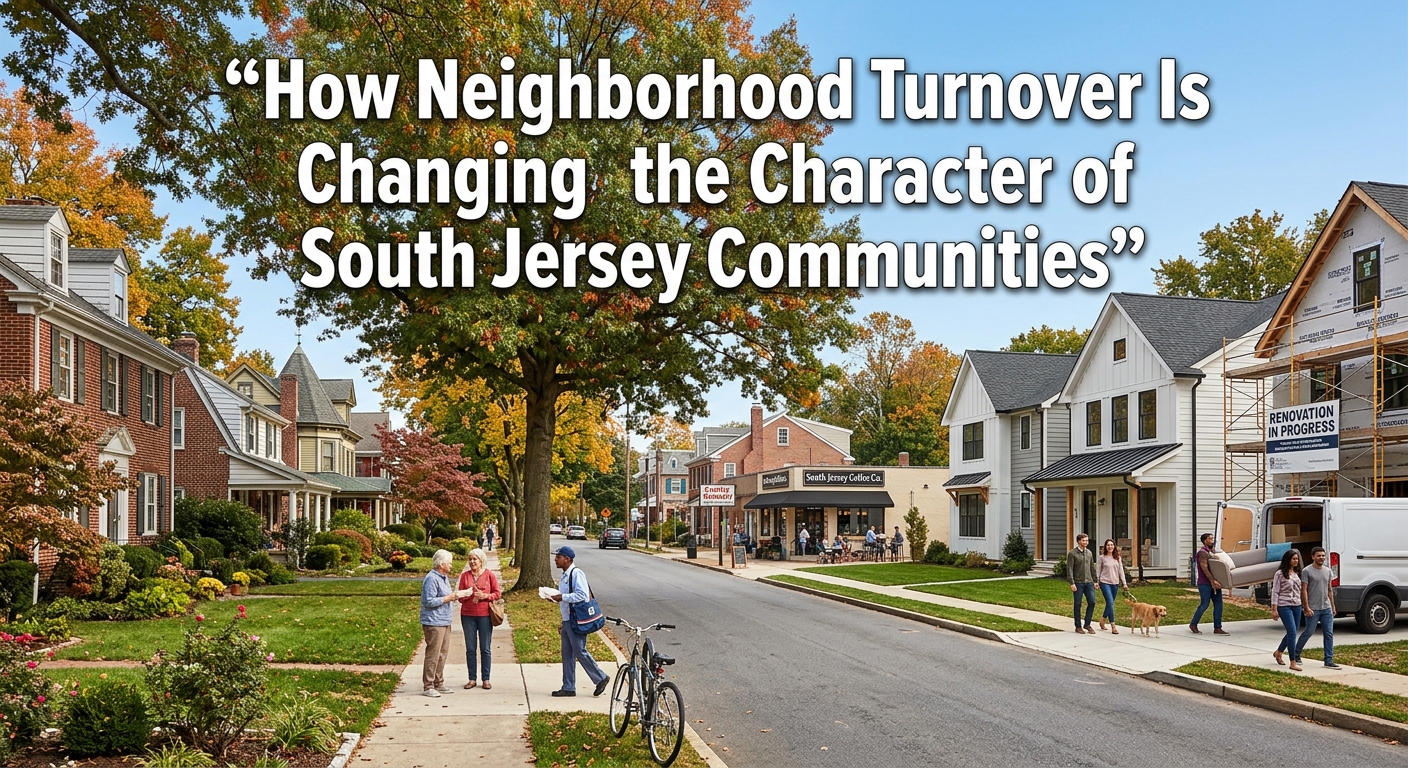
Neighborhoods don't stay exactly the same forever.
As longtime homeowners sell, younger families move in, new residents relocate from nearby cities, and different generations enter the housing market, the character of a community can gradually change.
This process—often referred to as neighborhood turnover—can influence everything from the appearance of homes to local businesses, community activities, buyer preferences, and the overall identity of a neighborhood.
South Jersey has experienced meaningful population and housing shifts in recent years. For example, Cherry Hill's population reached an estimated 79,965 in 2025, continuing a long period of growth relative to neighboring communities.
As Mary Murphy of The Murphy Group explains:
"Neighborhoods evolve as the people who live there change. What makes that interesting is that new residents can bring new energy while longtime homeowners help preserve the community's identity."
🏡 What Is Neighborhood Turnover?
Neighborhood turnover happens when a significant number of homes change ownership or occupancy over time.
It can occur because:
- Longtime homeowners decide to downsize
- Families move for work or lifestyle reasons
- Younger buyers enter the market
- New residents relocate from nearby cities
- Investors purchase properties
- New construction introduces additional housing
Turnover doesn't necessarily mean a neighborhood is losing its identity.
In many cases, it's simply part of a community's natural evolution.
👨👩👧👦 New Generations Can Change Buyer Demand
Different generations often have different housing preferences.
Younger buyers may prioritize:
- Updated interiors
- Home office space
- Walkability
- Restaurants and local businesses
- Lower-maintenance properties
- Flexible floor plans
Meanwhile, established homeowners may place greater value on:
- Larger lots
- Traditional layouts
- Mature landscaping
- Long-term neighborhood relationships
As the balance between these groups changes, the types of homes buyers seek can change as well.
🌳 Longtime Residents Help Preserve Neighborhood Identity
Turnover doesn't erase the history of a community.
Longtime homeowners often contribute:
- Established landscaping
- Community traditions
- Local knowledge
- Neighborhood relationships
- Architectural character
These elements can give established South Jersey neighborhoods a sense of identity that newer developments may take years to develop.
🛍️ New Residents Can Influence Local Businesses
Population changes can also affect the businesses surrounding a neighborhood.
As new households move in, demand may increase for:
- Restaurants
- Coffee shops
- Grocery stores
- Fitness centers
- Childcare services
- Specialty retailers
Over time, these businesses can change the personality and convenience of a community.
🏘️ Housing Preferences Can Shift With Turnover
As different buyers enter a neighborhood, demand can shift toward certain property features.
For example, buyers may increasingly look for:
- Updated kitchens
- Energy-efficient systems
- Dedicated offices
- Flexible living spaces
- Low-maintenance yards
- Modern outdoor areas
That can encourage homeowners to make improvements before selling and influence which properties receive the strongest buyer attention.
🚧 Community Investment Can Follow Population Changes
Neighborhood growth can sometimes encourage additional investment in infrastructure and public amenities.
Communities may see changes involving:
- Roads
- Sidewalks
- Parks
- Recreation facilities
- Public spaces
- Transportation access
New investment doesn't automatically increase property values, but improvements can contribute to a community's overall appeal.
📈 Turnover Can Create Opportunities for Buyers
Neighborhood change can create opportunities for buyers who are willing to look beyond current perceptions.
A community experiencing gradual reinvestment may offer:
- Established housing stock
- Mature trees and landscaping
- Existing amenities
- Renovation opportunities
- New businesses and services
The key is understanding whether the changes represent healthy evolution, stagnation, or something in between.
💰 What Turnover Can Mean for Home Values
Neighborhood turnover can affect property values in different ways.
When new homeowners invest in properties and the surrounding community continues to improve, buyer perception may strengthen.
On the other hand, excessive vacancy, deferred maintenance, or declining community investment can create challenges.
This is why buyers and sellers should evaluate the direction of a neighborhood, not just its current appearance.
🔍 Buyers Should Look Beyond the House
When evaluating an established South Jersey neighborhood, buyers should consider:
- How many homes have recently changed hands
- Whether properties are being renovated
- New businesses opening nearby
- Infrastructure improvements
- Community amenities
- Overall property maintenance
- Who is moving into the area
Looking at these trends can provide a clearer picture of where the neighborhood may be heading.
🧠 The Character of a Neighborhood Can Evolve Without Disappearing
Neighborhood change isn't necessarily something to fear.
A community can welcome new residents while maintaining the qualities that originally made it desirable.
The strongest neighborhoods often find a balance between:
Preserving what works + adapting to what residents need next.
That balance can help an established community remain attractive across generations.
💼 How The Murphy Group Helps Clients Understand Neighborhood Trends
At The Murphy Group, helping clients make informed real estate decisions means looking beyond the individual property.
Their approach considers:
- Neighborhood characteristics
- Housing turnover
- Buyer preferences
- Local development
- Community amenities
- Market trends
- Long-term property appeal
"A neighborhood's history matters, but so does its direction," Mary says. "We help clients understand both so they can make decisions based on where the community is going—not just where it has been."
📊 The Bottom Line
Neighborhood turnover is a natural part of South Jersey's evolving housing market.
As homes change hands and new residents move in, communities can experience changes in:
- Housing preferences
- Local businesses
- Property improvements
- Community activities
- Neighborhood demographics
- Overall character
Current South Jersey market conditions also vary significantly by location, with inventory and buyer demand differing from one community to another.
👉 The most important question isn't whether a neighborhood is changing. It's whether the changes are creating a community that remains attractive, connected, and well-positioned for the future.
📲 Curious About Where a South Jersey Neighborhood Is Heading?
Whether you're buying into an established community or preparing to sell in a neighborhood that's changing, The Murphy Group can help you understand local trends and evaluate the bigger picture.
👉 Start here: www.mgsells.com

Mary Murphy
Team Leader | The Murphy Group | eXp Realty, LLC | PLACE
or another way