

Categories
Home Buying Tips, Home Buying Guides, New Jersey Real Estate, Real Estate Guides, South Jersey Real EstatePublished April 9, 2026
The Hidden Trade-Offs of Low Property Taxes

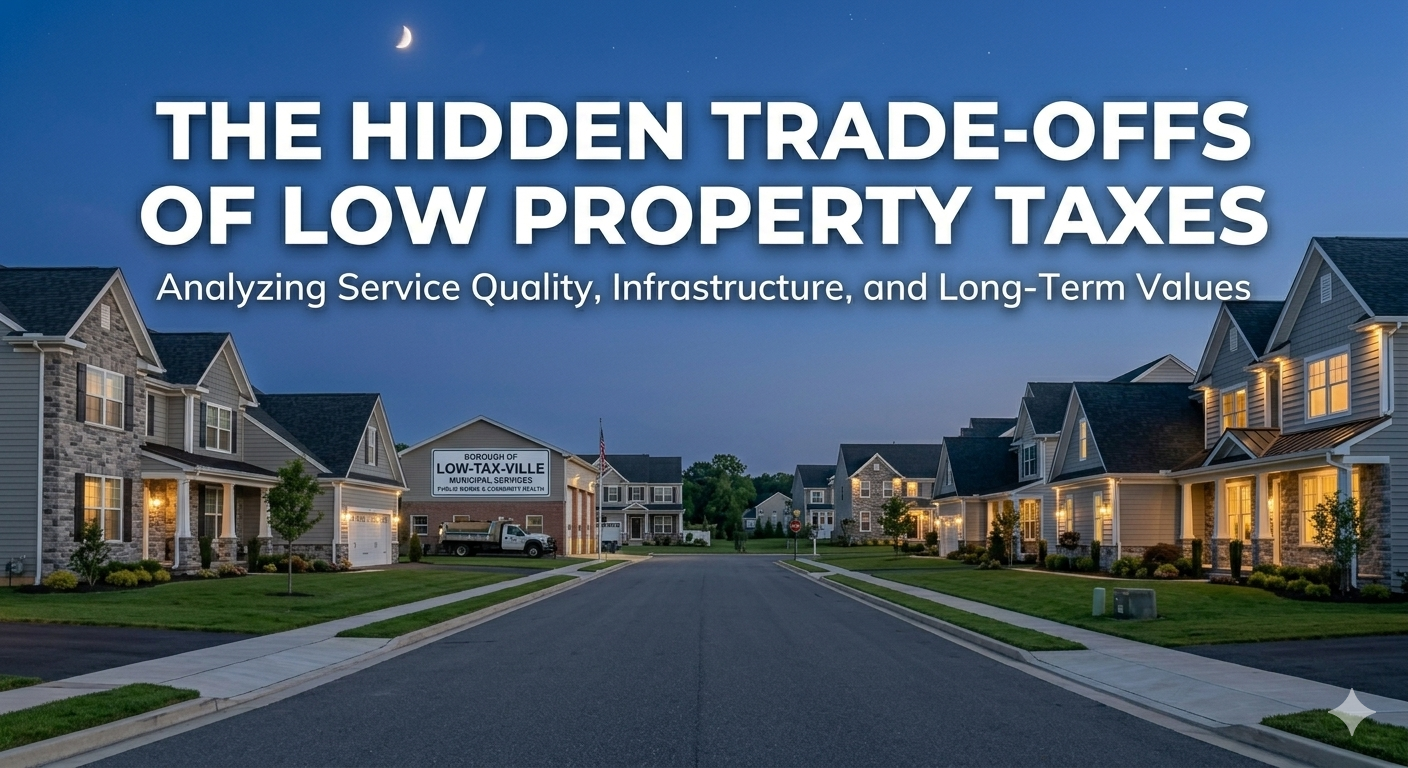
In South Jersey, low property taxes are often seen as a major advantage for homebuyers. Lower monthly carrying costs can make a home feel more affordable and attractive at first glance—but the reality is more nuanced.
As Mary Murphy of The Murphy Group explains:
“Low property taxes can absolutely be a benefit, but buyers often overlook what those savings might signal about services, infrastructure investment, or long-term value dynamics in a community.”
Understanding the trade-offs behind lower tax rates is key to making a smart, long-term real estate decision.
🏠 1. Limited Municipal Services and Amenities
Lower property taxes often correlate with fewer public services or slower infrastructure investment.
This can include:
- Reduced road maintenance frequency
- Fewer public recreational facilities
- Limited municipal upgrades or expansions
Buyer Insight:
While the monthly savings are appealing, they may come with a quieter or less developed public infrastructure experience.
📉 2. Slower Appreciation in Some Markets
Communities with very low tax bases may not reinvest aggressively into growth.
Potential impacts:
- Slower neighborhood modernization
- Fewer commercial developments nearby
- Less rapid home value acceleration
Mary Murphy notes:
“Appreciation isn’t just about the home—it’s about what surrounds it. Public investment often drives private value.”
🏘️ 3. School District and Perception Factors
In many cases, property taxes help fund school systems and local services that influence buyer demand.
When taxes are unusually low:
- School funding levels may be more limited
- Buyer perception can affect resale demand
- Families may prioritize higher-tax areas with stronger systems
Even when schools are solid, perception alone can influence market behavior.
🧠 4. The “Hidden Cost” of Deferred Investment
Low property taxes can sometimes indicate deferred maintenance or underinvestment in public assets.
This may show up as:
- Older infrastructure
- Slower utility upgrades
- Fewer community enhancements over time
Buyer takeaway:
What you save monthly may reappear later as indirect costs or lifestyle trade-offs.
💼 5. Resale Positioning Challenges
Buyers often compare neighborhoods based on both home price and tax structure.
Potential resale impacts:
- Lower-tax areas may attract price-sensitive buyers only
- Reduced urgency in competitive bidding environments
- Greater emphasis on condition and upgrades to stand out
Mary Murphy explains:
“When taxes are low, buyers expect the home price to reflect that—but they also expect the community to justify long-term value.”
📊 6. South Jersey Market Snapshot: Taxes vs. Value Perception
| Tax Level | Buyer Demand | Infrastructure Investment | Long-Term Appreciation |
|---|---|---|---|
| Low Taxes | Moderate | Variable | Steady |
| Moderate Taxes | High | Balanced | Strong |
| Higher Taxes | Very High (in premium areas) | Strong | Strongest in key corridors |
🏁 Final Takeaway
Low property taxes in South Jersey can absolutely improve affordability—but they are not a standalone indicator of value. The smartest buyers evaluate what those savings mean in the context of services, infrastructure, schools, and long-term appreciation potential.
📲 Make Smarter Cost-of-Ownership Decisions
The Murphy Group helps South Jersey buyers look beyond monthly tax savings to understand the full financial picture of homeownership—ensuring long-term value aligns with lifestyle and investment goals.
Explore smarter buying strategies at mgsells.com

Mary Murphy
Team Leader | The Murphy Group | eXp Realty, LLC | PLACE
or another way