

Categories
New Jersey Real Estate, Real Estate Guides, South Jersey Real Estate, Home Buying Tips, Home Buying Guides, Housing Guide, Relocation & Home Buying GuidesPublished January 29, 2026
Private Well Water in South Jersey: What Buyers Need to Know

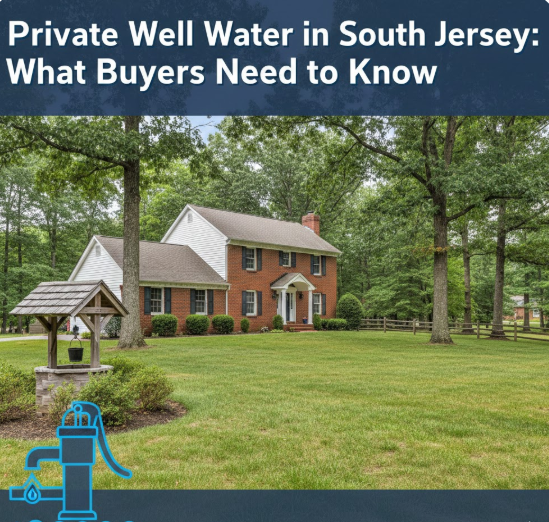
Many homes throughout South Jersey rely on private well water instead of public utilities. For buyers unfamiliar with wells, this can raise questions — but with the right knowledge, buying a home with well water can be a smart and safe decision.
Mary Murphy of The Murphy Group explains:
“Private wells are very common in South Jersey. The key for buyers is testing and understanding responsibility — not avoiding these homes altogether.”
Here’s what buyers should know before purchasing a home with private well water.
🚰 1. How Private Well Water Works
A private well draws groundwater from beneath the property and supplies water directly to the home. The system typically includes:
- A drilled or dug well
- A pump system
- A pressure tank
- Water treatment or filtration (if needed)
“Unlike public water, you control your supply,” Mary says.
“That independence is a big benefit for many homeowners.”
🔬 2. Water Testing Is Essential
Private well water should be tested during the home-buying process. Common tests include:
- Bacteria (total coliform, E. coli)
- Nitrates and nitrites
- pH and mineral content
- Iron, manganese, and hardness
- Lead or arsenic (in certain areas)
Mary emphasizes:
“Never skip well testing. Clean water is non-negotiable.”
Buyers can often negotiate treatment systems or corrective measures if issues arise.
💰 3. Maintenance & Ongoing Costs
Well systems generally have low monthly costs but require periodic maintenance:
- Annual water testing
- Pump servicing or replacement over time
- Filter or softener upkeep
“There’s no water bill, but there is responsibility,” Mary notes.
“Most well systems are very affordable to maintain when properly cared for.”
⚠️ 4. Common Well Water Red Flags
Buyers should investigate further if they notice:
- Staining on sinks or fixtures
- Metallic or sulfur odors
- Low or inconsistent water pressure
- Sellers unable to provide testing records
“Many issues are treatable,” Mary explains,
“but buyers need to identify them before closing.”
🏡 5. Well Water & Property Value
Homes with private wells can maintain strong value, especially in areas with:
- Larger lots
- Rural or semi-rural settings
- Limited municipal infrastructure
“Well water is expected in many South Jersey communities,” Mary says.
“It rarely hurts resale value when properly maintained.”
📄 6. Disclosure & Local Requirements
Sellers must disclose known well issues, and some municipalities or lenders may require:
- Recent water test results
- Well certifications
- Proof of system functionality
Mary adds:
“Regulations vary by township and loan type — another reason to work with a knowledgeable agent.”
💡 Tips for Buyers Considering Well Water Homes
✔ Schedule professional water testing
✔ Ask about filtration or treatment systems
✔ Understand pump age and depth
✔ Budget for future maintenance
“Once buyers understand the system, the fear usually disappears,” Mary says.
📲 Expert Guidance for South Jersey Buyers
Buying a home with private well water doesn’t have to be complicated. With proper testing and expert guidance, buyers can move forward with confidence.
Mary Murphy and The Murphy Group help South Jersey buyers navigate inspections, disclosures, and negotiations involving private well systems — ensuring clarity and peace of mind.
Learn more and get expert help today:
www.mgsellsarizona.com

Mary Murphy
Team Leader | The Murphy Group | eXp Realty, LLC | PLACE
or another way