

Categories
South Jersey Real Estate, Home Buying Tips, property value, Real Estate Guides, resale value, New Jersey homeownershipPublished October 19, 2026
Is a Corner-Lot Home in South Jersey a Better Buy? Pros, Cons, and Resale Considerations

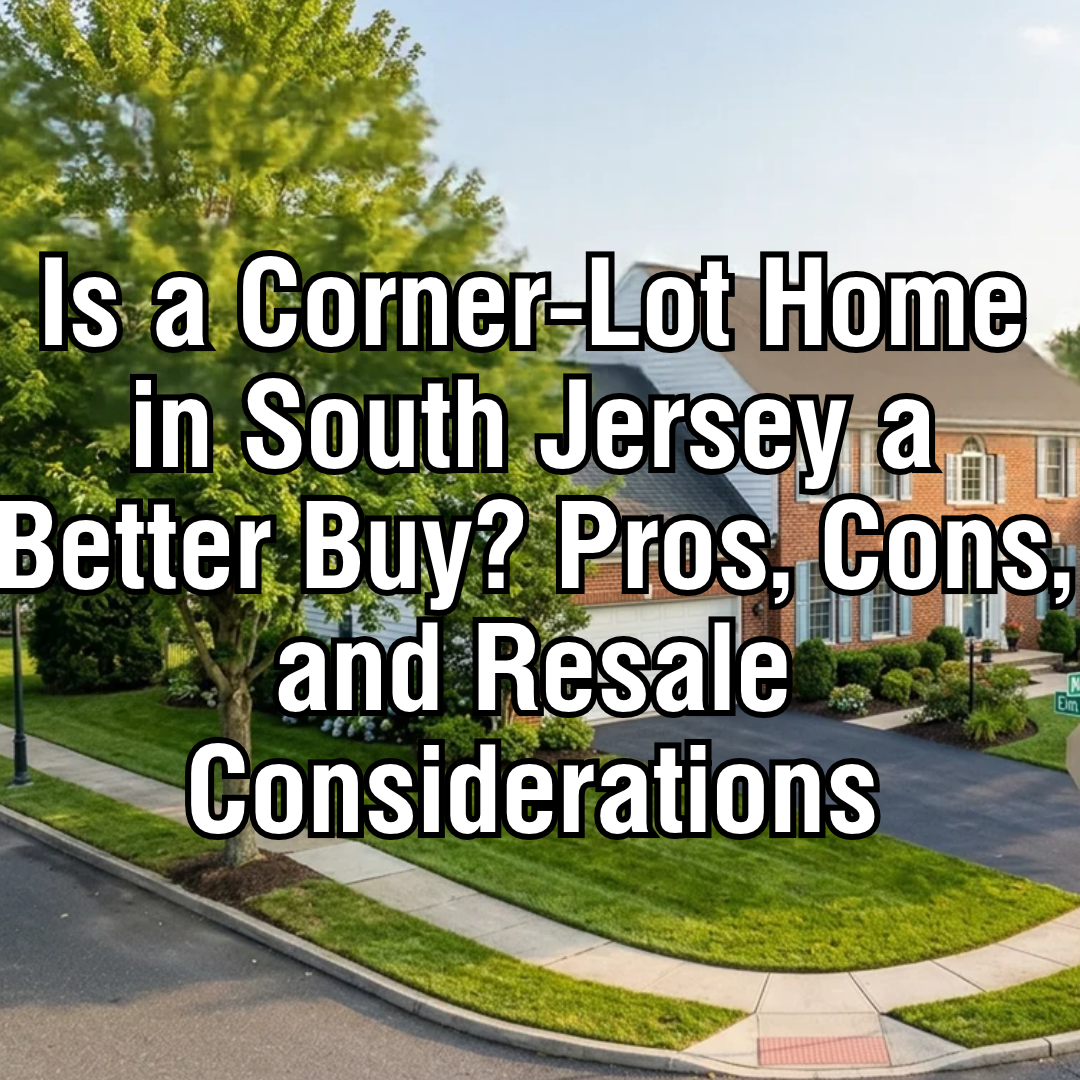
Two homes can have similar square footage, bedrooms, and interior finishes—but the way each property sits on its lot can make a surprising difference in everyday living.
That's especially true when comparing a traditional interior lot with a corner lot in South Jersey.
Corner-lot homes often offer additional street frontage, more open surroundings, and opportunities for distinctive landscaping. Some buyers appreciate the added visibility and outdoor design possibilities. Others prefer the privacy, reduced street exposure, and more enclosed backyard that an interior lot may provide.
Neither option is automatically better. The right choice depends on the property's layout, the surrounding streets, local zoning requirements, maintenance needs, and your plans for the home.
As Mary Murphy of The Murphy Group explains:
"When evaluating a home, buyers should look beyond the house itself. The shape and position of the lot can influence privacy, maintenance, future improvements, and how appealing the property may be to the next buyer."
Before purchasing a corner-lot home in South Jersey, here are the advantages, potential drawbacks, and resale considerations worth understanding.
🏡 1. What Makes a Property a Corner Lot?
A corner lot generally sits at the intersection of two streets, giving the property frontage along two sides rather than one.
Depending on the neighborhood, it may be located on:
- A quiet residential intersection
- A busy through street
- A suburban cul-de-sac entrance
- A neighborhood entrance or collector road
- A corner adjoining a park or open space
These settings can create very different ownership experiences.
A corner lot on two quiet residential streets may feel open and peaceful. A corner property near a busy intersection may experience more traffic, noise, and pedestrian activity.
The property's location matters just as much as the fact that it is a corner lot.
Before comparing homes, identify the streets that border the property, the amount of traffic they carry, and how the house, driveway, yard, and outdoor living areas are positioned in relation to them.
🌿 2. Pro: More Open Space and a Greater Sense of Separation
One reason buyers consider corner lots is that they may feel less enclosed than properties surrounded by neighboring homes on three sides.
Depending on the layout, a corner home may offer:
- More open views
- Fewer homes directly beside the house
- Additional space for landscaping
- A more distinctive street presence
- Greater flexibility in arranging outdoor areas
For buyers who dislike the feeling of being tightly surrounded by neighboring properties, this can be a meaningful advantage.
However, a corner lot does not necessarily provide more usable land. Some of the additional frontage may function as a side yard subject to setback requirements or restrictions on structures.
Compare the property's actual dimensions, usable outdoor space, and landscaping layout rather than assuming a corner lot automatically offers more room.
☀️ 3. Pro: More Opportunities for Natural Light
A home with fewer neighboring structures immediately beside it may receive more natural light along certain walls and windows.
This can make some rooms feel brighter and create additional opportunities for landscaping that complements the home's orientation.
However, sunlight depends on more than lot position. Important factors include:
- The direction the home faces
- Window placement
- Nearby trees
- The height of neighboring structures
- Seasonal changes in the sun's position
- Roof overhangs and surrounding obstructions
When touring a corner-lot home, consider visiting at different times of day if practical. A sunny front room in the morning may receive less direct light later, while a side yard may be shaded for much of the afternoon.
Natural light can improve everyday comfort, but it should be evaluated at the individual property level rather than assumed from the lot type.
🚗 4. Pro: Potentially More Flexible Driveway and Parking Options
Some corner lots provide opportunities for a driveway or garage arrangement that differs from a typical interior lot.
Depending on the property's design and local regulations, this may improve access or create more convenient vehicle circulation.
However, additional street frontage does not automatically mean you can install another driveway or create a new curb cut.
Before purchasing, examine:
- Existing driveway access
- Garage placement
- Available off-street parking
- Visibility when entering or exiting
- Sidewalk and curb locations
- Any applicable right-of-way restrictions
- Whether a proposed new driveway would require approval
If parking is a major reason you're considering a corner lot, confirm what is legally and practically possible before including a future driveway in your plans.
🌳 5. Pro: More Landscaping and Curb-Appeal Opportunities
Corner lots can offer more than one visible side of the home, creating opportunities for distinctive landscaping.
A well-maintained property may benefit from:
- Layered garden beds
- Decorative trees and shrubs
- Attractive side-yard landscaping
- Walkway improvements
- Coordinated exterior lighting
- A more prominent architectural presentation
These features can help a home stand out in a neighborhood.
The trade-off is that landscaping along two street-facing sides may require more time, money, and seasonal upkeep.
Before deciding that a corner lot is ideal for your landscaping plans, consider how much of the yard is exposed to the street, how easy it is to maintain, and whether local visibility requirements limit plant height or placement near the intersection.
🔊 6. Con: More Exposure to Traffic and Street Noise
A corner property may be exposed to traffic from two streets instead of one.
The impact depends on the neighborhood, road design, traffic patterns, and the distance between the home and the street.
Potential concerns include:
- Vehicles accelerating or braking near the intersection
- Delivery trucks and service vehicles
- Pedestrians passing along the side yard
- Traffic noise during commuting hours
- Headlights shining into windows at night
- More activity near outdoor seating areas
A corner home on a quiet residential street may experience very little disturbance. A property near a busy intersection could feel noticeably different.
Visit the property at different times, including a typical weekday and evening, to get a more realistic sense of the surroundings.
Pay attention to where bedrooms, living rooms, patios, and outdoor gathering spaces are located. The placement of these areas may matter more than the lot's label.
👀 7. Con: Less Privacy Along the Side Yard
One of the most important differences between corner lots and interior lots is the amount of yard visible from the street.
On some corner properties, a side yard faces a public sidewalk or road rather than another private backyard.
This can make outdoor spaces more visible to neighbors, pedestrians, and passing vehicles.
Consider whether:
- The side yard is exposed to public view
- Bedroom or living-room windows face the street
- A patio or deck is visible from the intersection
- Existing landscaping provides sufficient screening
- A fence could legally be installed where you want it
- Privacy improvements would require additional expense
Before purchasing, determine whether you are comfortable with the existing level of exposure.
Do not assume that a tall privacy fence will be permitted along every street-facing boundary. Local zoning and sight-distance rules may limit fence height or placement, particularly near intersections.
🚧 8. Con: Corner-Lot Zoning Can Limit Future Improvements
This is one of the most important issues to investigate before buying a corner lot.
In some South Jersey municipalities, corner lots are subject to front-yard setback requirements along both street-facing property lines. Local rules may also regulate fences, sheds, additions, landscaping, and other improvements.
For example, Howell Township's published zoning FAQ explains that both street-facing property lines on a corner lot are treated as front yards for setback purposes and describes restrictions on certain accessory structures within those setbacks.
The specific rules vary by municipality and zoning district, so do not assume the same standards apply throughout South Jersey.
If you are planning to add a structure or change the property's layout, verify:
- Required setbacks along each street
- Permitted locations for sheds and accessory structures
- Fence height and placement restrictions
- Pool and patio requirements
- Building coverage limitations
- Whether a zoning permit or variance may be required
A corner lot may look spacious while offering less freedom to build than you expect.
🚦 9. Con: Visibility Requirements May Affect Fences and Landscaping
Visibility at intersections is an important safety consideration.
Depending on local rules, a municipality may restrict tall fences, walls, hedges, or other obstructions within a designated sight triangle near a street intersection or driveway.
For example, some New Jersey zoning provisions limit objects that obstruct a driver's line of sight near intersections. The applicable dimensions and height restrictions depend on the governing regulation and location. <Cite refs={["turn286300search6","turn286300search8"]} />
This may affect your plans for:
- Privacy hedges
- Tall ornamental grasses
- Solid fencing
- Masonry walls
- Decorative landscaping
- Certain outdoor structures
Before purchasing a corner home specifically because you want to enclose the yard, contact the municipal zoning office to confirm what is permitted.
Existing landscaping or fencing should not automatically be assumed to comply with current requirements.
🧹 10. Con: More Exterior Maintenance
A corner property can have more visible frontage and additional landscaping to maintain.
Depending on the lot, you may need to manage:
- Lawn areas along two streets
- Sidewalk-edge landscaping
- Additional leaves and debris
- More exposed fencing
- Street-facing exterior surfaces
- Snow and ice around walkways and driveways
- Landscaping damaged by passing vehicles or winter conditions
The actual responsibilities depend on local rules and the property's layout. Some sidewalk or street-related duties may be governed by municipal requirements, so verify the obligations that apply to the address.
If you prefer a low-maintenance property, calculate the likely upkeep rather than judging the yard by its appearance during a showing.
A larger-looking corner lot may offer attractive outdoor space, but it can also mean more work throughout the year.
🌧️ 11. Investigate Drainage and Runoff Along Both Street Frontages
Corner lots may have different grading patterns and drainage conditions than neighboring interior lots.
The shape of the property, street elevations, curb design, downspouts, and nearby paved surfaces can influence how water moves around the house.
During your inspection, look for:
- Water pooling near the foundation
- Erosion along the side yard
- Low spots near the street corner
- Standing water after rain
- Downspouts discharging toward the house
- Cracks or settlement in walkways
- Signs of previous drainage work
A corner location does not automatically create drainage problems. However, runoff is worth evaluating because the property may interact with two street edges and more exposed yard areas.
If there are visible concerns, ask a qualified professional to determine the source and recommend appropriate solutions.
Do not assume you can redirect water toward the street or a neighboring property without checking the applicable drainage requirements.
🚶 12. Consider Pedestrian Activity and Safety
A home located at a busy intersection may experience more pedestrian activity along its street-facing boundaries.
This can be convenient if you enjoy being connected to the neighborhood, but it may be less appealing if you want a quiet, private outdoor environment.
If you have children, pets, or frequently use the side yard, evaluate:
- How close the yard is to the sidewalk
- Whether there is a clear boundary between the yard and street
- How visible the driveway is when exiting
- Whether nearby intersections have limited sightlines
- Whether the street has frequent vehicle or pedestrian traffic
- Whether the yard layout allows safe outdoor use
Consider the practical experience of living there, not just the property's appearance in listing photos.
A corner lot on a calm residential street may offer an excellent balance of accessibility and privacy. One next to a busy road may require more careful evaluation.
🏠 13. Determine Whether the Lot Shape Limits Usable Outdoor Space
Corner lots sometimes have irregular dimensions, angled boundaries, or setback requirements that reduce the amount of land available for certain uses.
This matters if you are looking for a large patio, a detached garage, a swimming pool, or a substantial backyard.
Before making an offer, think about how you would actually use the property.
Would you have room for:
- Outdoor dining
- A play area
- A vegetable garden
- A storage shed
- A future addition
- A privacy screen
- A pool or other recreational feature, subject to applicable rules
A survey and review of local zoning requirements can help you understand the property's boundaries and potential constraints.
The total lot size alone may not tell you how much of the land can realistically be used for your intended purposes.
📋 14. What to Check During a Corner-Lot Home Inspection
In addition to a standard home inspection, pay particular attention to the property's exterior layout and its relationship to both streets.
Use this checklist:
-
Visit during different times of day to evaluate traffic and noise.
-
Check the condition of sidewalks, walkways, and driveway access.
-
Look for drainage issues along the foundation and street-facing yards.
-
Evaluate privacy from sidewalks and neighboring properties.
-
Review fence placement and any visible damage.
-
Inspect landscaping for maintenance needs and potential visibility concerns.
-
Review the property's survey for boundaries and visible improvements.
-
Ask whether any easements or right-of-way restrictions affect the lot.
-
Verify local requirements for proposed fences, sheds, additions, or pools.
-
Consider the cost of ongoing lawn care, snow removal, and exterior upkeep.
This checklist helps you evaluate the lot as part of the purchase rather than discovering its limitations after closing.
📈 15. Does a Corner Lot Have Better Resale Value?
A corner lot can be attractive to some buyers, but it does not automatically command a higher sale price.
Resale value depends on the home's location, condition, layout, neighborhood demand, and how the property's advantages compare with its drawbacks.
A corner lot may appeal to future buyers when it offers:
- Attractive curb appeal
- Useful outdoor space
- Convenient driveway access
- A quiet residential setting
- Good natural light
- A well-maintained exterior
- Privacy despite additional street frontage
However, some buyers may prefer an interior lot because it offers more enclosure, less exposure to traffic, or a more private backyard.
The strongest comparison is between similar homes in the same neighborhood, with attention to recent comparable sales and differences in lot layout.
Do not assume that a corner lot will increase resale value simply because it has more street frontage.
💰 16. Compare the Total Cost of Ownership
The best property is not necessarily the one with the most impressive lot.
When comparing a corner lot with an interior lot, consider the full cost of ownership.
| Factor | What to consider |
|---|---|
| Landscaping | Will two street-facing sides require additional upkeep? |
| Privacy | Would fencing, shrubs, or screening add to your costs? |
| Drainage | Are improvements needed to address runoff or pooling? |
| Zoning | Could restrictions affect your planned improvements? |
| Parking | Is the existing driveway convenient and sufficient? |
| Exterior maintenance | Are more visible surfaces or walkways in need of attention? |
| Resale | Will the lot's layout appeal to likely future buyers? |
A corner property may still be the better choice if its advantages match your priorities. The important thing is to understand the financial trade-offs before committing.
🧠 17. Which Buyers May Prefer a Corner Lot?
A corner lot may be a good fit for buyers who value:
- A more open street presence
- Distinctive landscaping opportunities
- A side yard with useful outdoor space
- Additional natural light in certain areas
- Convenient access to the neighborhood
- A property that feels visually different from nearby homes
An interior lot may be more suitable for buyers who prioritize:
- A more enclosed backyard
- Reduced exposure to passing traffic
- Greater privacy along the side of the house
- Less street-facing landscaping
- A more traditional backyard layout
Neither preference is universally better.
The best choice is the one that supports your daily routine, budget, and long-term plans without requiring compromises you are unlikely to enjoy.
💼 How The Murphy Group Helps Buyers Evaluate Property Value
At The Murphy Group, choosing a home involves looking beyond the asking price and interior features to understand the property as a whole.
For a corner-lot home, that means considering the location, outdoor layout, maintenance requirements, potential restrictions, and how those factors compare with other homes in the neighborhood.
The goal is to help buyers ask informed questions, identify issues that may require further investigation, and understand which property features matter most to their plans.
A corner lot can be an excellent choice when its advantages outweigh its drawbacks for the buyer. The key is making that decision based on the specific property rather than a general assumption about corner lots.
📊 The Bottom Line
A corner-lot home in South Jersey may be a better buy if you value its open layout, landscaping potential, street presence, and outdoor configuration.
However, it may be less suitable if you prefer maximum privacy, minimal exterior maintenance, or fewer zoning constraints on future improvements.
Before closing, evaluate:
- Traffic and noise
- Privacy and outdoor usability
- Drainage and exterior maintenance
- Driveway access and parking
- Local setback and sightline requirements
- Property boundaries and easements
- Comparable sales and future resale appeal
A corner lot is not automatically more valuable or less desirable than an interior lot. Its true value depends on how well the property fits your needs today and the needs of future buyers.
📲 Thinking About Buying or Selling in South Jersey?
The Murphy Group helps buyers and sellers evaluate property features, understand local market considerations, and make informed real estate decisions.
👉 Start here: www.mgsells.com

Mary Murphy
Team Leader | The Murphy Group | eXp Realty, LLC | PLACE
or another way