

Categories
Burlington County, Camden County, Gloucester County, Home Buying Guides, Home Buying Tips, Housing Guide, NJ Housing, Real Estate Guides, South Jersey Real EstatePublished August 25, 2026
How Property Tax Changes Could Affect South Jersey Home Values and Buyer Demand

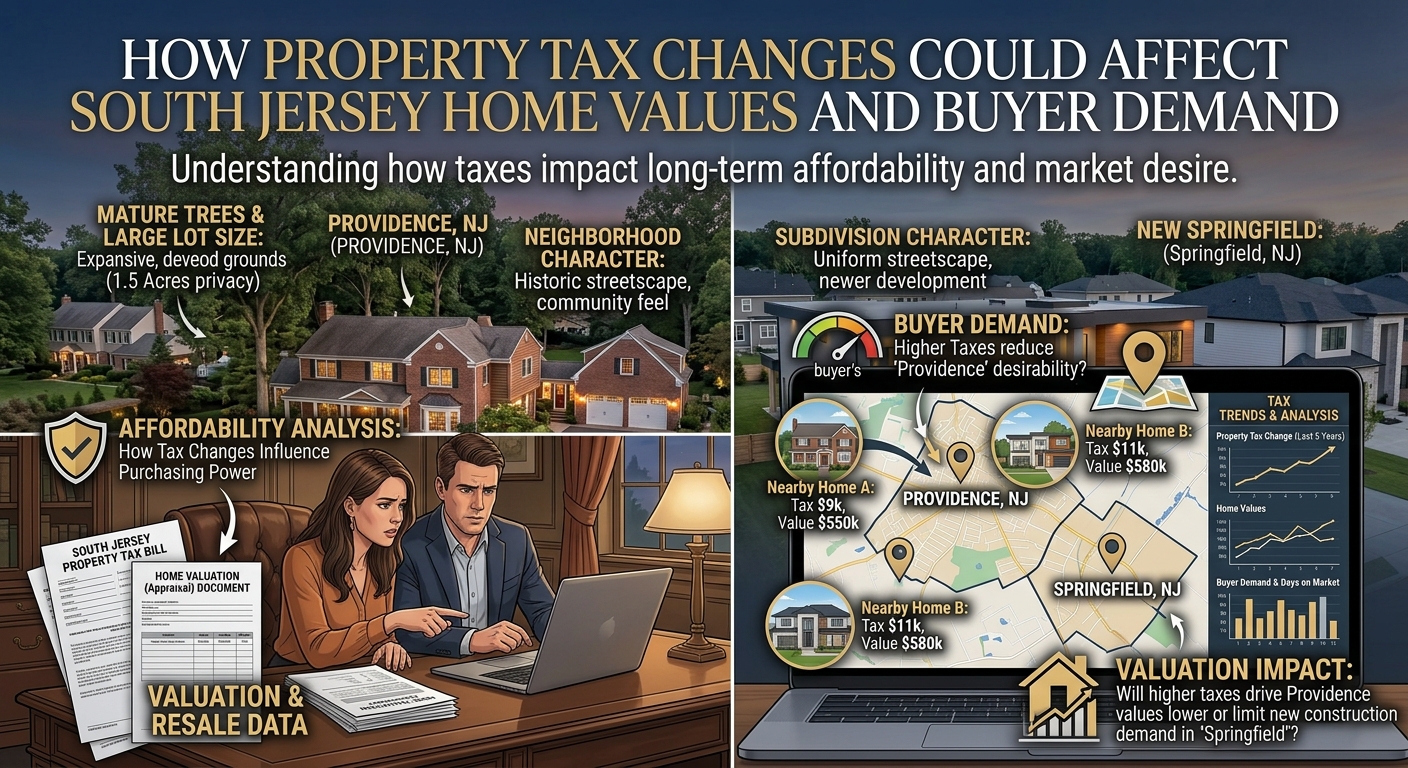
For South Jersey homeowners and buyers, property taxes are much more than a line item on a closing statement.
They can influence how much a buyer can afford, which neighborhoods they consider, how attractive a property appears, and ultimately how much buyers are willing to pay.
That makes changes in property taxes an important factor to watch when evaluating South Jersey real estate.
New Jersey property taxes are based on the assessed value of real property and local taxing requirements. Municipalities can also undertake revaluations or reassessments, which can change how individual properties are assessed. The state maintains annual lists of municipalities with approved revaluations and reassessments.
As Mary Murphy of The Murphy Group explains:
"Buyers don't look at the purchase price in isolation. Property taxes are part of the monthly cost of owning the home, so changes in taxes can influence both affordability and buyer perception."
💰 1. Higher Property Taxes Can Reduce Purchasing Power
A buyer may qualify for a particular home based on its purchase price, but property taxes can change the monthly payment significantly.
When taxes increase, buyers may have to:
- Lower their target price
- Increase their overall housing budget
- Look in different municipalities
- Consider smaller homes
- Reevaluate how much they are comfortable spending
This means property taxes can indirectly influence which homes receive buyer attention.
🧮 2. Buyers Are Comparing Total Monthly Costs
Today's buyers increasingly think beyond the listing price.
Their monthly housing calculation may include:
- Mortgage principal and interest
- Property taxes
- Homeowners insurance
- HOA fees
- Utilities
- Maintenance
Two South Jersey homes with similar asking prices can therefore have very different monthly ownership costs.
The home with the lower listing price isn't necessarily the more affordable option.
🏘️ 3. Tax Differences Can Influence Neighborhood Searches
Property taxes can become part of the decision when buyers compare neighboring communities.
A buyer may find two homes with similar:
- Square footage
- Bedrooms
- Lot sizes
- Condition
- Asking prices
but significantly different annual property taxes.
That difference can influence which community ultimately wins the buyer's attention.
📈 4. Property Taxes Can Influence Perceived Home Value
Buyers don't simply ask:
"How much does this home cost?"
They may also ask:
"What am I getting for the total cost?"
If a home carries relatively high taxes without providing corresponding benefits—such as location, services, amenities, or other desirable characteristics—buyers may perceive it as less attractive compared with alternatives.
That can create additional pressure during negotiations.
🏡 5. High Taxes Don't Automatically Mean Lower Home Values
It's important not to assume that higher property taxes automatically reduce property values.
Buyers may willingly pay higher taxes when they believe the community provides meaningful benefits.
Those may include:
- Highly regarded schools
- Convenient transportation
- Parks and recreation
- Strong community services
- Desirable locations
- Access to shopping and dining
The relationship between taxes and value is therefore more complicated than simply "high taxes are bad."
🔄 6. Revaluations Can Change the Numbers Buyers See
A municipal revaluation or reassessment can change property assessments.
New Jersey describes a revaluation as an adjustment or revision of property values within a municipality, while a reassessment updates property values to maintain a more uniform relationship between assessments and market values.
For homeowners, that means it's important to understand whether a change in an assessment represents a change in the property's estimated market value, a tax-rate adjustment, or part of a broader municipal process.
📊 7. The Tax Rate and Assessment Both Matter
Property taxes aren't determined simply by looking at a home's market price.
New Jersey uses an assessed value and local tax rates to calculate property taxes, and municipalities can have different assessment and taxing circumstances.
This is why buyers comparing properties should look at the actual tax information for each property rather than relying on assumptions based on the purchase price alone.
🧠 8. Tax Changes Can Affect Buyer Psychology
Even when a buyer can technically afford a property, higher ongoing costs can create hesitation.
A buyer may think:
"I could afford the house, but do I want to commit to this monthly expense?"
That distinction matters.
Housing decisions are influenced by both financial qualifications and personal comfort.
If buyers feel that ongoing costs are too high, they may delay making an offer or choose another property.
🏠 9. Sellers Need to Understand Their Tax Position
For sellers, property taxes can become an important part of the marketing and pricing conversation.
A higher tax bill doesn't necessarily make a home unsellable, but sellers should understand how their property's taxes compare with competing homes.
Buyers may be comparing:
- Purchase price
- Annual taxes
- Monthly ownership costs
- Home condition
- Location
- Amenities
Pricing a home without considering that comparison can make it harder to position the property effectively.
💡 10. Property Tax Relief Can Also Affect Affordability
New Jersey currently has several property tax relief programs, including ANCHOR, Senior Freeze, and Stay NJ, with eligibility requirements that vary by program. The state has also continued property-tax relief programs for qualifying residents in 2026.
However, buyers shouldn't assume that a tax-relief benefit will automatically transfer to them after purchasing a property.
Eligibility depends on the specific program and the homeowner's circumstances.
🔍 11. Buyers Should Research Taxes Before Making an Offer
Before submitting an offer, buyers should understand:
- Current annual property taxes
- Assessed value
- Whether the municipality has undergone a recent reassessment or revaluation
- Available tax-relief programs
- How the property's taxes compare with similar homes
New Jersey provides public property-tax and assessment information through its Division of Taxation and Department of Community Affairs resources.
A lender can also help buyers understand how property taxes affect their estimated monthly payment.
📈 12. Long-Term Buyers Should Think Beyond Today's Tax Bill
The current tax bill is important, but buyers should also consider the broader financial picture.
Ask:
- Is the community investing in infrastructure?
- Are property values changing?
- Are municipal services improving?
- Are taxes significantly different from nearby communities?
- Does the overall location justify the ongoing cost?
No one can predict future tax changes with certainty, but understanding the community's financial and development environment can help buyers make more informed decisions.
💼 How The Murphy Group Helps Clients Evaluate Property Taxes
At The Murphy Group, property taxes are considered as part of the broader home-buying and selling strategy.
Their approach includes helping clients understand:
- Total housing costs
- Local market comparisons
- Property tax differences
- Neighborhood characteristics
- Pricing strategy
- Long-term considerations
"The right home isn't simply the one with the right price," Mary says. "Buyers need to understand the full cost of ownership and how that compares with other opportunities in the market."
📊 The Bottom Line
Property tax changes can influence South Jersey real estate in several ways.
They can affect:
- Buyer purchasing power
- Monthly affordability
- Neighborhood preferences
- Offer strategies
- Perceived property value
- Seller pricing decisions
- Long-term ownership costs
But higher taxes don't automatically mean lower home values.
👉 The real question is whether buyers believe the overall value of the home and community justifies the total cost of ownership.
For homeowners and buyers, understanding property taxes—and how they compare with surrounding properties—is an important part of making an informed South Jersey real estate decision.
📲 Want to Understand How Property Taxes Affect Your Home's Value?
Whether you're considering buying, selling, or simply trying to understand your property's position in the South Jersey market, The Murphy Group can help you evaluate pricing, neighborhood factors, and the broader cost of homeownership.
👉 Start here: www.mgsells.com

Mary Murphy
Team Leader | The Murphy Group | eXp Realty, LLC | PLACE
or another way