

Categories
Burlington County, Camden County, Gloucester County, Home Buying Tips, Home Buying Guides, Housing Guide, New Jersey Real Estate, NJ Housing, Real Estate Guides, South Jersey Real Estate, South Jersey Buyer InsightsPublished August 25, 2026
How Neighborhood Turnover Is Changing the Character of South Jersey Communities

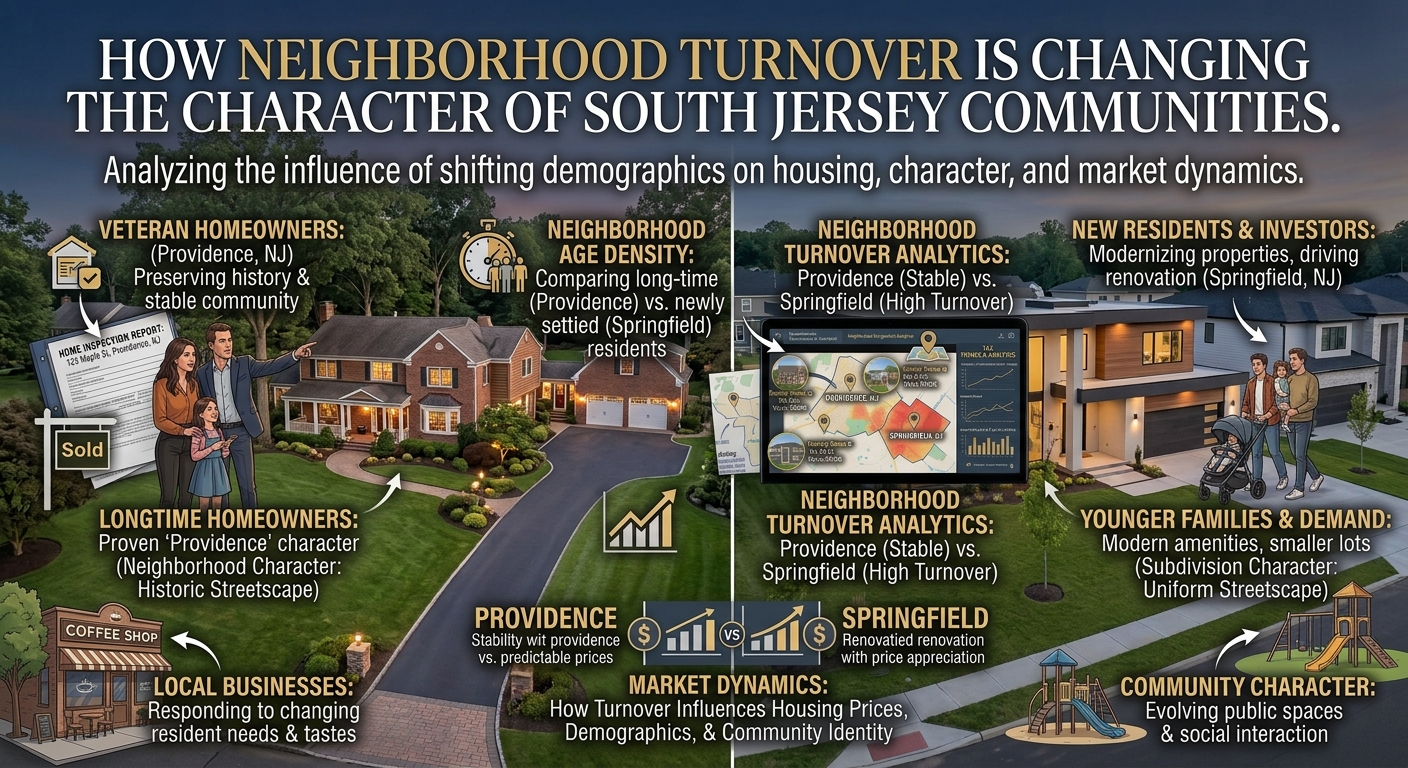
Neighborhoods don't stay exactly the same forever.
As longtime homeowners sell, younger families move in, new residents relocate to the area, and different generations enter the housing market, the character of a community can gradually evolve.
This process—known as neighborhood turnover—can influence much more than who lives next door.
It can affect:
- Housing styles
- Property improvements
- Local businesses
- Community activities
- Buyer preferences
- Neighborhood identity
- Long-term housing demand
And in South Jersey, where communities range from established suburban neighborhoods to rapidly changing areas, those shifts can create noticeable differences from one street to the next.
As Mary Murphy of The Murphy Group explains:
"Neighborhoods evolve as the people who live there change. New residents can bring new energy and expectations, while longtime homeowners help preserve the qualities that made the community desirable in the first place."
🏡 What Is Neighborhood Turnover?
Neighborhood turnover occurs when homes change ownership or occupancy over time.
It can happen because:
- Longtime homeowners decide to downsize
- Families relocate for work or lifestyle reasons
- Younger buyers enter the market
- New residents move from nearby cities
- Investors purchase properties
- Homeowners move into newer construction
Turnover doesn't automatically mean a neighborhood is declining or changing for the worse.
In many cases, it is simply part of a community's natural life cycle.
👨👩👧👦 1. New Generations Can Change Housing Demand
Different generations often have different priorities when searching for homes.
Younger buyers may place greater emphasis on:
- Updated kitchens
- Home office space
- Flexible floor plans
- Low-maintenance features
- Walkability
- Nearby restaurants and businesses
- Energy efficiency
Longtime homeowners may value:
- Larger lots
- Traditional layouts
- Mature landscaping
- Established relationships
- Quiet streets
- Long-term neighborhood stability
As the balance between these groups changes, the types of homes buyers want can change as well.
🔨 2. New Homeowners Often Bring New Investment
When a home changes hands, the new owner may decide to make improvements.
That can mean:
- Exterior updates
- New landscaping
- Kitchen renovations
- Bathroom upgrades
- Fresh paint
- New flooring
- Energy-efficiency improvements
When several homeowners make improvements over time, the visual appearance of an entire neighborhood can gradually change.
One renovated home may not make much difference.
Dozens can.
🌳 3. Longtime Residents Help Preserve Neighborhood Character
Turnover doesn't erase a community's history.
Longtime homeowners often contribute:
- Mature landscaping
- Community traditions
- Local knowledge
- Neighborhood relationships
- Architectural character
- A sense of stability
These elements can give established South Jersey neighborhoods a personality that newer developments may take years to develop.
🛍️ 4. New Residents Can Influence Local Businesses
Changes in household composition can eventually affect what businesses are successful nearby.
Growing demand can support:
- Restaurants
- Coffee shops
- Grocery stores
- Fitness centers
- Childcare
- Specialty retailers
- Professional services
When new businesses arrive, they can make a neighborhood more convenient—and potentially more attractive to future buyers.
🏘️ 5. Housing Preferences Can Shift
As new buyers enter an established neighborhood, demand may gradually move toward different features.
For example, buyers may increasingly look for:
- Dedicated home offices
- Open or flexible living areas
- Modern kitchens
- Updated bathrooms
- Outdoor entertaining areas
- Attached garages
- Low-maintenance yards
This can encourage sellers to update properties before putting them on the market.
It can also influence which homes receive the strongest buyer attention.
🚗 6. Convenience Can Become More Important
Neighborhood turnover can also change how residents use the surrounding community.
New homeowners may place a premium on proximity to:
- Major highways
- Public transportation
- Shopping
- Restaurants
- Parks
- Healthcare
- Recreation
A neighborhood that once appealed primarily because of its homes may increasingly attract buyers because of everything surrounding those homes.
🏗️ 7. Development Can Accelerate Neighborhood Change
Turnover doesn't happen in isolation.
New development, infrastructure improvements, commercial projects, and redevelopment can accelerate changes in established communities.
A neighborhood may experience:
New residents → increased demand → new businesses → property improvements → stronger buyer interest.
But the reverse can also happen if properties experience prolonged vacancies, deferred maintenance, or declining investment.
That's why buyers should consider the direction of a neighborhood, not simply its current appearance.
💰 8. Turnover Can Influence Property Values
Neighborhood turnover doesn't automatically increase or decrease home values.
Its impact depends on what happens alongside the turnover.
Positive factors may include:
- Well-maintained homes
- Renovation activity
- New businesses
- Strong buyer demand
- Infrastructure improvements
- Attractive amenities
Potential challenges may include:
- Increasing vacancies
- Deferred maintenance
- Reduced community investment
- Declining demand
The important question is whether the overall neighborhood is becoming more or less attractive to future buyers.
🔍 9. Buyers Should Look for Signs of Neighborhood Momentum
If you're considering purchasing in an established South Jersey community, look beyond the individual property.
Pay attention to:
- How many homes have recently sold
- Whether properties are being renovated
- New construction nearby
- New businesses opening
- Infrastructure projects
- Property maintenance
- Community amenities
- How long homes typically remain on the market
These clues can help reveal whether a neighborhood is stable, improving, or experiencing challenges.
🧠 10. Neighborhood Character Can Evolve Without Disappearing
One of the most interesting aspects of neighborhood turnover is that change doesn't necessarily eliminate identity.
A community can welcome new residents while preserving the characteristics that made it desirable.
The strongest established neighborhoods often find a balance between:
Preserving what works + adapting to what residents need next.
That balance can help a community remain attractive across generations.
📈 11. Turnover Can Create Opportunities for Buyers
Neighborhood change can sometimes create opportunities for buyers willing to look beyond current perceptions.
An established community undergoing gradual reinvestment may offer:
- Existing housing stock
- Mature trees
- Established infrastructure
- Nearby amenities
- Renovation opportunities
- New businesses
- A growing buyer base
The key is understanding whether those changes are creating sustainable demand.
🏡 12. Sellers Should Pay Attention to Who Is Moving In
Neighborhood turnover can also provide useful information for homeowners preparing to sell.
Understanding the incoming buyer can help sellers determine which improvements and marketing messages are most relevant.
For example, if buyers increasingly want:
- Home offices
- Flexible spaces
- Updated systems
- Low-maintenance yards
- Outdoor living
those features may deserve greater attention in the property's presentation.
💼 How The Murphy Group Helps Clients Understand Neighborhood Trends
At The Murphy Group, evaluating a property means looking beyond the four walls.
Their approach considers:
- Neighborhood characteristics
- Housing turnover
- Buyer preferences
- Local development
- Community amenities
- Market activity
- Long-term property appeal
"A neighborhood's history matters, but so does its direction," Mary says. "We help clients understand both so they can make decisions based on where the community is going—not just where it has been."
📊 The Bottom Line
Neighborhood turnover is a natural part of South Jersey's evolving real estate market.
As homes change hands and new residents move in, communities can experience changes in:
- Housing preferences
- Property improvements
- Local businesses
- Community activities
- Neighborhood character
- Buyer demand
Current South Jersey market conditions also vary significantly by county and community, which makes neighborhood-level analysis especially important. Recent 2026 market reports show meaningful differences in inventory, days on market, and buyer competition across South Jersey.
👉 The most important question isn't whether a neighborhood is changing. It's whether the changes are creating a community that remains attractive, connected, and well-positioned for the future.
📲 Curious About Where a South Jersey Neighborhood Is Heading?
Whether you're buying into an established community or preparing to sell in a neighborhood that's changing, The Murphy Group can help you understand local trends and evaluate the bigger picture.
👉 Start here: www.mgsells.com

Mary Murphy
Team Leader | The Murphy Group | eXp Realty, LLC | PLACE
or another way