

Categories
Burlington County, Camden County, Gloucester County, Home Buying Tips, Housing Guide, housing trend, Real Estate Guides, Relocation & Home Buying Guides, South Jersey Real Estate, South Jersey Market TrendsPublished August 26, 2026
How Nearby Construction Can Affect Your South Jersey Home’s Value

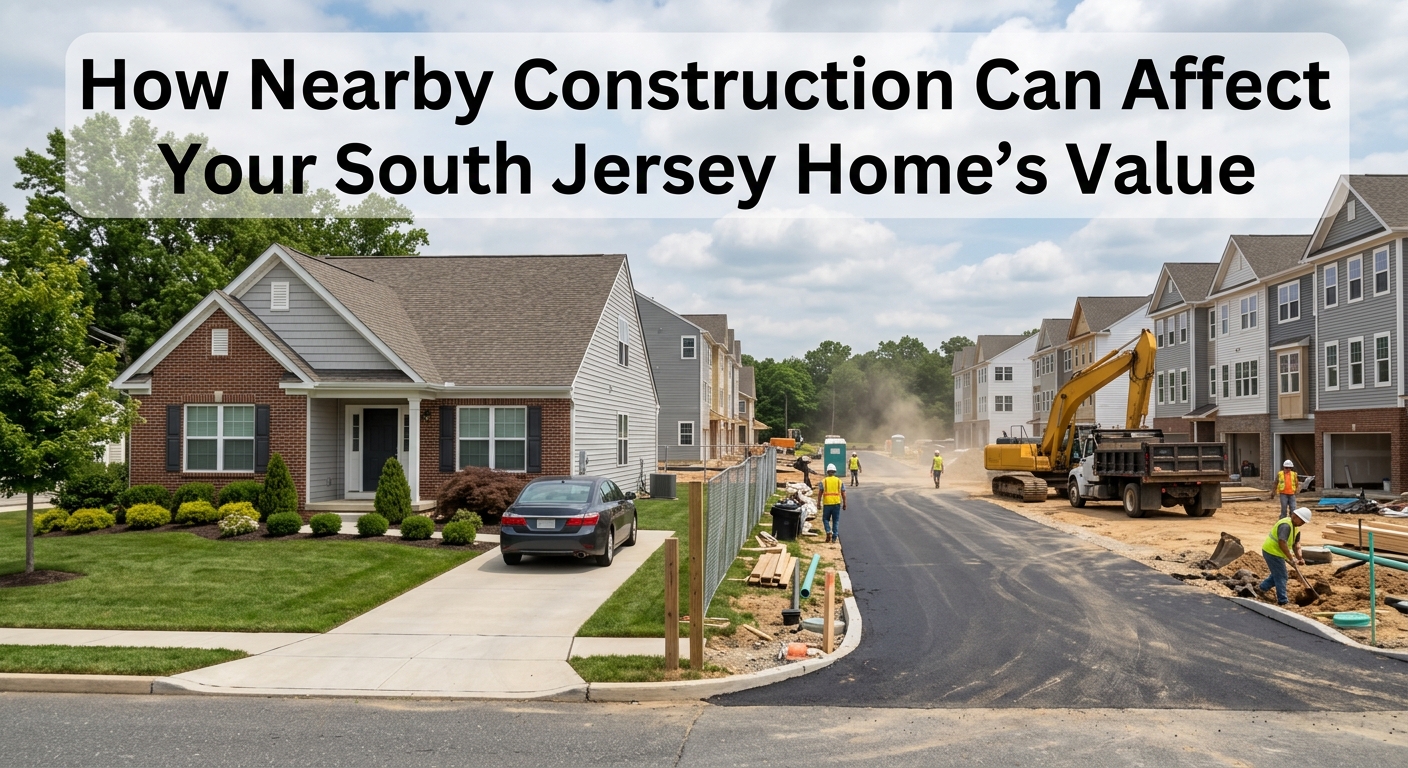
A new development can completely change the way a neighborhood looks and functions.
Sometimes that's good news.
A new shopping center, improved road, new housing development, or community amenity can make an area more convenient and attractive.
But construction can also create short-term—or sometimes long-term—concerns for nearby homeowners.
Noise, traffic, dust, changing views, reduced privacy, and uncertainty about what is being built can all influence how buyers perceive a property.
New Jersey itself recognizes that proposed construction and other off-site conditions can potentially affect the value of nearby residential properties. State guidance encourages prospective buyers to investigate surrounding conditions rather than looking only at the property itself.
As Mary Murphy of The Murphy Group explains:
"Construction isn't automatically good or bad for property values. What matters is what is being built, where it is located, how it changes the surrounding area, and how buyers perceive those changes."
🏗️ 1. Not All Construction Has the Same Impact
The first thing homeowners should understand is that "construction nearby" can mean very different things.
A small residential renovation is very different from:
- A new housing development
- Apartment construction
- A shopping center
- A major road project
- Industrial development
- Utility infrastructure
- A new school or community facility
The size, location, duration, and purpose of the project can all influence its impact.
🚧 2. Construction Can Create Short-Term Disruptions
Even a project that ultimately benefits the neighborhood can create temporary inconveniences.
Homeowners may experience:
- Construction noise
- Heavy equipment
- Dust
- Increased truck traffic
- Road closures
- Detours
- Temporary parking issues
- Changes in access
These factors can make a property less appealing while construction is underway.
For sellers, timing can therefore matter.
🚗 3. Traffic Can Change How Buyers View a Property
One of the biggest potential concerns is increased traffic.
A new development can bring additional:
- Residents
- Employees
- Customers
- Delivery vehicles
- School traffic
A quiet street today may experience noticeably different traffic patterns after a large project is completed.
For buyers, the question isn't simply whether a new development is being built.
It's:
"How will this project change the way I use this location?"
🔊 4. Noise Can Affect Buyer Perception
Noise is another factor buyers may notice immediately.
Construction itself creates temporary noise, but the completed project may introduce permanent activity.
For example:
- Commercial properties can generate customer traffic
- New roads can increase vehicle noise
- Apartment buildings can increase neighborhood activity
- Industrial uses may create ongoing operational noise
The impact depends heavily on distance, hours of activity, traffic patterns, and the type of development.
🌳 5. Views and Privacy Can Change
A nearby development can alter what homeowners see from their property.
A wooded area or open parcel could eventually become:
- Homes
- Parking areas
- Commercial buildings
- Roads
- Utility infrastructure
That doesn't necessarily reduce value, but a significant change in privacy or views can influence buyer perception.
For properties where privacy is a major selling point, this deserves particular attention.
🏘️ 6. New Construction Can Also Increase Demand
Construction isn't necessarily a negative.
New development can introduce improvements that make an area more attractive.
Potential benefits can include:
- New restaurants
- Retail
- Grocery stores
- Parks
- Recreation
- Healthcare
- Transportation improvements
- New community amenities
Research published in 2026 by The Pew Charitable Trusts found that housing built near existing jobs, stores, and transit can produce infrastructure and public-finance advantages compared with development farther from established services.
For homeowners, the important issue is whether nearby development improves the overall convenience and desirability of the area.
📈 7. New Development Can Signal Neighborhood Investment
When developers invest significant capital in an area, it can sometimes indicate that they see future demand.
That investment may lead to:
- More housing
- New businesses
- Improved infrastructure
- Additional services
- Increased community activity
But homeowners shouldn't automatically assume that every development will increase property values.
The quality and type of development matter.
⚠️ 8. Large Projects Can Create Uncertainty
One of the biggest challenges for homeowners is not always the construction itself.
It can be the uncertainty surrounding it.
Homeowners may wonder:
- What exactly is being built?
- How large will it be?
- When will construction finish?
- Will traffic increase?
- Will there be additional phases?
- Will zoning change?
- Will surrounding properties also be developed?
Uncertainty can make buyers more cautious.
That's why understanding the approved plans and development timeline can be valuable.
🔍 9. Buyers Should Research More Than What They See From the Street
If you're buying a South Jersey home near active or proposed construction, don't rely solely on the current appearance of the neighborhood.
Research:
- Planning and zoning approvals
- Building permits
- Development proposals
- Road projects
- Nearby land use
- Future phases of development
New Jersey's Department of Community Affairs provides construction and development data, including building permits, housing units authorized, demolition activity, and other indicators through its Development Trends Viewer.
That information can help buyers understand whether a project is isolated or part of a larger pattern of development.
🏡 10. Homeowners Should Consider the Timeline
The same construction project can affect a property differently at different stages.
During Construction
Potential concerns include:
- Noise
- Dust
- Traffic
- Equipment
- Temporary access issues
After Completion
Potential benefits or drawbacks may include:
- New amenities
- More traffic
- Improved infrastructure
- Less privacy
- New neighbors
- Increased convenience
The long-term effect may therefore be very different from the short-term disruption.
💰 11. The Impact on Home Value Isn't Always Immediate
Property values don't respond to construction in a simple, predictable way.
Buyers may initially react negatively to:
- Noise
- Traffic
- Construction activity
- Uncertainty
But after completion, the same project could become a positive if it brings desirable amenities or improves the area's overall appeal.
That's why homeowners should avoid assuming:
Construction = lower value
or
Development = higher value.
The actual effect depends on the specific project and surrounding market.
📊 12. Distance Matters
Not every property near a development will experience the same impact.
A home directly adjacent to a construction site may experience very different effects from a home several blocks away.
Consider:
- Distance
- Line of sight
- Traffic patterns
- Road access
- Noise direction
- Property orientation
- Screening and landscaping
Two homes in the same neighborhood can therefore have completely different experiences.
🧠 13. Buyer Perception Can Matter as Much as the Physical Impact
Real estate values aren't determined entirely by physical characteristics.
Perception matters.
A buyer may see a new shopping center as:
"Convenient—everything is nearby."
Another buyer may see it as:
"Too much traffic and activity."
The same development can therefore appeal to one buyer while discouraging another.
This is why understanding the likely buyer for a particular property is important when evaluating nearby construction.
🏘️ 14. Infrastructure Projects Can Be Different
Not all construction involves buildings.
Road improvements, bridges, utilities, sidewalks, drainage systems, and transportation projects can also affect nearby properties.
Some may create temporary disruption but provide long-term benefits.
Others may increase traffic or alter access.
Homeowners should evaluate both the construction period and the finished project.
💼 How The Murphy Group Helps Clients Evaluate Nearby Development
At The Murphy Group, understanding a home's value means looking beyond the property lines.
Their approach considers:
- Current neighborhood conditions
- Proposed development
- Buyer preferences
- Location advantages
- Potential drawbacks
- Comparable properties
- Long-term resale considerations
"We don't look at construction in isolation," Mary says. "We look at what it means for the neighborhood and how buyers are likely to perceive the change."
📊 The Bottom Line
Nearby construction can affect a South Jersey home's value—but the impact isn't automatically positive or negative.
It depends on:
- What is being built
- How close it is
- How long construction will last
- Traffic and noise
- Changes to privacy or views
- New amenities
- Infrastructure improvements
- Buyer perception
- Long-term neighborhood demand
👉 The most important question isn't simply, "Is there construction nearby?" It's "What will this construction change about the way people live, work, travel, and experience the neighborhood?"
For homeowners and buyers, understanding that bigger picture can make it easier to evaluate both today's property value and tomorrow's resale potential.
📲 Wondering How Nearby Development Could Affect Your Home?
If there's proposed construction, new development, or infrastructure work near your South Jersey property, The Murphy Group can help you evaluate the potential impact from a real estate perspective.
👉 Start here: www.mgsells.com

Mary Murphy
Team Leader | The Murphy Group | eXp Realty, LLC | PLACE
or another way