

Categories
digital home buying, Home Buying Guides, Home Buying Tips, Real Estate Guides, New Jersey Real Estate, South Jersey Real EstatePublished June 8, 2026
How emotional attachment forms during virtual home tours

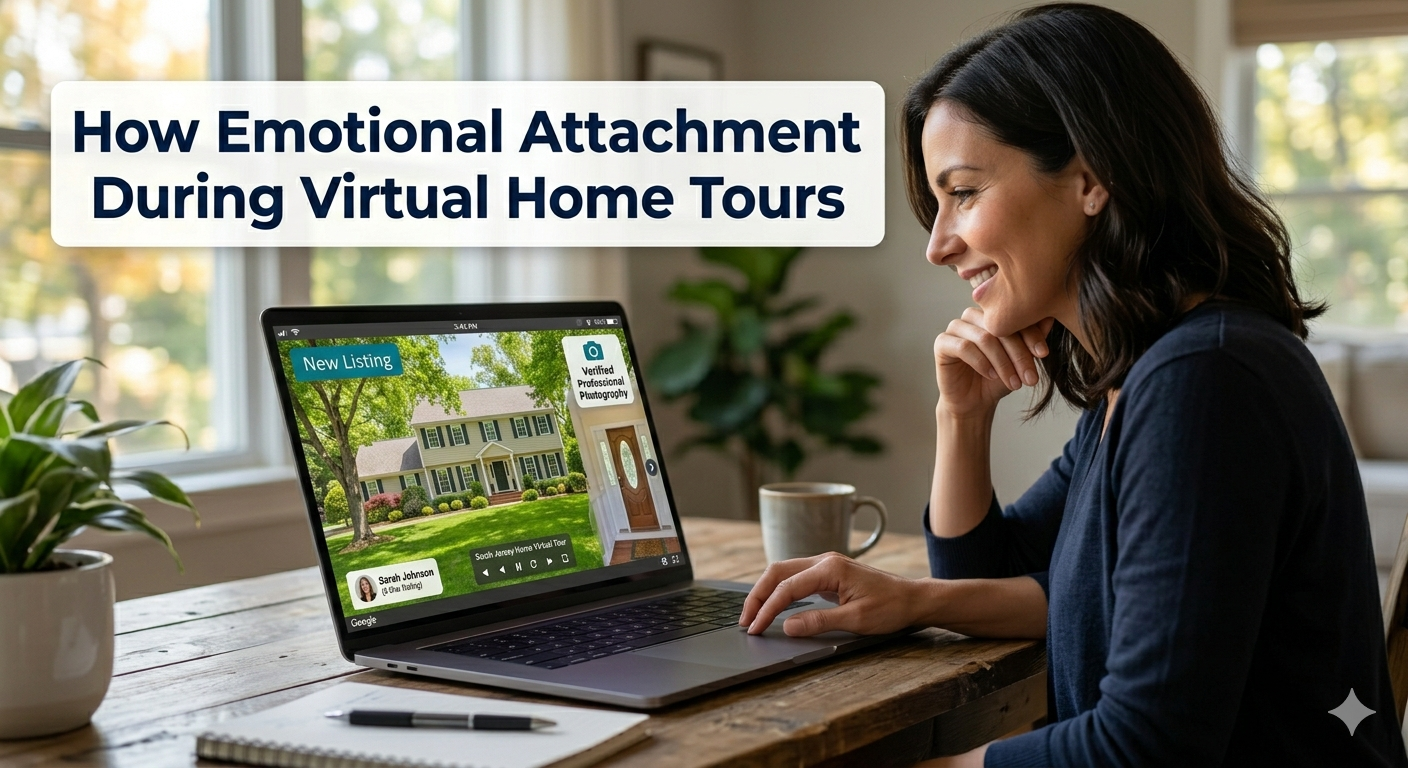
A surprising shift has taken place in real estate:
Many buyers now form emotional connections to homes before they ever step inside them.
Virtual tours, video walkthroughs, and digital listing experiences are no longer just informational tools—they are emotional triggers.
In South Jersey’s 2026 market, buyers often decide how they feel about a home while still sitting on their couch.
As Mary Murphy of The Murphy Group explains:
“By the time a buyer walks through the front door, they’ve often already decided whether the home feels right.”
🧠 Emotional Attachment Starts With Imagination
Unlike in-person showings, virtual tours require buyers to mentally complete the experience.
As they navigate a home digitally, they begin to imagine:
- Where furniture would go
- How natural light changes during the day
- What it would feel like to live there
- How daily routines would unfold
That imagination is the beginning of emotional attachment.
The more easily buyers can picture themselves in the space, the stronger the connection becomes.
📱 1. Motion Creates a Sense of Reality
Video walkthroughs and 3D tours feel more “real” than static photos because they mimic movement.
As buyers move through a virtual space, their brain processes it as an experience rather than just information.
This creates:
- A stronger sense of presence
- A more realistic spatial understanding
- A feeling of “being there”
That sense of presence is the first step toward attachment.
🌞 2. Light and Flow Shape Emotional Comfort
Even in virtual environments, buyers are highly sensitive to:
- Brightness
- Room transitions
- Sightlines
- Openness
Homes that feel naturally bright and easy to navigate tend to create stronger emotional pull.
When a virtual tour feels smooth and intuitive, buyers subconsciously associate that ease with comfort in real life.
🏡 3. The Brain Builds Ownership Before Purchase
One of the most powerful psychological effects in virtual tours is mental ownership.
As buyers explore digitally, they begin to think in terms of:
- “This could be my kitchen”
- “I’d put my desk here”
- “This would be the family room”
That shift—from observer to participant—is where emotional attachment forms.
🛋️ 4. Staging and Design Influence Emotional Projection
Virtual attachment depends heavily on how a home is presented.
Well-staged or thoughtfully designed spaces help buyers:
- Visualize scale accurately
- Understand room function quickly
- Imagine daily life more easily
Empty or poorly presented homes often slow emotional engagement because buyers struggle to “fill in the blanks.”
🔁 5. Rewatching Builds Familiarity—and Familiarity Builds Attachment
Unlike in-person showings, virtual tours can be revisited repeatedly.
And repetition matters.
Each time a buyer reopens a tour, they:
- Notice new details
- Strengthen familiarity
- Deepen emotional comfort
- Increase subconscious ownership
Familiarity often transforms initial interest into emotional preference.
🧠 6. The “Safe Exploration” Effect
Virtual tours allow buyers to explore without pressure.
There’s:
- No agent standing beside them
- No time constraint
- No immediate decision required
This relaxed environment allows emotions to develop naturally, without pressure interfering.
Ironically, this freedom often strengthens attachment more than in-person urgency.
📍 7. Digital First Impressions Shape In-Person Reactions
By the time buyers schedule a showing, they often already have:
- Favorite rooms
- Expected emotional experience
- Mental layout understanding
- Pre-formed opinions
If the in-person experience matches the virtual impression, attachment deepens quickly.
If it differs, buyers may feel uncertainty—even in a great home.
⚠️ When Emotional Attachment Doesn’t Form
Not all virtual tours succeed in creating connection.
Common barriers include:
- Poor lighting or dark visuals
- Confusing navigation or layout flow
- Lack of staging or scale reference
- Low-quality video or photography
- Overly fast or disjointed walkthroughs
When buyers struggle to understand a space, emotional connection weakens.
🧠 Why This Matters in Today’s Market
In South Jersey’s digital-first real estate environment:
- Buyers often shortlist homes online
- Virtual tours influence showing decisions
- Emotional attachment begins earlier than ever
- Competition happens before physical visits
This means the virtual experience is no longer optional—it is foundational.
💼 How The Murphy Group Optimizes Virtual Buyer Engagement
At The Murphy Group, virtual presentation is treated as a critical part of the selling process.
Their approach includes:
- High-quality video walkthroughs
- Strategic lighting and staging recommendations
- Flow-focused tour sequencing
- Buyer psychology-based presentation planning
- Ensuring digital experience matches in-person reality
“A virtual tour should do more than show a home,” Mary says. “It should help buyers start imagining their life there.”
📊 The Bottom Line
Emotional attachment during virtual home tours forms because:
- Buyers actively imagine living in the space
- Movement and flow create realism
- Familiarity builds comfort over time
- Digital exploration reduces decision pressure
- Mental ownership begins before physical visits
And in today’s market:
👉 Many homes are emotionally “chosen” long before buyers ever walk through the door.
📲 Want Your Home to Stand Out Online and In Person?
The Murphy Group helps South Jersey sellers create digital-first impressions that attract attention, build emotional connection, and drive real-world demand.
👉 Start here: www.mgsells.com

Mary Murphy
Team Leader | The Murphy Group | eXp Realty, LLC | PLACE
or another way