

Categories
New Jersey Real Estate, Real Estate Guides, Real Estate Market Insights, Home Buying Tips, Home Buying GuidesPublished April 20, 2026
How Buyers Use Google Maps Before Scheduling a Tour

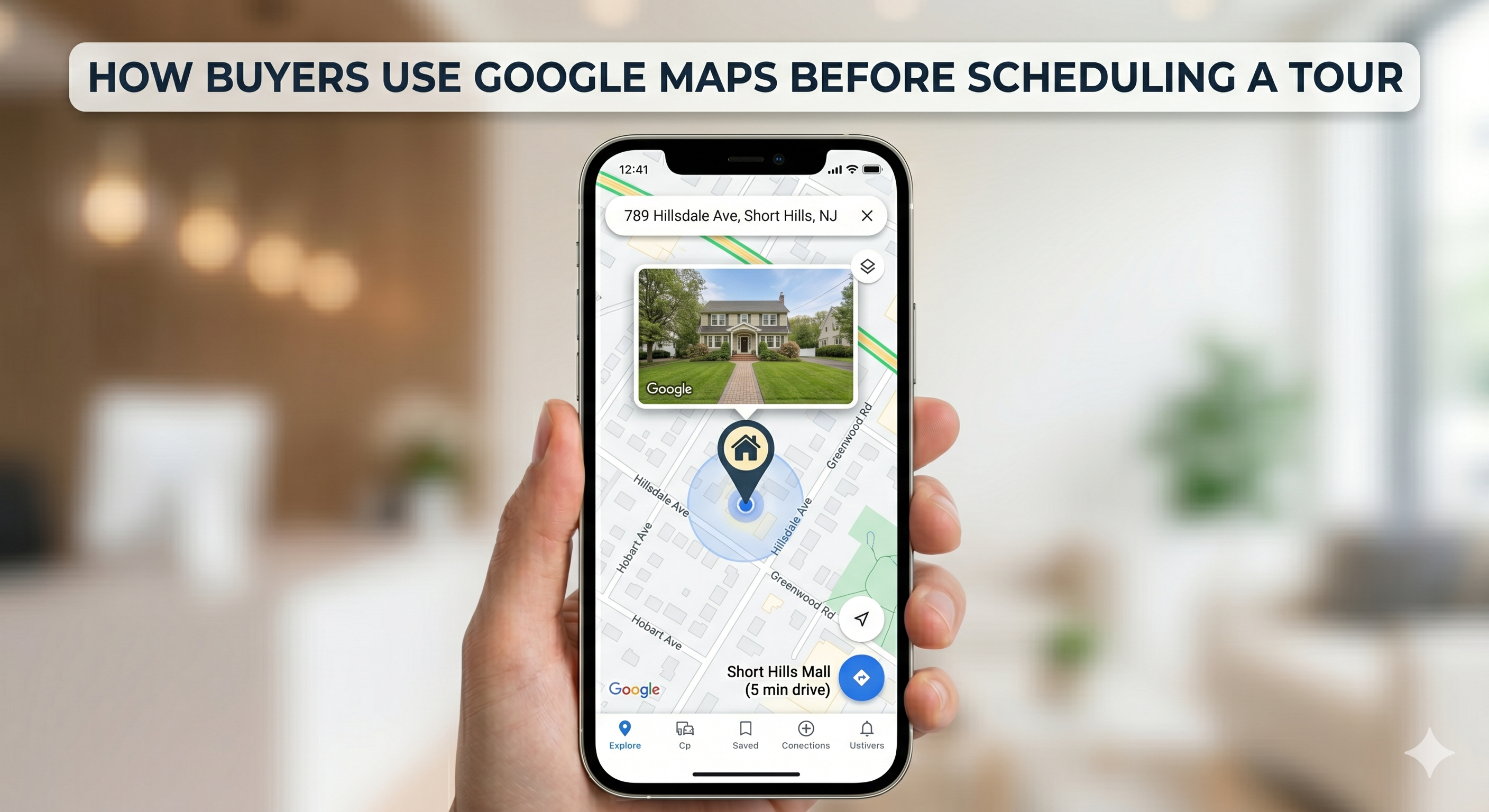
Before buyers ever schedule a showing in New Jersey, they’re doing something that many sellers overlook:
👉 They’re opening Google Maps.
In seconds, they’re evaluating not just the home—but everything around it. The street, the neighbors, nearby businesses, traffic flow, even how the property looks from above.
And here’s the key insight:
Buyers often decide whether a home is worth visiting based on what they see on the map—before they ever contact an agent.
As Mary Murphy of The Murphy Group explains:
“Google Maps has become part of the showing process. Buyers use it to validate what they’re seeing in the listing—and sometimes to rule a home out entirely.”
📍 What Buyers Are Actually Looking For
When a buyer pulls up a property on Google Maps, they’re not casually browsing—they’re actively investigating.
1. The Immediate Street View
Buyers check:
- Curb appeal beyond listing photos
- Neighboring homes and property conditions
- Street parking and spacing
- Overall feel of the block
If the street doesn’t match the expectation set by the listing, interest drops quickly.
2. The Surrounding Area
Zooming out, buyers look for:
- Proximity to main roads or highways
- Nearby commercial buildings or industrial zones
- Parks, schools, and walkability
- Noise factors (busy intersections, rail lines, etc.)
This helps them assess lifestyle fit in seconds.
3. Satellite View Perspective
Satellite mode reveals things photos may not:
- Backyard size and layout
- Roof condition or additions
- Lot boundaries and neighboring proximity
- Pools, decks, or outdoor features
If something feels off or unclear, buyers hesitate.
4. Commute and Convenience
Buyers often plug in directions immediately.
They’re evaluating:
- Drive time to work hubs
- Traffic patterns
- Accessibility to major routes
- Daily convenience
In New Jersey, where commuting plays a major role, this step can make or break interest.
⚠️ Why Some Homes Lose Buyers on Google Maps
Even strong listings can fall apart during this stage.
1. The Listing Oversells the Reality
If photos present a polished, private setting—but maps reveal a busy road or tight spacing—buyers feel misled.
That disconnect creates doubt.
2. Lack of Context in Photos
If the listing avoids showing the street or surroundings, buyers assume there’s something being hidden.
Transparency builds trust. Omission raises questions.
3. Unflattering Map Imagery
Outdated or poorly maintained exteriors visible on Street View can impact perception—even if the home has been updated since.
First impressions extend beyond listing photos.
4. Nearby Red Flags
Buyers may notice:
- Commercial buildings next door
- High-traffic roads
- Utility structures
- Dense housing patterns
Even if these aren’t dealbreakers, they can reduce urgency to schedule a tour.
🧠 The Psychology Behind Map Checking
Buyers use Google Maps for one main reason:
👉 Risk reduction
Before investing time in a showing, they want to confirm:
- The home matches the listing
- The area aligns with their lifestyle
- There are no surprises
If anything feels uncertain, they move on to the next listing.
🏡 How This Impacts New Jersey Sellers
In New Jersey’s competitive market, buyers are often comparing multiple homes across different towns and neighborhoods.
That means:
- Your listing is being evaluated beyond your control
- Buyers are forming opinions before stepping inside
- Small environmental factors can influence big decisions
Homes that align visually and contextually—from listing to map—perform better.
💼 How The Murphy Group Prepares Listings for This Step
At The Murphy Group, marketing doesn’t stop at the listing—it anticipates buyer behavior.
Their strategy includes:
- Providing full visual context of the property and surroundings
- Setting accurate expectations through honest presentation
- Highlighting location advantages within marketing materials
- Addressing potential concerns proactively
- Positioning homes to build confidence before a showing is requested
“We think about what buyers will see after the listing,” Mary says. “Because that’s where many decisions are actually made.”
📈 The Bottom Line
Google Maps has quietly become a critical part of the home-buying journey.
Before buyers schedule a tour, they’re asking:
- Does this home look as good in real life?
- Does the area fit my lifestyle?
- Are there any hidden surprises?
If the answers aren’t clear—or don’t match expectations—showings never happen.
📲 Want Buyers to Feel Confident Before They Visit?
The Murphy Group helps sellers present their homes with clarity, transparency, and strategy—so buyers don’t just click, they commit to seeing it in person.
👉 Start here: www.mgsells.com

Mary Murphy
Team Leader | The Murphy Group | eXp Realty, LLC | PLACE
or another way