

Categories
Burlington County, Camden County, Gloucester County, South Jersey Real Estate, Real Estate Guides, New Jersey Real Estate, HVAC, Home Buying Tips, home inspection, home maintenance costPublished October 19, 2026
How an Aging HVAC System Can Affect a South Jersey Home Purchase

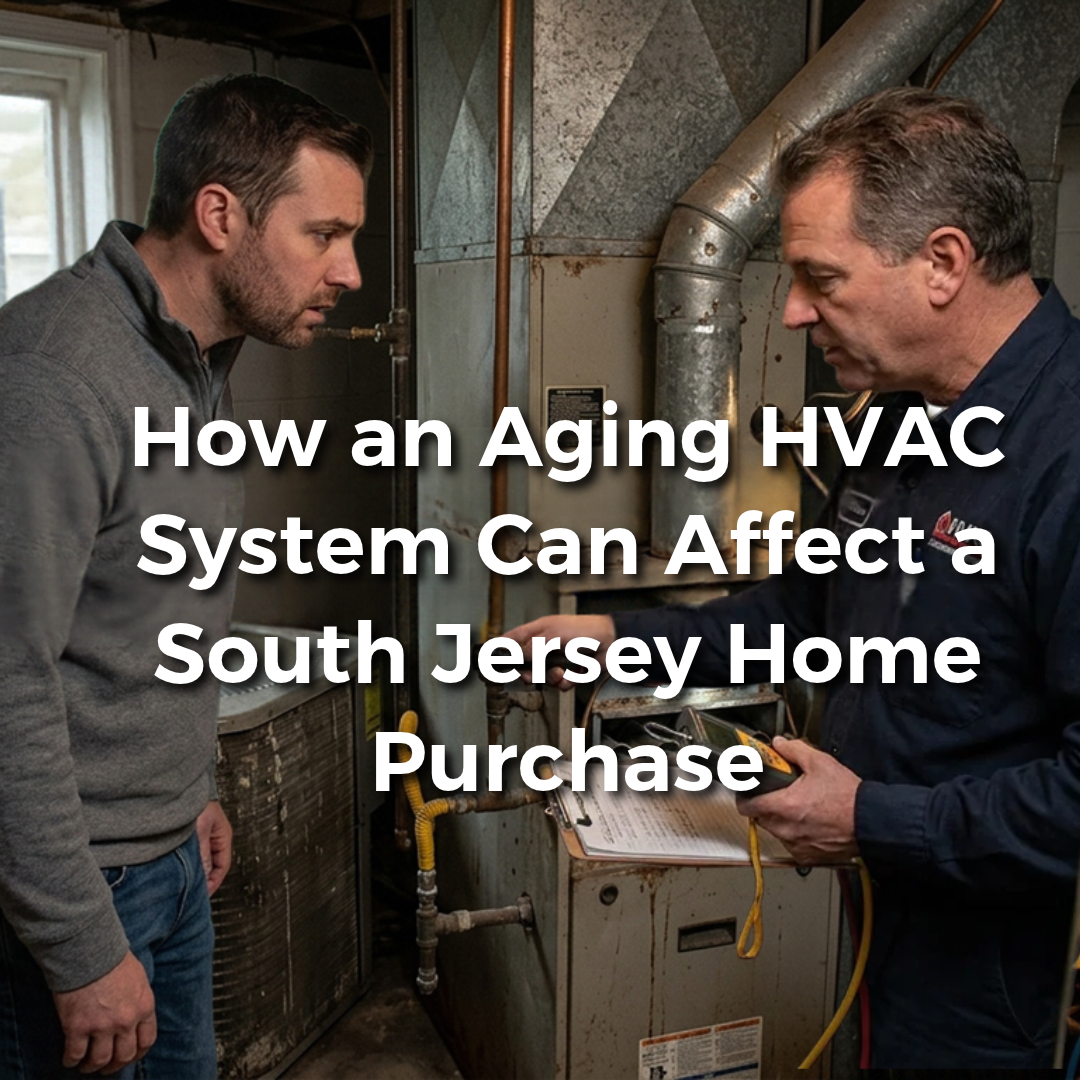
When touring a South Jersey home, it's easy to focus on the kitchen, bathrooms, flooring, and curb appeal. But some of the most important features are the ones buyers rarely notice until something goes wrong.
One of them is the heating, ventilation, and air conditioning system—better known as HVAC.
An aging HVAC system doesn't automatically mean a home is a bad investment. However, it can affect monthly utility bills, comfort, maintenance costs, and the amount of money a buyer may need to spend shortly after closing.
In South Jersey, where homeowners rely on heating during cold winters and cooling during humid summers, the condition of these systems deserves careful attention.
As Mary Murphy of The Murphy Group explains:
“A home's value isn't just about what you see during a showing. Buyers also need to understand the condition of the systems they'll depend on every day—and whether those systems could create unexpected expenses after closing.”
Before making an offer, understanding the age, condition, and performance of a home's HVAC equipment can help you make a more informed decision.
🏡 1. Why HVAC Age Matters When Buying a Home
An HVAC system is a major component of a home's everyday functionality. Depending on the property, it may include a furnace, boiler, central air conditioner, heat pump, ductwork, thermostats, and related equipment.
As equipment ages, its reliability and efficiency can change. Parts may become harder to source, repairs may become more frequent, and replacement may become a more realistic possibility.
According to ENERGY STAR's heating and cooling guidance, buyers should consider having equipment evaluated when a heat pump or air conditioner is more than 10 years old or when a furnace or boiler is more than 15 years old.
These are useful guidelines—not automatic expiration dates. A well-maintained older system may continue working reliably, while a newer system can still have problems because of poor installation, inadequate maintenance, or other issues.
The important question isn't simply how old the system is. It's how well it operates and what its condition could mean for future ownership costs.
🔍 2. Different HVAC Systems Have Different Lifespans
Not every South Jersey home uses the same heating and cooling setup. Understanding what's installed can help buyers ask better questions.
Common systems include:
- Gas or oil furnaces: Heat the home by distributing warm air through ductwork.
- Boilers: Heat water or produce steam for radiators or other hydronic heating systems.
- Central air conditioning: Cools the home through a central unit and ductwork.
- Heat pumps: Provide heating and cooling, with performance depending on the system and outdoor conditions.
- Ductless mini-splits: Provide heating and cooling to individual rooms or designated zones.
Age recommendations vary by equipment type, usage, climate, maintenance, and installation quality. A professional HVAC contractor can assess the specific system rather than relying on a general estimate.
Buyers should also distinguish between the age of the heating equipment and the age of the air conditioner. A home might have a newer furnace paired with an older outdoor AC unit—or the reverse.
Ask for the installation dates of each major component and whether any equipment has been replaced separately.
💰 3. An Older System Could Mean Higher Energy Bills
Heating and cooling account for a substantial share of household energy use
. ENERGY STAR notes that nearly half of the energy used in a typical home goes toward heating and cooling. (ENERGY STAR)
As equipment ages or deteriorates, it may need more energy to maintain comfortable indoor temperatures. However, higher bills are not always caused by the HVAC unit itself.
Other contributing factors may include:
- Poor attic or wall insulation
- Air leaks around windows and doors
- Leaky or poorly insulated ductwork
- Incorrectly sized equipment
- Dirty filters or neglected maintenance
- Inefficient thermostat settings
For South Jersey buyers, this means a home with an older HVAC system deserves a closer look at the entire heating and cooling setup—not just the equipment label.
If available, ask the seller for recent utility bills. Comparing energy usage across seasons may help you understand the home's operating costs, although household size, thermostat settings, and weather can make comparisons imperfect.
❄️ 4. Comfort Problems May Reveal More Than Age
An HVAC system can appear functional during a showing without adequately heating or cooling the entire home.
Pay attention to potential warning signs, including:
- Rooms that remain unusually hot or cold
- Weak airflow from vents
- Unusual banging, rattling, or grinding sounds
- Persistent humidity problems
- Frequent system cycling
- Uneven temperatures between floors
- Burning or musty odors that warrant professional evaluation
Some of these symptoms may point to an aging unit, but others can result from ductwork problems, insulation deficiencies, thermostat issues, or other repairable conditions.
For example, an upstairs bedroom that feels much warmer than the rest of the house doesn't necessarily mean the entire system needs replacement.
A qualified HVAC professional can help identify the cause and determine whether the issue requires maintenance, a repair, or more substantial work.
🧾 5. HVAC Problems Can Change Your Post-Closing Budget
One of the biggest risks of buying a home with an aging HVAC system is the possibility of an unplanned expense soon after moving in.
A system might continue operating during the inspection but fail months later. Alternatively, an inspection could reveal a problem that requires immediate attention before the purchase moves forward.
Potential expenses may include:
- Routine servicing and cleaning
- Replacement of worn components
- Refrigerant-related repairs, depending on the system
- Ductwork repairs or sealing
- Thermostat replacement
- Major equipment replacement
The cost depends on the equipment type, capacity, installation requirements, local labor rates, and whether related components also need work. Replacing a single component may cost substantially less than replacing an entire system.
Rather than assuming a replacement is imminent, buyers should obtain a professional assessment and, if needed, written estimates from qualified contractors.
A realistic ownership budget should account for both the home's purchase price and the possibility of major system repairs during the years ahead.
🏠 6. What a Home Inspection Can—and Cannot—Tell You
A standard home inspection in New Jersey includes a visual, functional, and non-invasive review of accessible components, including heating and cooling systems. The state's Home Inspection Advisory Committee explains the scope of a home inspection in its official FAQ.
However, a general home inspection is not the same as a comprehensive HVAC service evaluation.
An inspector may identify visible concerns, test system operation when conditions permit, and recommend further evaluation. A standard inspection generally does not establish an exact remaining service life or guarantee that equipment won't fail after closing.
For a home with an older system, consider asking:
- Does the equipment operate as expected during the inspection?
- Are there visible signs of leakage, corrosion, or deterioration?
- Is airflow adequate in the accessible areas?
- Are there maintenance records or repair invoices?
- Does the inspector recommend an HVAC specialist?
- Are any issues significant enough to require a written repair estimate?
If the system is old, noisy, poorly maintained, or showing performance problems, a dedicated HVAC evaluation may provide valuable additional information.
📋 7. Check the Maintenance and Replacement History
A system's history can help buyers understand whether its age is a concern or simply a detail to monitor.
Ask the seller, when possible, for:
- Installation dates for the furnace, boiler, AC, or heat pump
- Records of annual servicing
- Receipts for significant repairs
- Warranty documentation
- Information about replaced parts
- Details about recurring issues
- Manuals and equipment specifications
A well-maintained system with documented service history may be a more reassuring purchase than a newer system with repeated breakdowns and little maintenance documentation.
Buyers should also verify which equipment is included in the sale and whether any transferable warranties or service agreements apply.
If the seller doesn't have records, that alone doesn't prove the system has been neglected. It simply means buyers may need to rely more heavily on a professional assessment.
⚠️ 8. An Aging HVAC System Can Affect Negotiations
Discovering an older HVAC system doesn't automatically entitle a buyer to a discount. Negotiations depend on the contract, the system's actual condition, the local market, and the parties' willingness to reach an agreement.
Still, documented HVAC concerns can provide a reasonable basis for discussing the terms of a purchase.
Depending on the circumstances, a buyer might ask for:
- A seller-paid credit, if permitted by the contract and lender
- A specific repair completed by a qualified contractor
- Replacement of a demonstrably failing system
- A price adjustment that reflects documented repair needs
- Additional time to obtain estimates or specialist evaluations, if agreed upon
The strongest requests are supported by facts: the inspection report, a contractor's written findings, and a realistic estimate of the work involved.
For instance, an air conditioner that is older but operating normally presents a different negotiation situation from a system that cannot cool the home and requires substantial repairs.
Buyers should discuss contractual options and deadlines with their real estate agent and, where appropriate, their attorney. Any credits or repairs must comply with the purchase agreement and applicable lender requirements.
🏦 9. Could an Aging HVAC System Affect Financing or Insurance?
Sometimes, but age alone does not automatically prevent a buyer from obtaining a mortgage or homeowners insurance.
The bigger concern is whether the system's condition creates a material habitability, safety, or insurability issue—or whether a lender's appraisal or property requirements identify a problem that must be addressed.
For example, a functioning older furnace may not create a transaction obstacle. A nonfunctional heating system during cold weather, however, could raise more serious questions.
Buyers should clarify any specific lender, appraisal, or insurer requirements early rather than assuming that a particular system age will determine approval.
If a replacement is likely, also ask the insurance provider whether the planned equipment or fuel type affects coverage requirements or premiums.
🌡️ 10. South Jersey's Seasonal Weather Makes System Reliability Important
In South Jersey, HVAC performance matters throughout the year.
During winter, dependable heating helps keep indoor spaces comfortable during cold spells. During summer, reliable cooling and humidity control can make a significant difference in daily living.
An older system may also be more noticeable in a larger home, a multistory property, or a house with additions that were not adequately integrated into the original heating and cooling design.
Before buying, consider whether the system can maintain comfortable temperatures throughout the home—not just in the rooms you toured.
Ask whether any rooms rely on supplemental heating or cooling, and whether the system has been evaluated following renovations or additions.
This is particularly useful when buying an older home where the layout, insulation, windows, or square footage may have changed over time.
🔧 11. Should You Replace an Aging HVAC System Before or After Closing?
There is no single answer. The right decision depends on the equipment's condition, the cost of repairs, the buyer's budget, and the terms of the transaction.
Replacing before closing may make sense when:
- The system has failed or cannot reliably heat or cool the home.
- A qualified contractor recommends replacement.
- The parties agree that replacement is necessary to complete the transaction.
- The buyer and seller can agree on the work, timing, and documentation.
Replacing after closing may make sense when:
- The system operates adequately and has no significant diagnosed defects.
- Replacement is a future planning decision rather than an immediate need.
- The buyer prefers to compare equipment options and contractors.
- The buyer has budgeted for the expense and understands the potential risks.
If a replacement is planned, avoid choosing equipment based on price alone. Proper sizing, ductwork condition, installation quality, energy efficiency, and the home's insulation all affect performance.
ENERGY STAR recommends working with qualified contractors and ensuring the equipment is correctly sized for the home. Read its heating and cooling guidance.
💡 12. Don't Assume a New HVAC System Is Always the Better System
New equipment can offer improved efficiency and reliability, but its age is only one part of the decision.
A newer system that was installed incorrectly or sized poorly may perform worse than expected. Meanwhile, an older unit that has received regular maintenance may still provide satisfactory service.
Buyers should evaluate:
- Equipment condition
- Installation quality
- Maintenance history
- Current performance
- Energy use
- Compatibility with the home's layout
- Likely repair or replacement needs
The goal is not to buy the home with the newest equipment at any cost. It is to understand what you're purchasing and whether the home's systems fit your budget and expectations.
✅ 13. A Practical HVAC Checklist for South Jersey Homebuyers
Before moving forward with a purchase, use this checklist to organize your questions.
Equipment and records
-
Identify the type and approximate age of each major HVAC component.
-
Request maintenance and repair records.
-
Check whether any warranties remain active.
-
Ask about recurring problems or previous replacements.
Inspection and performance
-
Have the system evaluated during the home inspection, when conditions permit.
-
Note unusual sounds, odors, leaks, or uneven temperatures.
-
Ask whether a specialist evaluation is recommended.
-
Obtain written estimates for significant concerns.
Budget and negotiation
-
Review available utility bills.
-
Estimate potential repair or replacement expenses.
-
Discuss any documented issues with your real estate agent.
-
Confirm applicable contract deadlines and lender requirements.
-
Set aside a reasonable maintenance reserve for future ownership.
A few targeted questions before closing can help prevent expensive surprises later.
💼 How The Murphy Group Helps Buyers Make Informed Decisions
At The Murphy Group, buying a home means looking beyond the listing photos and asking the questions that matter for long-term ownership.
When an aging HVAC system is part of the picture, buyers benefit from understanding the property's condition, likely maintenance needs, and how those factors fit into their overall budget.
The Murphy Group helps clients navigate the process by:
- Identifying questions to raise during showings and inspections
- Helping buyers understand how property condition can affect negotiations
- Coordinating communication around inspection findings and next steps
- Encouraging appropriate professional evaluations when concerns arise
- Considering maintenance costs alongside price, location, and lifestyle needs
“The goal is to help buyers make decisions with their eyes open,” Mary says. “When you understand a home's condition and the costs that may come with it, you can move forward with greater confidence.”
📊 The Bottom Line
An aging HVAC system can affect a South Jersey home purchase in several ways, from energy efficiency and indoor comfort to repair costs and negotiations.
But an older system is not automatically a reason to walk away.
The key is to understand its actual condition, review its maintenance history, investigate any warning signs, and determine whether future costs fit your budget.
Before making a final decision, remember:
- Age is a clue, not a diagnosis.
- A general home inspection may not determine remaining service life.
- A qualified HVAC contractor can help assess performance and repair needs.
- Documented defects may provide grounds to discuss repairs or other terms.
- A realistic budget should include potential future maintenance and replacement.
The smartest home purchase isn't necessarily the one with the newest HVAC system. It's the one where you understand what you're buying—and can plan confidently for the costs of ownership.
📲 Thinking About Buying a Home in South Jersey?
Whether you're evaluating an older property, reviewing inspection findings, or comparing the long-term costs of different homes, The Murphy Group can help you navigate the buying process with a clearer understanding of what matters.
👉 Start here: www.mgsells.com
```html

Mary Murphy
Team Leader | The Murphy Group | eXp Realty, LLC | PLACE
or another way