

Categories
Burlington County, Camden County, Gloucester County, Home Buying Tips, Home Buying Guides, Housing Guide, Real Estate Guides, South Jersey Real EstatePublished September 30, 2026
How a Home’s Roof Age Can Affect More Than Its Curb Appeal in New Jersey

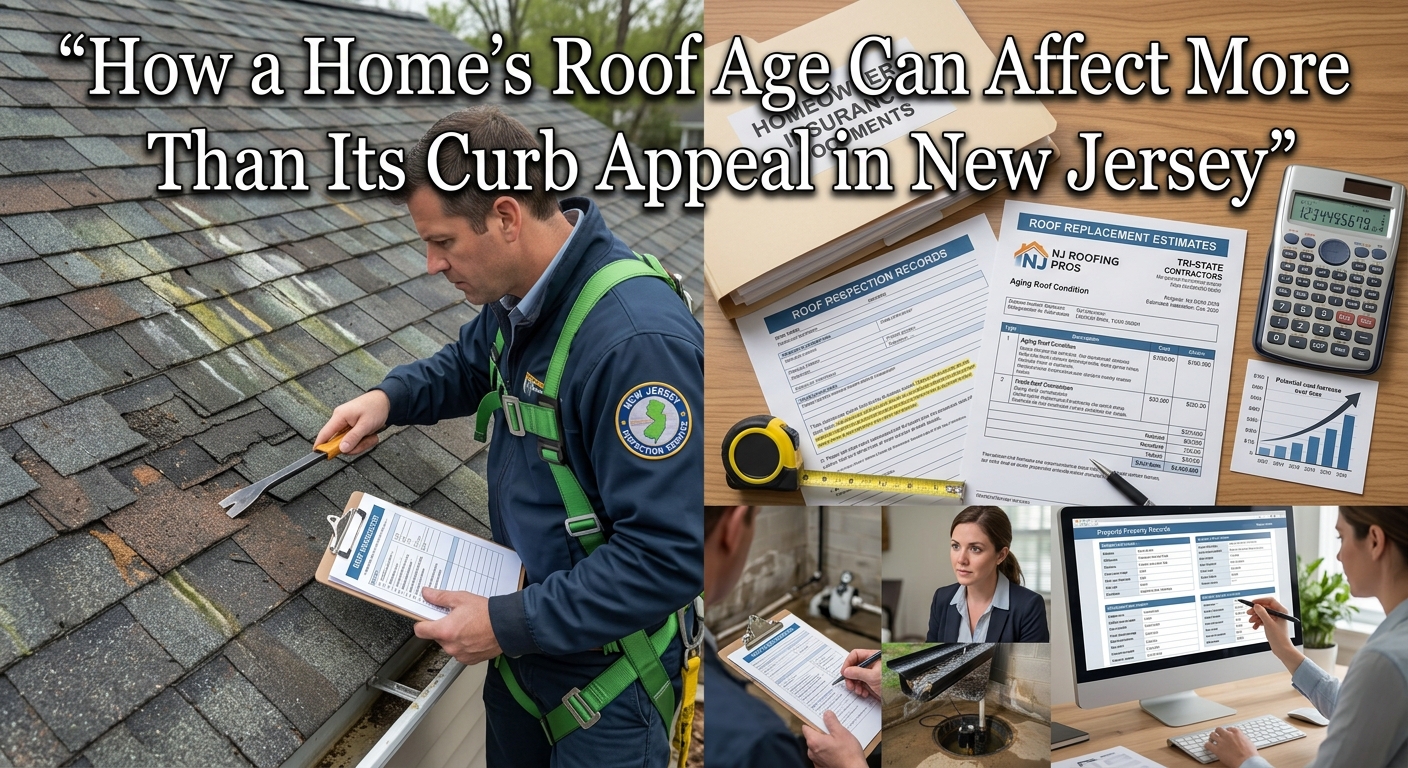
A new roof can make a home look dramatically better.
Fresh shingles.
Clean lines.
No visible wear.
But the roof is doing much more than improving curb appeal.
For New Jersey homebuyers, the age and condition of a roof can affect insurance, maintenance planning, inspection findings, negotiating leverage, future expenses, and even how attractive the property may be to the next buyer.
That makes the roof one of the most important systems to investigate during a home purchase.
New Jersey's Department of Banking and Insurance notes that the age of a home and its essential components, including the roof, can be among the factors insurers consider when evaluating homeowners policies. The department also advises consumers to compare coverage carefully and understand the property's specific insurance requirements.
As Mary Murphy of The Murphy Group explains:
“Buyers sometimes see a roof as just another exterior feature. But its age can tell you much more about the home's upcoming maintenance needs and the costs you may need to plan for after closing.”
🏠 1. Roof Age Can Tell You How Much Maintenance May Be Ahead
A roof doesn't last forever.
Its expected service life depends on factors such as:
- Roofing material
- Installation quality
- Ventilation
- Weather exposure
- Maintenance
- Previous repairs
- Overall construction
That means the year a roof was installed is important information for buyers.
A relatively new roof may mean fewer immediate replacement concerns.
An older roof doesn't necessarily mean the property is a bad purchase.
It simply means the buyer should understand its current condition and remaining useful life.
🔍 2. The Roof's Age Isn't the Same as Its Condition
This is one of the most important distinctions.
A 15-year-old roof isn't automatically failing.
A 10-year-old roof isn't automatically in excellent condition.
Age is a clue—not a diagnosis.
Two roofs of the same age can perform differently because of:
- Installation quality
- Roofing material
- Ventilation
- Weather exposure
- Maintenance history
- Previous storm damage
- Repairs
That's why buyers should avoid making a decision based solely on the installation date.
The better question is:
“What condition is the roof in today?”
🛡️ 3. Insurance Companies May Look Closely at Roof Age
This is where roof age becomes more than a maintenance issue.
New Jersey DOBI identifies the age of a dwelling and its essential components, including the roof, among factors that may affect homeowners insurance underwriting and pricing.
The state's consumer guidance also notes that newer homes generally have lower insurance rates than older homes and that some insurers may limit coverage or decline very old homes.
That doesn't mean an older roof automatically makes a property difficult to insure.
But buyers should find out before closing.
A property that looks affordable can become more expensive if the buyer discovers unexpected insurance requirements.
💰 4. A Roof Can Affect the True Cost of Buying the Home
Imagine two otherwise similar homes:
Home A: $475,000 with a newer roof
Home B: $450,000 with an aging roof
At first glance, Home B appears to save $25,000.
But if the buyer needs to replace the roof relatively soon, some or all of that apparent savings may disappear.
And the roof isn't the only cost.
Replacement can also involve:
- Labor
- Tear-off
- Disposal
- Underlayment
- Flashing
- Ventilation work
- Decking repairs
- Gutters or related components
The exact cost depends on the property and roofing system.
That's why buyers should evaluate the roof as part of the total cost of ownership, not simply the purchase price.
🧾 5. Ask for the Roof's History
A seller may know:
- When the roof was installed
- Who installed it
- What material was used
- Whether repairs were completed
- Whether there was storm damage
- Whether portions were replaced
- Whether warranties remain
Documentation can be particularly useful.
Ask whether the seller has:
- Invoices
- Contracts
- Warranties
- Permits where applicable
- Inspection reports
- Repair records
A listing description that says “newer roof” is useful marketing information.
A dated invoice showing the actual installation is much more useful for due diligence.
🔎 6. Look for Signs of Roof Wear During the Showing
Buyers aren't expected to perform a professional roof inspection themselves.
But they can look for obvious clues.
From the ground, watch for:
- Missing shingles
- Damaged shingles
- Curling or buckling
- Excessive granule accumulation
- Sagging areas
- Damaged flashing
- Moss or algae growth
- Visible deterioration
Also look around the home for signs that could suggest water intrusion.
Inside, pay attention to:
- Ceiling stains
- Discoloration
- Peeling paint
- Damp odors
- Water marks around skylights
- Attic moisture
None of these observations should be treated as a professional diagnosis.
They're reasons to ask better questions.
🌧️ 7. Storm Exposure Matters in New Jersey
New Jersey homes experience rain, wind, snow, ice, and occasional severe storms.
That means roof condition can change over time even when the roof isn't particularly old.
Buyers should ask whether the roof has experienced:
- Wind damage
- Fallen-tree damage
- Hail
- Ice-related damage
- Leaks
- Emergency repairs
A roof's age alone doesn't tell the complete story.
Its maintenance and weather history matter too.
🏡 8. The Roof Can Affect a Home Inspection
An inspector may identify:
- Visible deterioration
- Damaged materials
- Improper installation
- Flashing concerns
- Ventilation issues
- Evidence of water intrusion
- Areas requiring further evaluation
The inspection doesn't necessarily mean the buyer will receive a simple answer such as:
“Replace the roof.”
Instead, the report may identify conditions that require monitoring, repair, or evaluation by a qualified roofing professional.
That distinction matters.
💬 9. Roof Condition Can Become a Negotiation Issue
Suppose a buyer submits an offer based on the home's overall condition.
During inspection, the roof is found to be significantly older or more deteriorated than expected.
The buyer may now have a legitimate reason to reconsider the economics of the purchase.
Depending on the circumstances and contract terms, the parties might discuss:
- Repairs
- A credit
- A price adjustment
- Replacement before closing
- A different resolution
The seller doesn't automatically have to agree.
The buyer doesn't automatically receive a concession.
But roof condition can become part of the negotiation because it represents a potential future expense.
🏦 10. Roof Condition Can Become Part of the Financing Conversation
Mortgage financing and homeowners insurance are connected in practical ways.
A lender generally wants the property to be adequately protected by insurance.
If a buyer has difficulty obtaining acceptable homeowners coverage because of the property's condition, that can create another obstacle before closing.
New Jersey's Department of Banking and Insurance maintains a list of insurers writing homeowners policies in the state and explains that consumers who cannot obtain standard coverage may have access to the New Jersey Insurance Underwriting Association FAIR Plan under certain circumstances.
That isn't a reason to automatically reject an older roof.
It is a reason to check insurability early.
🧱 11. The Roof Protects More Than the Roof
A roof problem can eventually affect other parts of a house if water enters where it shouldn't.
Potentially affected areas can include:
- Attic insulation
- Ceiling materials
- Drywall
- Framing
- Electrical components
- Flooring
- Interior finishes
That's why a small visible roof issue shouldn't always be dismissed as cosmetic.
The important question is whether there is evidence that water has already reached the interior.
🌡️ 12. Attic Ventilation Can Matter Too
Buyers sometimes focus entirely on shingles.
But the roof system includes more than the outer roofing material.
Ventilation and moisture management can influence the condition and longevity of roofing components and the attic space.
During inspection, buyers may want to understand whether there are concerns involving:
- Attic ventilation
- Moisture
- Insulation
- Condensation
- Mold-like growth
- Improperly vented systems
These are areas where a qualified inspector or roofing professional can provide more useful information than a visual walkthrough alone.
🧮 13. Roof Replacement Should Be Part of Long-Term Budgeting
Even if the roof doesn't need replacement immediately, an older roof should be considered when planning future expenses.
Buyers should ask:
“If I had to replace this roof in the next several years, could I comfortably afford it?”
That question becomes particularly important for buyers who are already budgeting for:
- Closing costs
- Moving expenses
- Furniture
- Appliances
- Repairs
- Landscaping
- Renovations
A home may be affordable based on the mortgage payment but less comfortable financially when major maintenance is added to the equation.
📈 14. A New Roof Can Influence Resale Appeal
Roof condition matters when a homeowner becomes the seller.
A buyer looking at two similar homes may naturally pay attention to which property has fewer major maintenance concerns.
A newer roof can provide:
- Greater buyer confidence
- A more polished appearance
- Fewer immediate maintenance concerns
- A potentially easier explanation during negotiations
But homeowners shouldn't assume that every dollar spent on a roof will automatically return dollar-for-dollar in resale value.
The benefit depends on the property, market, timing, buyer expectations, and overall condition.
🏘️ 15. Roof Age Can Matter More in an Older Home
A roof shouldn't be evaluated in isolation.
An older home may also have:
- Older plumbing
- Older electrical systems
- Older windows
- Older HVAC
- Older insulation
- Older exterior materials
If several major components are nearing the end of their useful lives at the same time, the buyer's future maintenance burden could become significant.
That's why the question shouldn't simply be:
“How old is the roof?”
It should be:
“How does the roof's age fit into the overall condition of the property?”
📸 16. Listing Photos Can Hide Roof Condition
Real estate photography is designed to showcase a home's best features.
That means buyers may see:
- Beautiful landscaping
- Updated kitchens
- Bright living spaces
- Attractive exterior angles
without seeing much of the roof itself.
That doesn't mean anything is being hidden.
Roof condition simply isn't always easy to evaluate through listing photos.
Buyers should therefore make roof research part of the inspection and due-diligence process.
🔧 17. “Newer Roof” Can Mean Different Things
The phrase “newer roof” is not a precise measurement.
It could mean:
- Installed two years ago
- Installed seven years ago
- Installed ten years ago
- Repaired recently
- Partially replaced
- Re-shingled over an older layer
Buyers should ask for specifics.
When was it installed?
What material was used?
Was the entire roof replaced?
Was the underlying decking inspected?
Were any repairs completed afterward?
Specific answers are much more useful than marketing language.
🛠️ 18. Ask Whether the Roof Has Been Repaired or Replaced in Sections
Not every roof replacement happens all at once.
A property may have a main roof replaced while another section remains older.
Additions, porches, garages, and other structures may also have different roofing ages.
This matters because the buyer needs to understand the condition of the entire property, not just the most recently replaced portion.
🛡️ 19. Don't Compare Insurance Quotes Without Comparing Coverage
If roof age affects insurance pricing, buyers may be tempted to choose whichever quote is cheapest.
New Jersey DOBI advises consumers to compare policies using the same deductibles and levels of coverage because insurers can differ substantially in both pricing and service.
That means a useful comparison should include:
- Annual premium
- Deductible
- Coverage limits
- Roof-related provisions
- Replacement-cost terms
- Exclusions
- Other applicable conditions
A lower premium isn't meaningful if the coverage is materially different.
🧾 20. Understand Replacement Cost Versus Actual Cash Value
This distinction can become especially important when discussing older property components.
New Jersey DOBI explains that replacement cost is generally the amount required to repair or replace covered property with materials of similar kind and quality without deducting depreciation, while actual cash value takes depreciation into account.
Buyers should ask their insurance professional how the policy treats the roof and other major components.
The exact coverage depends on the policy.
But understanding the terminology can help prevent surprises later.
⚠️ 21. A Roof Problem Doesn't Automatically Mean You Should Walk Away
This is an important point for buyers.
An older roof can still be perfectly manageable.
Perhaps:
- The roof is well maintained
- A professional inspection finds no significant problems
- The seller has complete records
- The price reflects the condition
- Insurance is available
- The buyer has budgeted for future replacement
In that situation, the roof may simply be another ownership expense to plan for.
The problem isn't necessarily “old roof.”
The problem is “unknown roof condition and unknown future cost.”
🧠 22. The Right Question Is “What Is the Roof Telling Me?”
A roof can provide clues about the property's broader maintenance history.
If the roof is:
- Well maintained
- Properly repaired
- Documented
- Professionally installed
that may provide useful insight into how the property has been cared for.
If there are repeated repairs, visible deterioration, missing documentation, or evidence of leaks, buyers may want to investigate further.
The roof doesn't tell the entire story.
But it can be an important chapter.
📋 New Jersey Roof Due-Diligence Checklist
Before buying a home, consider asking:
☐ How old is the roof?
☐ What roofing material was used?
☐ When was the entire roof last replaced?
☐ Were any sections replaced separately?
☐ Are there invoices or warranties?
☐ Has the roof experienced storm damage?
☐ Have there been previous leaks?
☐ Are there visible signs of deterioration?
☐ Does the inspection identify roof concerns?
☐ Is further evaluation by a roofing professional recommended?
☐ What does homeowners insurance cost for this specific property?
☐ Does the insurer have any roof-related requirements?
☐ What deductible and coverage apply?
☐ Are replacement-cost provisions available?
☐ If replacement becomes necessary, can the buyer budget for it?
☐ How does the roof's condition compare with other major systems in the home?
💼 How The Murphy Group Helps Buyers Look Beyond Curb Appeal
At The Murphy Group, evaluating a home means looking beyond the features that photograph well.
That includes helping buyers ask questions about:
- Roof age
- Property condition
- Maintenance history
- Insurance
- Potential future expenses
- Resale considerations
- Overall value
The goal isn't to make assumptions based on age.
It's to help buyers understand what the roof may mean for the property's short-term and long-term ownership costs.
As Mary Murphy explains:
“The roof is one of those features buyers may barely think about when they fall in love with a house. But understanding its age and condition can make a big difference in planning for ownership.”
📊 The Bottom Line
A home's roof affects much more than how the property looks from the street.
For New Jersey buyers, roof age and condition can influence:
- Maintenance planning
- Inspection findings
- Insurance considerations
- Potential repair costs
- Negotiations
- Financing-related issues
- Resale appeal
- Long-term ownership expenses
New Jersey DOBI specifically identifies the age of the home and its essential components, including the roof, as factors that can influence homeowners insurance underwriting.
That doesn't mean an older roof automatically makes a property a bad investment.
It means buyers should understand what they're buying.
👉 Don't just ask whether the roof looks good. Ask how old it is, how it has been maintained, what the inspection says, what insurance will cost, and what expense may be coming next.
A roof can be one of the clearest examples of why looking beyond curb appeal matters when buying a New Jersey home.
📲 Thinking About Buying a New Jersey Home?
The Murphy Group helps buyers look beyond the listing photos and understand the property factors that can affect ownership—from roof condition and insurance to maintenance, pricing, and long-term value.
👉 Start here: www.mgsells.com

Mary Murphy
Team Leader | The Murphy Group | eXp Realty, LLC | PLACE
or another way