

Categories
Burlington County, Camden County, Gloucester County, Home Buying Guides, Home Buying Tips, South Jersey Real Estate, home inspectionPublished October 19, 2026
Buying a South Jersey Home With a Crawl Space: What Should You Check Before Closing?

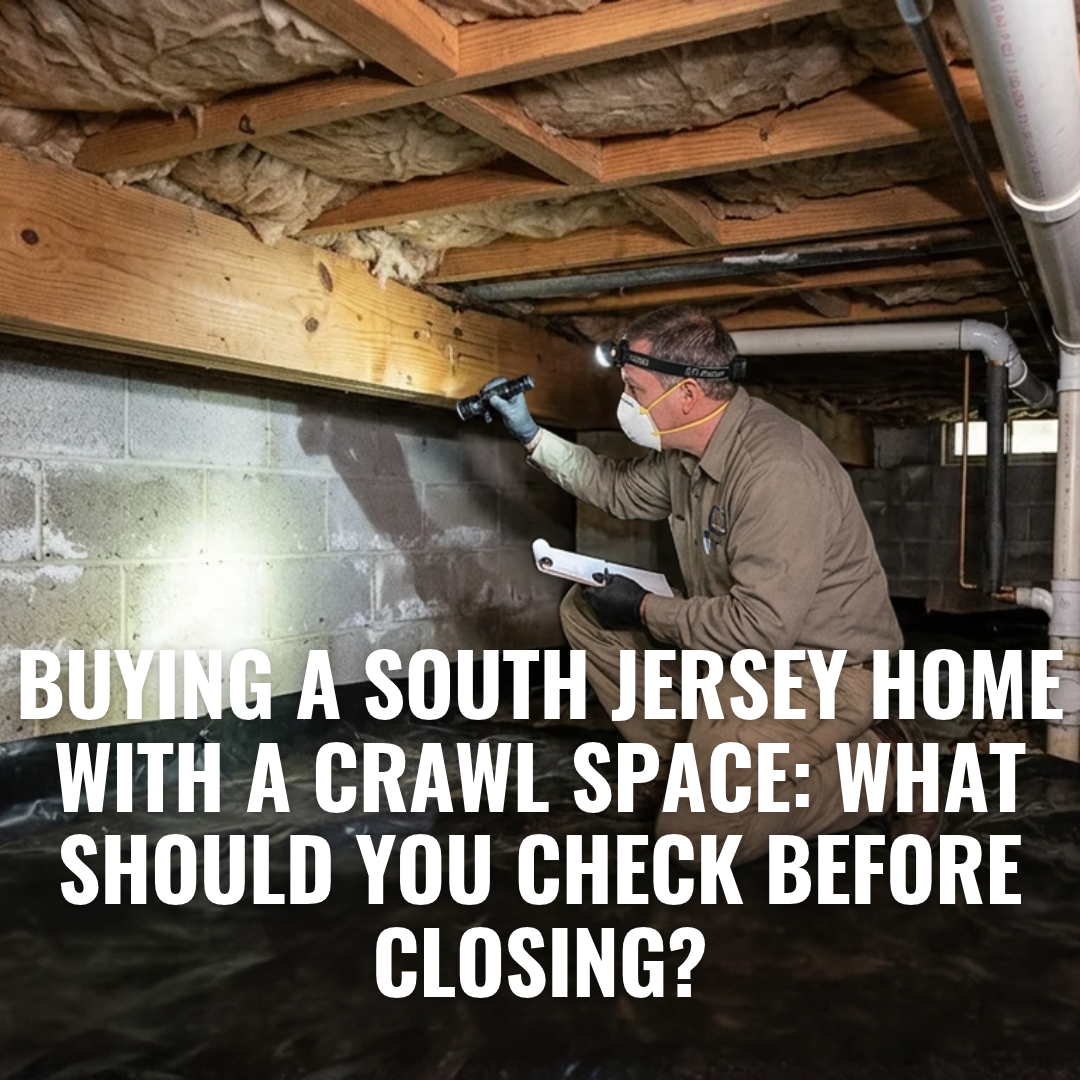
A home can look beautiful during a showing and still have problems hiding beneath the floors.
For buyers considering an older home, a raised ranch, or a property with a crawl space in South Jersey, the area underneath the house deserves just as much attention as the kitchen, bathrooms, and roof.
A crawl space is the low, accessible area between the ground and the first floor of a home. It may contain plumbing, insulation, structural supports, electrical components, and other important parts of the house.
Although a crawl space is not automatically a problem, its condition can reveal issues that affect the home's structure, indoor comfort, maintenance needs, and long-term ownership costs.
Moisture intrusion, poor drainage, damaged wood, pest activity, and inadequate insulation are among the concerns buyers should investigate before completing a purchase.
As Mary Murphy of The Murphy Group explains:
"When buying a home, it's important to look beyond the finishes and understand the condition of the property as a whole. What you can't easily see can be just as important as what you see during a showing."
Before closing on a South Jersey home with a crawl space, here's what you should know.
🏡 1. Understand Why the Home Has a Crawl Space
Crawl spaces are common in certain types of residential construction, particularly homes built without full basements.
Depending on the property, a crawl space may provide access to plumbing, electrical wiring, heating components, and the underside of the home's floor structure.
Before making an offer—or while completing your due diligence—ask:
- Was the crawl space part of the home's original design?
- Has it been modified or renovated?
- Is the floor dirt, gravel, concrete, or another material?
- Is the area vented, sealed, or conditioned?
- Has the homeowner experienced water intrusion or recurring moisture?
- Have any repairs or moisture-control improvements been completed?
Understanding the design helps you evaluate whether the space is functioning as intended and whether its maintenance requirements are reasonable.
The key: A crawl space itself is not a defect. Its condition, construction, and maintenance history matter more than its mere presence.
💧 2. Look for Standing Water and Signs of Water Intrusion
Moisture is one of the first things buyers should investigate.
Water can enter a crawl space through foundation openings, plumbing leaks, groundwater movement, or poor exterior drainage. Even when standing water is not visible during the inspection, previous moisture problems may leave clues.
Look for:
- Puddles or standing water
- Damp soil or wet ground coverings
- Water stains on foundation walls
- Mineral deposits or white residue on masonry
- Rust on metal components
- Water marks on support posts
- Evidence of previous pumping or drainage work
A crawl space that appears dry during one inspection is not necessarily free from recurring water problems.
Ask whether the homeowner has experienced flooding after heavy rain, snowmelt, or seasonal changes. If the inspection reveals suspicious conditions, a qualified professional can help identify the source and recommend appropriate corrective work.
🌧️ 3. Evaluate Exterior Drainage Around the Home
Some crawl space problems begin outside the house.
When rainwater collects near the foundation, it may increase the likelihood of water entering the crawl space. Gutters, downspouts, grading, and nearby hard surfaces can all influence where water flows.
During your property inspection, examine:
- Whether the ground slopes away from the foundation
- Whether gutters are clogged or damaged
- Where downspouts discharge water
- Whether driveways or patios direct runoff toward the house
- Whether low areas collect water after rain
- Whether retaining walls or nearby landscaping affect drainage
New Jersey's Department of Community Affairs includes correcting drainage and groundwater problems, directing surface water away from the foundation, and managing downspout discharge among its home weatherization guidance.
If the crawl space has moisture issues, don't assume the solution is simply to install a pump or cover the ground. The source of the water should be identified first.
🦠 4. Check for Mold-Like Growth and Persistent Musty Odors
A musty smell near a crawl space entrance can indicate elevated humidity, damp materials, or a history of moisture intrusion.
During the inspection, look for visible growth, dark staining, or unusual discoloration on:
- Floor joists
- Subflooring
- Wooden beams
- Insulation
- Foundation surfaces
- Stored materials
However, discoloration alone does not establish that a substance is mold, and an ordinary visual inspection may not determine the cause or extent of a problem.
If the inspector observes suspicious growth or persistent odors, ask whether further evaluation by an appropriately qualified moisture or mold professional is warranted.
The important question is not simply whether a stain exists. It's whether moisture is ongoing, whether building materials have been damaged, and what work is needed to address the underlying condition.
🪵 5. Inspect Floor Joists, Beams, and Other Structural Components
The crawl space may provide a view of the components supporting the floors above.
Pay particular attention to:
- Floor joists that appear cracked, sagging, or deteriorated
- Beams showing signs of decay
- Damaged or deteriorated sill plates
- Improperly supported structural members
- Corrosion affecting metal connectors
- Unusual repairs or makeshift supports
- Evidence of previous movement or settlement
Not every crack or uneven floor indicates a major structural defect. Some conditions may be related to age, construction methods, or minor movement.
However, visible deterioration, significant sagging, or questionable support arrangements deserve careful investigation.
New Jersey's home-inspection standards address structural components, including foundations and floors, and require inspectors to describe the methods used to inspect under-floor crawl spaces.
If a structural concern is identified, consider obtaining an evaluation from a qualified structural professional before your inspection contingency or other applicable contractual deadline expires.
🐜 6. Look for Termites and Other Wood-Destroying Pests
Crawl spaces can provide conditions that attract certain pests, particularly when wood remains damp or comes into contact with soil.
Watch for possible signs of wood-destroying insects, including:
- Mud tubes on foundation walls
- Hollow-sounding or damaged wood
- Small holes or galleries in timber
- Discarded insect wings
- Wood that appears weakened or crumbles easily
- Evidence of previous pest treatments
These signs do not all prove an active infestation, but they warrant appropriate follow-up.
Ask whether a wood-destroying insect inspection has been completed, whether there is a history of treatment, and whether documentation or a transferable warranty is available.
If damage is found, determine whether it is superficial or whether it has affected structural components.
Important: Pest treatment alone may not resolve the problem if moisture, wood-to-soil contact, or another contributing condition remains.
🧱 7. Examine the Foundation Walls and Supports
The crawl space may expose foundation areas that are difficult to evaluate from outside.
Look for:
- Significant cracks
- Bulging or displaced masonry
- Loose or deteriorated mortar
- Water staining
- Crumbling concrete or block
- Unusual gaps around supports
- Signs of previous patching or reinforcement
Small cracks can occur in many homes, and their significance depends on factors such as size, location, movement, and surrounding conditions.
A crack accompanied by water intrusion, displacement, or structural movement deserves more attention than a minor, stable surface crack.
Ask the inspector to document concerning findings and explain whether specialist evaluation is recommended. Avoid assuming that every crack requires major repairs—or that every repaired crack has resolved the underlying issue.
🛡️ 8. Check for a Ground-Moisture Barrier
Some crawl spaces have exposed soil floors. In these spaces, moisture can move from the ground into the air and surrounding building materials.
A ground-moisture barrier, often made from durable plastic sheeting, helps limit moisture vapor entering from the soil when appropriately installed.
Check whether:
- The ground is covered
- The covering has tears or holes
- Seams and edges appear properly secured
- Water is trapped beneath the material
- The covering is displaced around support posts
- There is evidence of previous moisture-control work
New Jersey DCA guidance recommends an airtight ground-moisture barrier in dirt-floored crawl spaces and discusses appropriate installation practices.
A missing or damaged barrier does not automatically mean the home has serious damage. It does, however, create an opportunity to ask whether moisture control should be improved.
The right solution depends on the crawl space's design and moisture conditions.
🌬️ 9. Evaluate Ventilation, Humidity, and Airflow
Crawl spaces can be designed with different approaches to moisture and air management. Some use exterior vents, while others are intentionally sealed or conditioned.
The important issue is whether the existing setup is appropriate for the home and functioning properly.
Ask your inspector to evaluate:
- Whether vents are present and unobstructed, where applicable
- Whether there are signs of excessive humidity
- Whether insulation or debris blocks airflow
- Whether ventilation openings have been improperly altered
- Whether a sealed crawl space has suitable moisture management
- Whether mechanical equipment appears to be operating as intended
Simply adding vents or closing them off is not a universal solution. The appropriate strategy depends on the building design, climate, moisture sources, and applicable construction requirements.
If the current system appears ineffective, obtain recommendations from a qualified professional before agreeing to corrective work.
🧊 10. Inspect the Insulation and Subfloor Above
Insulation beneath the first floor can influence comfort and energy use.
In a home with a crawl space, inspect for:
- Missing insulation
- Insulation that has fallen away
- Wet or compressed insulation
- Damaged vapor-retarder facing
- Gaps around plumbing or other penetrations
- Signs of pests nesting in insulation
- Deterioration or staining on the subfloor
Wet or damaged insulation should not simply be covered with new material. The source of moisture needs to be addressed, and damaged materials may require replacement.
New Jersey DCA guidance specifically recommends resolving drainage, groundwater, wood deterioration, and structural problems before installing floor or foundation insulation.
For buyers, this matters because a home may need more than a quick insulation upgrade to improve comfort and reduce moisture-related risks.
🚰 11. Check Plumbing for Leaks and Improper Drainage
Crawl spaces often contain water supply lines, drainpipes, and other plumbing components.
A small leak that goes unnoticed can contribute to damp insulation, damaged wood, or persistent humidity.
Ask your inspector to look for:
- Active drips or water stains
- Corroded or damaged pipes
- Improperly supported plumbing
- Signs of past pipe repairs
- Leaking drain connections
- Pipes vulnerable to freezing
- Drainage or sump-pump discharge concerns
If a home has a history of frozen pipes or plumbing leaks, ask what repairs were made and whether any surrounding materials were affected.
For significant leaks or questionable plumbing installations, a licensed plumber can help determine the scope of necessary repairs.
⚡ 12. Look for Electrical and Other Safety Concerns
Some crawl spaces contain electrical wiring, junction boxes, receptacles, or equipment serving the home.
Look for visible concerns such as:
- Exposed or damaged wiring
- Loose electrical connections
- Wiring in areas subject to water intrusion
- Improperly supported cables
- Damaged equipment or enclosures
- Evidence of makeshift electrical work
Do not enter an unsafe crawl space or attempt to move wiring, insulation, or equipment yourself.
A home inspector may recommend further evaluation by a licensed electrician if a concern is identified. Electrical components should be assessed by an appropriate professional, particularly when moisture and electricity may be present together.
🐭 13. Look for Rodents, Debris, and Unwanted Materials
A crawl space may accumulate materials that attract pests or make inspection and maintenance more difficult.
Check for:
- Rodent droppings
- Nesting materials
- Damaged insulation
- Food waste or cardboard
- Construction debris
- Wood scraps
- Unidentified containers or discarded materials
New Jersey DCA guidance recommends removing biodegradable matter, including wood and cardboard, from crawl spaces as part of moisture and building-condition management.
If pest activity is present, ask whether professional pest control is needed and whether entry points should be sealed.
If you encounter unidentified chemicals, containers, or potentially hazardous materials, avoid handling them until their contents and appropriate removal procedures are established.
🌡️ 14. Pay Attention to Indoor Comfort and Air Quality
Problems beneath a home can sometimes affect the living areas above.
For example, a crawl space with persistent dampness, damaged insulation, or air leakage may contribute to musty odors, cold floors, or uneven temperatures.
During the showing and inspection, notice whether:
- Floors feel unusually cold
- Certain rooms have inconsistent temperatures
- Musty odors are present inside the home
- The heating system struggles to maintain comfort
- There are signs of recurring condensation
- Family members have noticed recurring moisture-related issues
These observations are clues, not diagnoses. Several different conditions can produce similar symptoms.
A professional evaluation can help determine whether the cause involves insulation, air leakage, humidity, plumbing, drainage, or another building component.
🏚️ 15. Ask About Previous Crawl Space Repairs
Previous repairs are not necessarily a negative. In fact, documented improvements may demonstrate that the homeowner has addressed known issues.
However, buyers should understand what was repaired and whether the work solved the underlying problem.
Ask for records relating to:
- Waterproofing or drainage improvements
- Vapor-barrier installation
- Sump-pump installation
- Structural repairs
- Pest treatments
- Insulation replacement
- Mold or moisture remediation
- Foundation repairs
Where available, request invoices, permits, warranties, contractor information, and any follow-up inspection reports.
If the seller says a problem has been resolved, supporting documentation can help establish what was done and whether further evaluation is appropriate.
🔍 16. Understand What a Standard Home Inspection Can—and Cannot—Tell You
A professional home inspection is an important part of buying a property, but it is not a guarantee that every hidden defect will be discovered.
New Jersey's home-inspection standards recognize that inspectors are not required to enter areas that are unsafe or lack the specified minimum clearance. Inspectors must also document areas that were not inspected and explain why.
That means a crawl space may be only partially inspected—or may not be entered at all—depending on its accessibility and safety.
Before closing, review the report carefully and ask:
- Was the crawl space physically entered?
- Which areas were visible?
- Were any areas inaccessible?
- Were moisture readings or other specialized assessments recommended?
- Did the inspector identify conditions requiring additional evaluation?
- Were any limitations noted in the report?
If the crawl space could not be adequately inspected, consider arranging a specialist evaluation while your contractual inspection period is still open.
Do not assume an inaccessible crawl space is problem-free simply because the report contains few findings.
💰 17. Estimate the Potential Cost of Repairs Before Closing
The cost of addressing a crawl space concern depends on the cause, extent of damage, accessibility, and the type of corrective work required.
Possible expenses may include:
- Plumbing repairs
- Gutter or drainage improvements
- Ground-moisture barrier installation
- Insulation replacement
- Pest treatment
- Debris removal
- Moisture-control equipment
- Wood repairs
- Structural reinforcement
- Professional remediation
A minor maintenance issue and a major structural problem can have very different financial implications.
Rather than relying on a broad online estimate, request written evaluations and itemized proposals from qualified contractors when significant concerns are identified.
When reviewing a proposal, confirm:
- What work is included
- Whether damaged materials will be removed or replaced
- Whether the underlying cause will be addressed
- Whether permits or inspections may be required
- What warranties apply
- Whether follow-up monitoring is recommended
This information helps you understand the potential cost of ownership before you commit to the purchase.
📝 18. Decide Which Findings Require Negotiation
Not every crawl space issue should cause a buyer to abandon a property.
The right response depends on the severity of the condition, the estimated cost, the seller's willingness to address it, and the terms of the purchase contract.
| Finding | Potential next step |
|---|---|
| Minor debris or routine maintenance | Request cleanup or plan for maintenance |
| Missing or damaged moisture barrier | Ask for an evaluation and installation estimate |
| Plumbing leak | Obtain a plumbing repair assessment |
| Recurring water intrusion | Identify the source and obtain a drainage or waterproofing evaluation |
| Pest activity | Arrange appropriate pest inspection and treatment |
| Suspected wood decay | Request a qualified assessment of affected materials |
| Significant structural concerns | Seek specialist evaluation and written repair recommendations |
| Inaccessible crawl space | Determine whether further inspection can be arranged |
Depending on your contract and applicable deadlines, you may be able to negotiate repairs, request a credit, discuss a price adjustment, or reconsider the purchase if a serious issue cannot be resolved satisfactorily.
Your real estate agent and attorney can help you understand the available options under your agreement. Do not assume a seller is obligated to make every requested repair.
📋 19. Use This Crawl Space Checklist Before Closing
Before finalizing your purchase, work through this checklist with your inspector and other appropriate professionals.
-
Crawl space accessibility and inspection limitations are documented.
-
No unexplained standing water or recurring moisture evidence remains unresolved.
-
Exterior grading and drainage have been evaluated.
-
Foundation walls and structural supports have been examined.
-
Floor joists, beams, and subflooring show no unresolved signs of significant deterioration.
-
Pest activity and possible wood damage have been addressed.
-
Ground-moisture barrier condition has been assessed where applicable.
-
Insulation and ventilation have been evaluated.
-
Visible plumbing and electrical concerns have been addressed.
-
Previous repairs and warranties have been reviewed where available.
-
Recommended specialist inspections have been completed or appropriately accounted for.
-
Written estimates are available for significant proposed repairs.
-
Any negotiated repairs or credits are documented in the appropriate written agreement.
-
Outstanding concerns have been discussed with your real estate agent and attorney before applicable deadlines.
This checklist is not a substitute for a professional inspection, but it can help you ask better questions and make a more informed decision.
💼 How The Murphy Group Helps South Jersey Buyers Make Informed Decisions
Buying a home involves more than finding the right layout, neighborhood, and asking price. It also means understanding the property's condition and the costs that may come with ownership.
At The Murphy Group, the goal is to help buyers approach the process with clear expectations and informed decision-making.
That includes helping clients understand inspection findings, identify questions that need answers, coordinate appropriate follow-up through the relevant professionals, and evaluate how property conditions may affect their plans.
A crawl space concern does not automatically make a home a bad investment. The key is understanding the condition, determining the likely scope of work, and making decisions based on reliable information rather than assumptions.
As Mary Murphy explains:
"The goal isn't to find a home with absolutely nothing to address. It's to understand what you're buying, recognize the important risks, and make a decision with confidence."
📊 The Bottom Line
When buying a South Jersey home with a crawl space, pay close attention to:
- Moisture and water intrusion
- Exterior drainage
- Mold-like growth and musty odors
- Foundation and structural components
- Termites and other pests
- Ground-moisture barriers
- Insulation and ventilation
- Plumbing and electrical conditions
- Previous repairs and maintenance records
- Inspection limitations and potential repair costs
A crawl space can be a perfectly manageable feature of a home. Problems arise when moisture, deterioration, or other concerns go unnoticed or remain unresolved.
Before closing, make sure you understand the condition of the space beneath the home—not just the rooms above it.
📲 Thinking About Buying a Home in South Jersey?
The Murphy Group can help you navigate the homebuying process, evaluate the questions that matter, and make informed decisions as you work toward finding the right property.
👉 Start here: www.mgsells.com

Mary Murphy
Team Leader | The Murphy Group | eXp Realty, LLC | PLACE
or another way