

Categories
South Jersey Real Estate, Home Buying Tips, Home Buying Guides, home buying costs, Housing Guide, housing trendPublished June 3, 2026
Why two nearly identical homes can trigger totally different reactions

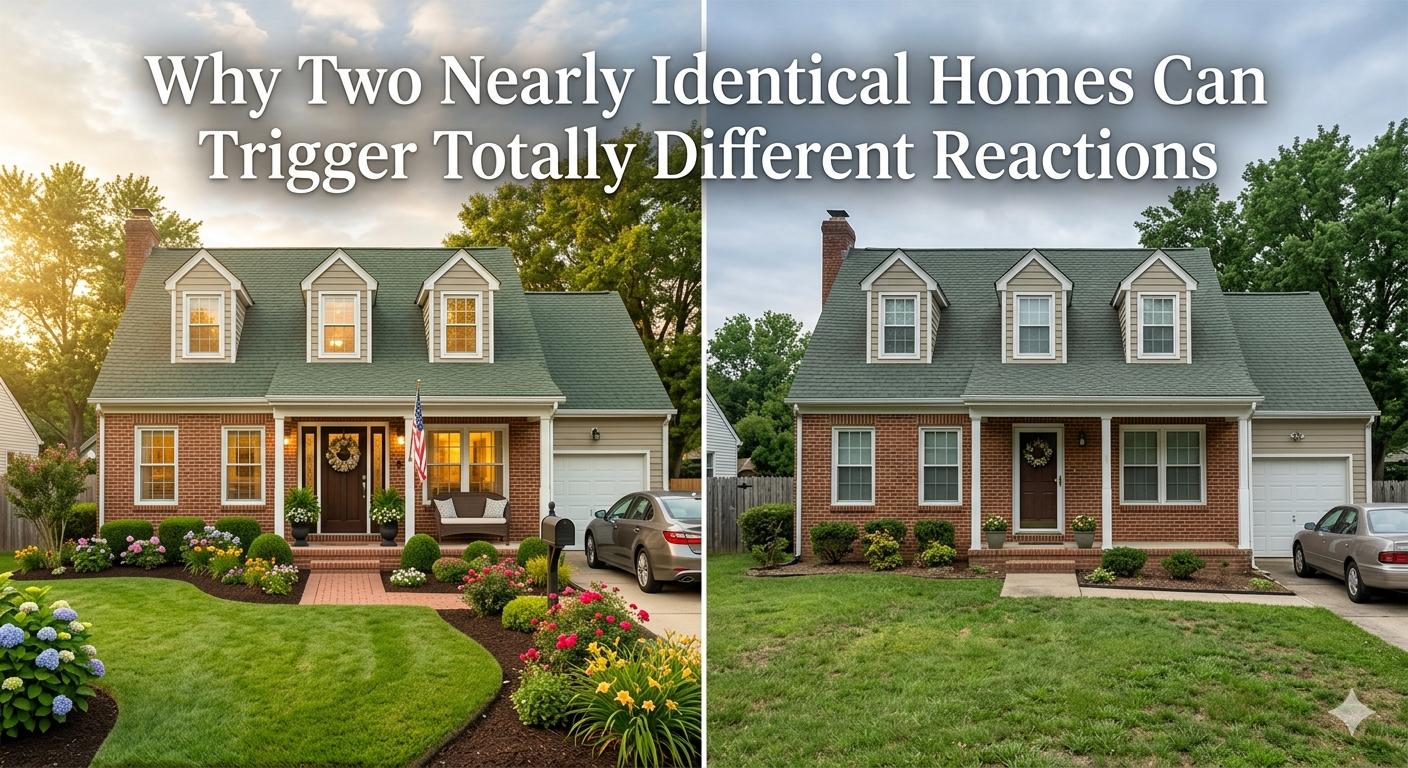
On paper, two homes can look almost identical:
- Same square footage
- Same number of bedrooms
- Similar layouts
- Comparable pricing
- Even the same ZIP code
And yet, buyers often react in completely different ways.
One home feels exciting, comfortable, and “right.”
The other feels flat, uncertain, or easy to skip.
So what’s really happening?
👉 It’s not logic driving the difference.
👉 It’s perception, timing, and emotional framing.
As Mary Murphy of The Murphy Group explains:
“Buyers don’t experience homes as data points. They experience them as feelings—and those feelings can change everything.”
🧠 Buyers Don’t Compare Homes—They React to Them
Most buyers believe they are evaluating homes logically.
In reality, they are reacting emotionally within seconds.
When a buyer walks into a home—or even scrolls through photos—they instantly register:
- Comfort or discomfort
- Clarity or confusion
- Warmth or coldness
- Ease or friction
That immediate reaction often determines whether the home stays on their list.
📈 The Hidden Factors That Change Everything
1. First Impression Timing
The order in which a buyer sees a home matters more than most people realize.
A similar home viewed:
- First → feels fresh and impressive
- Third or fourth → feels less exciting by comparison
👉 Context changes perception instantly.
2. Lighting and Atmosphere Differences
Even subtle differences in:
- Natural light
- Window placement
- Time of day during showings
- Interior color tones
can shift emotional response dramatically.
One home feels bright and open.
Another feels dim or closed in—even if layouts are identical.
3. Emotional “Clutter” in Presentation
Small details influence perception:
- Furniture placement
- Personal items
- Wall color choices
- Visual noise in staging
One home feels easy to imagine living in.
The other requires mental effort to “translate.”
Buyers almost always prefer the easier experience.
4. Neighborhood Micro-Impressions
Even within the same area, subtle differences affect reactions:
- Street quietness
- Landscaping quality
- Neighboring home condition
- Drive-in experience
Buyers often absorb these impressions before they reach the front door.
5. Psychological Anchoring From the First Room
The first space a buyer sees sets expectations for the rest of the home.
If the entry feels:
- Bright and open → everything feels better
- Dark or cramped → everything feels more critical
That initial anchor shapes the entire experience.
🏡 Why “Identical” Homes Are Never Truly Identical to Buyers
Even when layouts match perfectly, homes differ in:
- Light direction
- Maintenance perception
- Airflow and openness
- Noise levels
- Emotional warmth
Buyers don’t see floor plans—they experience environments.
That’s why two structurally similar homes can feel completely different in practice.
⚠️ The Role of Buyer Mindset
A buyer’s emotional state also plays a major role.
If they are:
- Excited → they see possibilities
- Tired → they notice flaws
- Overwhelmed → they compare critically
- Pressured → they hesitate more
The same home can trigger different reactions depending on timing and mental load.
🧠 The Psychology Behind “Instant Yes” vs “Maybe”
Fast emotional decisions usually fall into two categories:
Instant Yes:
- Feels easy to understand
- Requires no mental adjustment
- Matches lifestyle expectations quickly
Maybe:
- Requires justification
- Invites comparison
- Creates uncertainty or second-guessing
The difference is rarely about features—it’s about emotional friction.
📊 What This Means in Today’s South Jersey Market
In a market where buyers have more listings to choose from, small differences matter more than ever.
Homes that create:
- Immediate clarity
- Emotional comfort
- Strong visual appeal
tend to outperform otherwise similar listings.
Homes that create:
- Slight confusion
- Visual inconsistency
- Emotional distance
tend to slow down—even if they are objectively comparable.
💼 How The Murphy Group Helps Decode Buyer Reactions
At The Murphy Group, understanding buyer behavior is as important as market data.
Their approach includes:
- Evaluating how buyers emotionally experience a home
- Identifying subtle presentation differences that affect perception
- Positioning listings for stronger first impressions
- Advising sellers on small changes with big impact
- Helping buyers recognize emotional alignment quickly
“The difference between a fast sale and a slow one is often how the home feels in the first 30 seconds,” Mary says. “That’s what we focus on.”
📊 The Bottom Line
Two nearly identical homes can trigger completely different reactions because:
- Buyers respond emotionally, not analytically
- First impressions shape everything that follows
- Small environmental differences create big perception shifts
- Context and timing influence decision-making
And ultimately:
👉 Homes don’t compete on paper—they compete in the mind of the buyer.
📲 Want to Understand Why Some Homes Stand Out Instantly?
The Murphy Group helps South Jersey buyers and sellers identify the hidden factors that influence perception, demand, and decision-making.
👉 Start here: www.mgsells.com

Mary Murphy
Team Leader | The Murphy Group | eXp Realty, LLC | PLACE
or another way