

Categories
South Jersey Real Estate, Home Buying Tips, New Jersey Real Estate, buyer tips, Burlington County, Camden County, Gloucester County, property MaintenancePublished October 19, 2026
What South Jersey Buyers Should Know About Homes With Retaining Ponds or Stormwater Basins Nearby

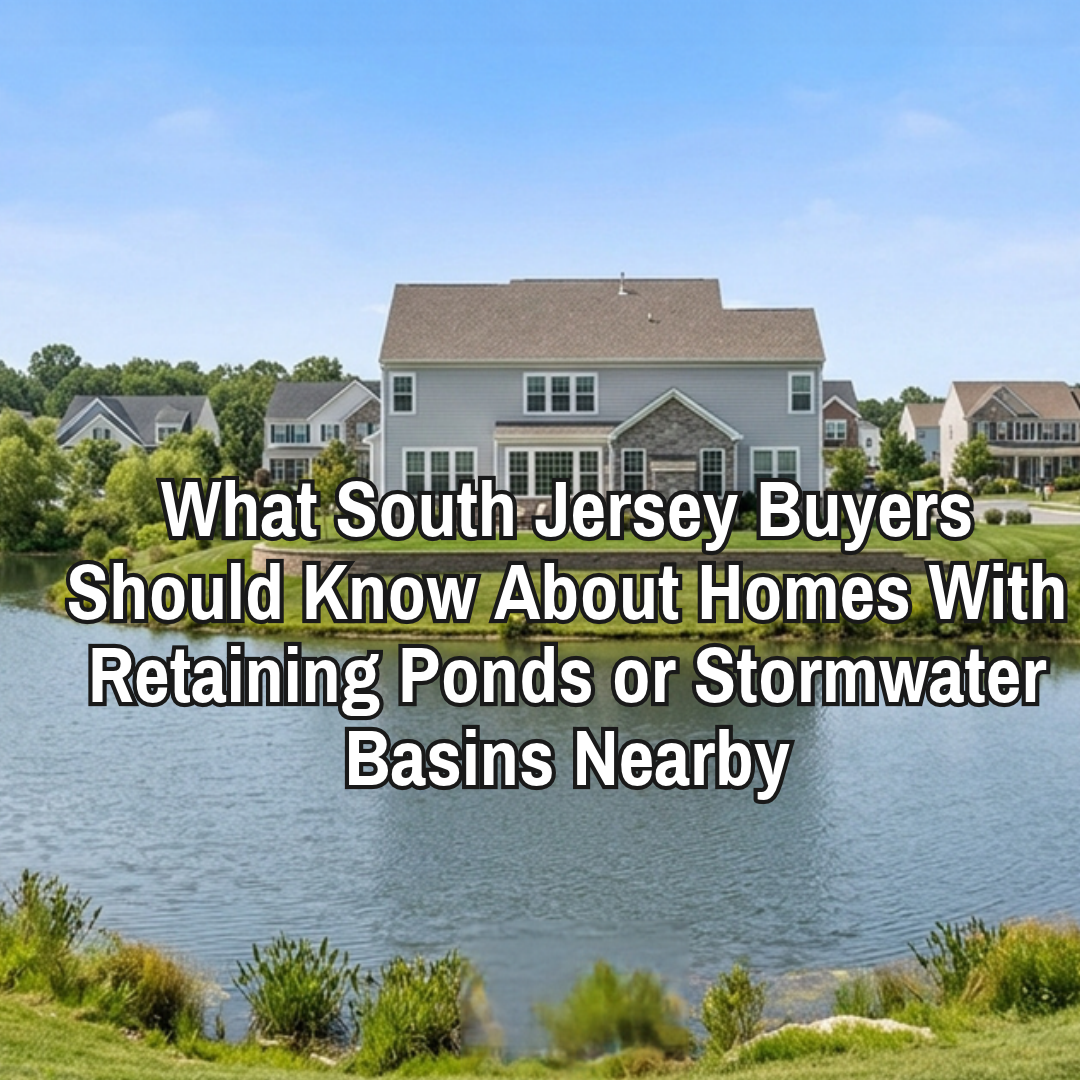
A home near a pond or landscaped water feature can look especially appealing during a showing. The view may feel peaceful, the surroundings may seem more open, and the property might offer a sense of privacy that's difficult to find in a densely developed neighborhood.
But not every pond near a South Jersey home is simply a decorative feature.
Some are stormwater basins designed to collect, temporarily hold, filter, or gradually release runoff from roads, roofs, driveways, and surrounding properties. Others may be natural ponds, constructed water features, or part of a larger drainage system.
Understanding the difference matters because nearby stormwater infrastructure can affect how water moves through a neighborhood, who is responsible for maintenance, how the surrounding land can be used, and what buyers should investigate before closing.
The New Jersey Department of Environmental Protection explains that stormwater basins help manage runoff and can help reduce flooding along waterways. Their performance and maintenance depend on the design and site conditions. (NJDEP stormwater basin guidance)
As Mary Murphy of The Murphy Group explains:
“A property's surroundings are part of the purchase, too. Buyers should look beyond the view and understand how nearby drainage features work, who maintains them, and whether they could affect the home's long-term ownership costs.”
Before purchasing a South Jersey home near a retaining pond or stormwater basin, here's what to consider.
🏡 1. First, Understand What Kind of Pond You're Looking At
The words retention pond, detention basin, and stormwater basin are sometimes used interchangeably in everyday conversation, but they can describe different designs and functions.
Common possibilities include:
- Wet retention pond: Typically designed to maintain a permanent pool of water while also receiving stormwater runoff.
- Dry detention basin: Generally designed to hold runoff temporarily and drain after a storm.
- Infiltration basin: Designed to allow stormwater to soak into the ground under suitable conditions.
- Constructed wetland: Uses wetland-like features as part of a stormwater treatment system.
- Decorative pond: Primarily intended as a landscape feature, though it may still have drainage or other site-specific functions.
A pond may also serve more than one purpose.
Do not assume a water feature is decorative just because it has grass, trees, walking paths, or attractive landscaping around it. Ask the listing agent or municipality what it is designed to do and whether plans or maintenance documents are available.
The NJDEP stormwater basin guidance provides additional information about how these facilities function and when maintenance or permits may be relevant.
🌧️ 2. A Nearby Basin Can Help Manage Stormwater—but It Is Not a Guarantee Against Flooding
One potential benefit of a properly designed and maintained stormwater basin is that it helps manage runoff from a developed area.
During heavy rainfall, water that would otherwise flow directly across streets, driveways, lawns, and other surfaces may be directed into a basin. Depending on the design, the basin can temporarily store water, allow infiltration, or release water through a controlled outlet.
However, a stormwater basin does not guarantee that nearby homes will never flood.
Flooding can still occur because of:
- Rainfall that exceeds the system's design capacity
- Blocked or damaged inlets and outlets
- Poor grading around a house
- Clogged drainage pipes or roadside ditches
- High groundwater levels
- Flooding from nearby streams or other waterways
- Water flowing from neighboring properties
- Poorly maintained drainage infrastructure
A home's risk depends on more than the distance to the pond. The property's elevation, drainage patterns, foundation, and relationship to surrounding land all matter.
Before making an offer, ask whether the property or nearby streets have experienced flooding, standing water, or recurring drainage problems. Then verify those answers through available records and professional inspections where appropriate.
🌊 3. Look for Signs of Drainage or Standing-Water Problems
A stormwater basin is designed to manage water, but its surroundings can still reveal drainage concerns that deserve investigation.
During your visit, look for:
- Water pooling near the home's foundation
- Persistently soggy areas in the yard
- Erosion along slopes or drainage channels
- Sediment or debris blocking visible inlets
- Damaged outlet structures
- Water stains or signs of repeated water intrusion in a basement or crawl space
- Soil that appears to have settled around drainage features
Some basins are designed to retain water permanently, while others are intended to drain after rainfall. The presence of water alone is not necessarily a problem.
The more important question is whether the basin and the property's drainage system appear to be functioning as intended.
If you notice concerning conditions, ask your home inspector whether additional evaluation by a drainage contractor, civil engineer, or other qualified professional is appropriate.
🦟 4. Consider Mosquitoes and Other Pests
Standing water can create mosquito-breeding opportunities, but not every pond or basin presents the same level of risk.
Factors can include:
- How long water remains in the basin
- Whether the water circulates or stagnates
- Vegetation density
- Accumulated organic debris
- Seasonal temperatures and rainfall
- The effectiveness of local mosquito-control efforts
A properly designed and maintained basin may not create a significant mosquito problem. Conversely, neglected drainage features or small pockets of stagnant water can become troublesome.
When touring the home, visit the backyard and nearby outdoor areas during warmer weather if possible. Ask neighbors whether mosquitoes are a recurring concern, especially during late spring and summer.
If the property is in a community with an HOA, ask whether the association coordinates basin maintenance or mosquito-control services. Confirm what is actually included rather than assuming these services are provided.
🌿 5. Understand the Maintenance Responsibilities
One of the most important questions is who is responsible for maintaining the basin.
Depending on the development and applicable agreements, responsibility may rest with a homeowners' association, municipality, another public entity, or another designated party. The arrangement varies by property and should be verified through records.
New Jersey's stormwater rules address maintenance plans, responsible parties, and ongoing upkeep for covered stormwater management measures. The NJDEP also publishes stormwater maintenance guidance.
Maintenance may include:
- Removing accumulated sediment and debris
- Inspecting inlets, outlets, and drainage structures
- Repairing erosion or damaged components
- Managing vegetation
- Maintaining fences or other safety features
- Inspecting the basin and keeping maintenance records
These responsibilities can involve meaningful long-term costs.
Before buying, ask for the stormwater maintenance plan, relevant recorded agreements, and available inspection or maintenance records. If an HOA is responsible, review its budget, reserve planning, and any history of special assessments.
Do not assume that living near a basin automatically makes you personally responsible for maintaining it—or that the municipality will take care of it. Verify the specific arrangement.
💵 6. Could the Basin Affect HOA Fees or Special Assessments?
If the property belongs to a planned community, the stormwater basin may be one of the shared features that requires ongoing maintenance.
Depending on the governing documents and community arrangements, the cost of maintaining shared infrastructure may be reflected in HOA assessments or other charges.
Potential expenses can include routine landscaping, inspections, sediment removal, repairs, and larger maintenance projects.
Ask the seller or association for:
- Current HOA dues and what they cover
- The association's budget and reserve information
- Recent special assessments
- Known upcoming repairs to common infrastructure
- Basin inspection and maintenance records
- Any outstanding disputes or unresolved maintenance concerns
A low HOA fee is not necessarily a benefit if the association has insufficient reserves for major repairs. Likewise, a higher fee may cover useful services and properly funded infrastructure.
The goal is to understand whether the community has a realistic plan for maintaining the basin over time.
🏘️ 7. Check Whether the Basin Is on Your Property or Common Land
A pond or stormwater basin may appear to be part of a home's backyard even when the land belongs to an HOA, municipality, utility, or another property owner.
This distinction matters because ownership and access rights can affect what you are allowed to do near the water.
For example, there may be recorded easements or restrictions that affect:
- Fencing and landscaping
- Tree planting or removal
- Building sheds, patios, or other structures
- Grading or filling land
- Access for inspection and maintenance crews
- Changes to drainage patterns
Review the property survey, deed, title documents, and relevant recorded easements with your real estate agent and, when appropriate, your attorney or surveyor.
If the basin is near the property line, confirm the actual boundary rather than relying on the apparent edge of the grass or water.
🚧 8. Understand Easements and Restrictions Before Planning Improvements
Buyers sometimes imagine extending a patio, installing a fence, adding landscaping, or creating a private sitting area near a pond.
Those plans may be possible—but they should not be assumed.
Stormwater facilities need sufficient access and space to operate and be maintained. An easement or recorded restriction may limit construction, landscaping, grading, or other activities in designated areas.
Some maintenance activities may also require permits depending on the location, design, and applicable environmental regulations. The NJDEP explains these considerations in its stormwater basin guidance.
Before budgeting for outdoor improvements, ask the municipality or responsible entity about applicable restrictions. Confirm any proposed project with the appropriate professionals and permitting authorities.
A nearby water feature can enhance a property's appeal, but the surrounding land may not be available for unrestricted personal use.
🛡️ 9. Evaluate Safety, Especially for Children and Pets
Water features and drainage basins can present safety concerns, especially where banks are steep, surfaces are slippery, or water levels change after storms.
During your visit, look for:
- Steep or eroded banks
- Missing or damaged barriers where provided
- Unprotected drainage openings
- Slippery paths or muddy edges
- Areas where children or pets could easily reach the water
- Signs that water levels rise significantly during heavy rainfall
Do not assume that a pond is safe for swimming, wading, fishing, or recreational use simply because it looks clean.
Stormwater basins are generally designed for drainage and runoff management, not necessarily recreation. Water quality and depth may vary, and some facilities may be subject to access restrictions.
If you have children or pets, consider how close the basin is to the yard, whether a physical barrier is appropriate, and whether the property layout allows you to manage access safely.
🏠 10. Consider How Close the Basin Is to the House
Distance matters, but it is not the only factor.
A home that backs onto a basin may offer an open view and fewer immediate rear neighbors. However, a home located lower than the surrounding land or near a drainage outlet may require additional investigation.
Consider the following:
- Is the home higher or lower than the basin?
- Does the yard slope toward the house or away from it?
- Are there visible drainage channels between the property and basin?
- Does the basement show signs of water intrusion?
- Is the foundation close to a slope or embankment?
- Is there an access easement behind the home?
A qualified inspector can identify visible concerns, but questions about grading, soil conditions, groundwater, or basin performance may require specialized evaluation.
Avoid judging risk solely by whether the pond is a few feet or several hundred feet away. Water movement depends on the broader site and drainage design.
🌧️ 11. Review Flood Maps and Local Flood History
A home near a stormwater basin is not automatically in a flood zone. Equally, a home outside a mapped flood zone is not guaranteed to be free from flooding.
New Jersey's Department of Environmental Protection warns that flood risk can exist outside mapped flood zones and that flood maps do not capture every potential future risk. Its Know Your Flood Risk resource provides access to flood-related information and mapping tools.
Before making an offer:
- Search the property's address using the NJDEP flood-risk resources.
- Review FEMA flood-zone information through the FEMA Flood Map Service Center.
- Ask the seller about past flooding, water intrusion, or drainage repairs.
- Check available municipal records for drainage or flooding complaints, where accessible.
- Ask your insurance provider whether flood coverage is recommended or required for your circumstances.
A map is a screening tool, not a property-specific engineering assessment. If the home is in a low-lying area or has a history of water problems, seek further advice from qualified professionals.
🏦 12. Ask About Homeowners Insurance and Flood Insurance
Being near a stormwater basin does not automatically mean that a home requires flood insurance or will have unusually high premiums.
Insurance requirements and costs depend on factors such as the property's mapped flood zone, lender requirements, coverage choices, insurer underwriting, and the property's specific characteristics.
Before the inspection or attorney-review period ends, as applicable:
- Obtain a homeowners insurance quote.
- Ask whether flood insurance should be considered.
- Confirm whether your mortgage lender has flood-insurance requirements.
- Review any available history of water damage or flood claims.
- Understand what is and is not covered under the proposed policies.
Standard homeowners insurance often treats flood damage differently from other water-related damage. Do not assume a policy will cover flooding simply because it covers certain types of water damage.
Discuss coverage directly with your insurance professional, and consider a separate flood policy where appropriate.
🌳 13. Look at the View, Privacy, and Outdoor Enjoyment
A home near a pond or basin can have genuine lifestyle benefits.
Depending on the location and design, it may offer:
- An open rear view
- Fewer homes immediately behind the property
- A greater sense of space
- Attractive landscaping and wildlife
- A pleasant setting for outdoor relaxation
However, the view may change over time as vegetation grows, maintenance work occurs, or nearby land is developed.
Before buying, consider whether you would still appreciate the property if the basin's appearance changed seasonally or if maintenance equipment needed access to the area.
Also determine whether paths around the basin are public, private, or restricted. A nearby walking path may be convenient, but it should not be assumed to be open for public use without verification.
📈 14. Could a Nearby Stormwater Basin Affect Resale Value?
The impact on resale depends on the property, neighborhood, basin condition, and buyer preferences.
Some buyers appreciate the open space and water views. Others may be concerned about mosquitoes, maintenance, safety, drainage, or uncertainty about flood risk.
Factors that may influence future marketability include:
- Whether the basin is attractive and well maintained
- The property's elevation and drainage
- The presence of documented water problems
- The amount of privacy the location provides
- HOA fees or potential assessments
- Access restrictions and easements
- Buyer demand in the specific neighborhood
There is no universal rule that homes near stormwater basins sell for more or less than comparable properties. The best comparison is with similar homes in the same local market, taking their location and property condition into account.
If you are concerned about resale, ask your real estate agent to review comparable sales and explain how buyers in that particular area appear to respond to similar locations.
🔎 15. Questions to Ask Before Making an Offer
Use these questions to guide your due diligence:
About the basin
- What type of pond or stormwater facility is it?
- What is its purpose, and how does it function during heavy rainfall?
- Who owns the land where it is located?
- Is public access allowed, or is it restricted?
About maintenance
- Who is responsible for inspections, repairs, and upkeep?
- Is there a written maintenance plan?
- Are recent inspection records available?
- Are any repairs or major maintenance projects anticipated?
About the property
- Has the home or yard experienced flooding or standing water?
- Are there drainage easements or restrictions?
- Does the property slope toward the basin or toward the house?
- Are there visible signs of erosion or water intrusion?
About costs and future plans
- Are maintenance expenses included in HOA fees?
- Have special assessments been imposed or discussed?
- Are there plans for nearby development or changes to the basin?
- Will the location affect insurance or future outdoor improvements?
Answers should be verified where possible through the seller, HOA, municipality, property documents, and relevant professionals.
✅ 16. A Homebuyer Checklist for Properties Near Stormwater Basins
Before committing to a purchase, make sure you have reviewed the following:
-
Identify the type and purpose of the nearby water feature.
-
Review the property survey and any relevant easements.
-
Ask about the basin's owner and maintenance responsibility.
-
Request available maintenance plans and inspection records.
-
Inspect the yard, foundation, basement, and visible drainage features.
-
Check NJDEP and FEMA flood-risk resources.
-
Ask about past flooding and water intrusion.
-
Review HOA budgets, dues, and possible assessments, if applicable.
-
Obtain homeowners insurance and discuss flood coverage.
-
Investigate any concerns through qualified professionals.
-
Confirm applicable restrictions before planning construction or landscaping.
This process helps you evaluate the actual property instead of making assumptions based on the presence of water nearby.
💼 How The Murphy Group Helps South Jersey Buyers Evaluate Property Location
At The Murphy Group, buying a home means looking at more than the house itself. The surrounding land, drainage patterns, neighborhood infrastructure, and long-term ownership considerations can all influence whether a property is the right fit.
When a home is located near a retaining pond or stormwater basin, The Murphy Group helps buyers identify the questions worth asking and navigate the due-diligence process.
That includes:
- Helping buyers understand location-related considerations during showings
- Identifying questions to raise with sellers, HOAs, and municipalities
- Encouraging appropriate inspections and professional evaluations
- Reviewing how maintenance costs and restrictions may affect ownership
- Considering location and comparable sales when discussing future resale
“A home can have a beautiful setting and still deserve careful due diligence,” Mary says. “Our goal is to help buyers understand both the benefits and the responsibilities before making a decision.”
📊 The Bottom Line
Buying a South Jersey home near a retaining pond or stormwater basin can offer benefits, including attractive views, open space, and a sense of privacy. But the location also deserves careful evaluation.
Before moving forward, understand:
- What the water feature is designed to do
- How drainage and flood risk affect the property
- Who maintains the basin and how that work is funded
- Whether easements or restrictions affect the land
- Whether the location creates safety, insurance, or resale concerns
The goal isn't to avoid every home near water. It's to understand the property's surroundings, verify the facts, and make a confident decision based on the specific home and its location.
📲 Thinking About Buying a Home in South Jersey?
The Murphy Group helps buyers evaluate properties, ask the right questions, and navigate the homebuying process with a clearer understanding of location, condition, and long-term ownership.
👉 Start here: www.mgsells.com

Mary Murphy
Team Leader | The Murphy Group | eXp Realty, LLC | PLACE
or another way