

Categories
South Jersey Real Estate, South Jersey Market Trends, South Jersey Buyer Insights, Real Estate Selling Tips, Real Estate Market Insights, New Jersey Real Estate, Real Estate Guides, Home Buying Guides, Home Buying TipsPublished February 9, 2026
The Growth of Artisan Districts and Their Impact on South Jersey Property Values

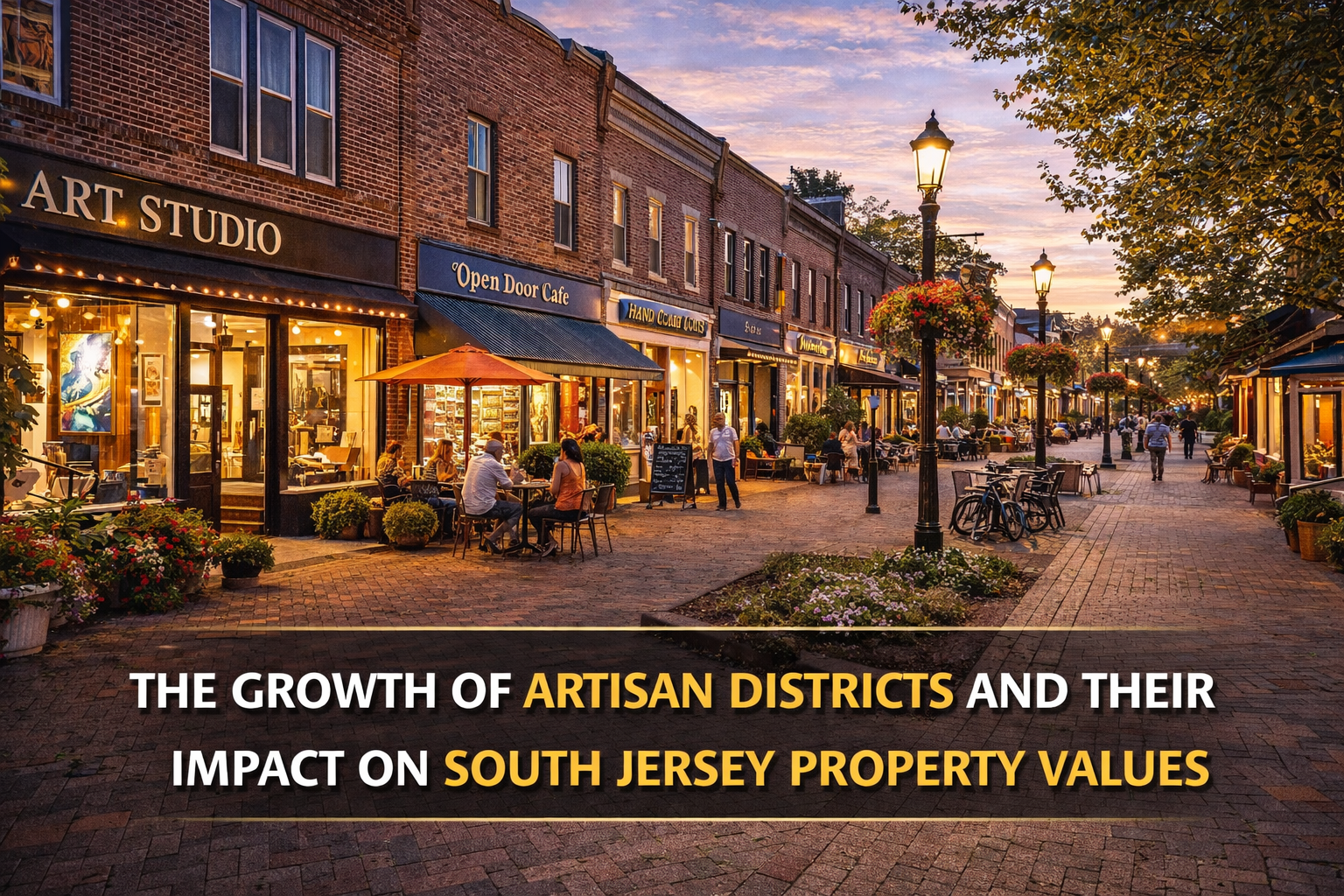
In South Jersey real estate, culture is becoming currency.
Neighborhoods once defined by convenience or affordability are now being reshaped by artisan districts—clusters of local makers, galleries, cafés, breweries, and creative spaces that transform how areas feel, function, and ultimately, how they’re valued.
These districts don’t just change streetscapes. They change buyer perception.
Mary Murphy of The Murphy Group explains:
“Artisan districts create identity. When a neighborhood feels distinctive and alive, buyers assign more value to it—even if the homes themselves haven’t changed dramatically.”
🎨 1. What Defines an Artisan District in South Jersey
Unlike traditional downtowns, artisan districts are typically:
Walkable, mixed-use areas
Anchored by local creators, not chains
Focused on experience, culture, and community
Evolving organically rather than through large-scale development
In South Jersey, these districts often emerge in revitalized main streets, warehouse conversions, or historic town centers.
📈 2. Why Artisan Districts Influence Property Values
Homes near artisan districts benefit from:
Increased foot traffic and neighborhood visibility
Stronger emotional appeal for lifestyle-driven buyers
Higher perceived “cool factor” and uniqueness
Greater demand from buyers relocating from urban cores
Buyers aren’t just purchasing square footage—they’re buying proximity to creativity, community, and daily experiences.
🏘️ 3. The Buyer Profiles Driving Demand
Artisan districts attract:
Young professionals seeking walkable lifestyles
Remote workers prioritizing quality of life
Downsizers looking for vibrant, low-commute living
Second-home buyers wanting culture without shore congestion
These buyers tend to compete aggressively for homes within walking or biking distance.
☕ 4. Walkability Is the Value Multiplier
Proximity matters—but walkability matters more.
Homes located within a short walk of artisan hubs often:
Sell faster than comparable properties
Receive stronger offers
Maintain value during market slowdowns
Being able to walk to a coffee shop, studio, or weekend market consistently outperforms being “a short drive away.”
🔄 5. Revitalization Without Overdevelopment
One reason artisan districts perform well is balance.
They typically grow without:
High-rise density
Over-commercialization
Loss of neighborhood character
This controlled evolution helps protect long-term residential value while still delivering growth.
📊 6. Long-Term Appreciation vs Short-Term Trends
Unlike trend-based amenities, artisan districts:
Age well as community anchors
Encourage repeat visitation and local loyalty
Support stable appreciation rather than spikes
Neighborhoods with strong cultural ecosystems tend to remain desirable across market cycles.
🏁 Final Takeaway
Artisan districts are quietly reshaping South Jersey’s real estate landscape.
By creating identity, walkability, and emotional connection, they elevate surrounding neighborhoods and strengthen property values—not through flash, but through authenticity.
For buyers, they offer lifestyle and longevity.
For sellers, they offer positioning power.
📲 Navigating Artisan District Markets in South Jersey
The Murphy Group helps buyers and sellers understand how cultural growth, walkability, and neighborhood identity influence long-term value—not just list price.
Explore South Jersey homes near emerging artisan districts at mgsells.com

Mary Murphy
Team Leader | The Murphy Group | eXp Realty, LLC | PLACE
or another way