

Categories
First-Time Homebuyers, Home Buying Guides, Home Buying Tips, Housing Guide, New Jersey Real Estate, Real Estate GuidesPublished January 30, 2026
NJ Environmental Regulations That Affect Homeowners

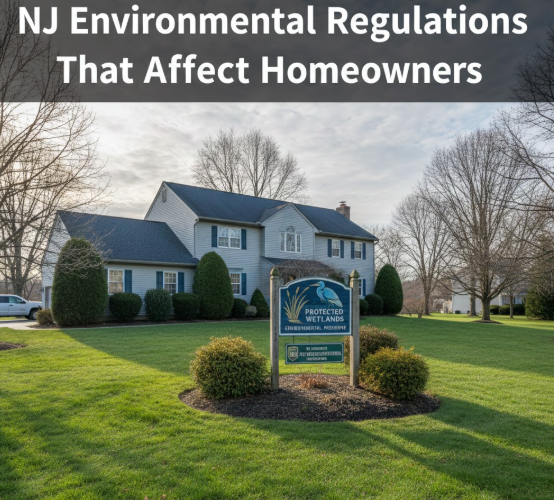
New Jersey homeowners benefit from scenic landscapes and natural resources, but the state’s environmental regulations can influence property use, renovations, and maintenance. From wetlands and floodplains to septic systems and stormwater management, understanding these rules is critical for buyers and existing homeowners alike.
Mary Murphy of The Murphy Group explains:
“Environmental regulations protect our communities and natural resources, but they also directly impact what homeowners can do on their property. Knowing the rules upfront avoids costly mistakes and legal issues.”
Here’s what you need to know.
🌿 1. Wetlands and Coastal Regulations
- Wetlands and tidal areas are protected under NJDEP rules
- Restrictions may affect:
- Landscaping or grading
- Pools, decks, and additions
- Drainage and runoff
- Permits are required for any land disturbance near protected areas
Mary notes:
“Even a small portion of wetlands on a property can trigger state oversight. Buyers need to factor this into their plans.”
🏠 2. Septic Systems and Water Quality
- NJ regulates septic systems to protect groundwater
- Older systems may require inspection, maintenance, or upgrades
- Improper systems can affect water quality and property resale
“A functioning septic system isn’t just about convenience — it’s about compliance and safety,” Mary says.
🌊 3. Floodplains and Stormwater Management
- Homes near rivers, creeks, or low-lying areas may fall under floodplain regulations
- Stormwater management requirements may limit grading, drainage, and impervious surfaces
- Flood insurance may be required even outside FEMA-designated zones
Mary adds:
“Floodplain regulations protect your home and neighbors, but they can affect expansions, pools, and landscaping.”
⚖️ 4. Tree Removal and Landscaping Rules
- Certain municipalities require permits for large tree removal
- Regulations may protect endangered species or native habitats
- Landscaping changes near protected areas often need municipal approval
“Property improvements often intersect with environmental regulations,” Mary explains.
“Professional guidance prevents violations and fines.”
🛠️ 5. Energy, Solar, and Sustainability Guidelines
- Some towns encourage or require solar-ready construction
- Renewable energy installations may need local permits or compliance checks
- Energy-efficient upgrades can intersect with zoning and historic district rules
Mary notes:
“Environmental regulations don’t just restrict — they also open opportunities for sustainable, cost-saving improvements.”
💡 6. Tips for Buyers & Homeowners
✔ Review municipal and NJDEP guidelines for your property
✔ Hire professionals familiar with local environmental regulations
✔ Check for wetlands, floodplain, and tree protection rules
✔ Include inspections and permits in your homebuying process
Mary emphasizes:
“Knowledge is the key. Understanding environmental rules upfront protects your investment and allows you to make informed improvements.”
📲 Expert Guidance on NJ Home Regulations
Navigating New Jersey’s environmental rules can be complex, but with the right guidance, homeowners and buyers can plan, improve, and protect their properties.
Mary Murphy and The Murphy Group help clients understand regulations, compliance requirements, and property potential, ensuring smooth, worry-free real estate transactions.
Learn more and explore NJ homes with expert guidance today:
www.mgsellsarizona.com

Mary Murphy
Team Leader | The Murphy Group | eXp Realty, LLC | PLACE
or another way