

Categories
South Jersey Real Estate, South Jersey Relocation Trends, Housing Guide, New Jersey Real Estate, Real Estate GuidesPublished February 6, 2026
How Local Food Hubs Influence Housing Demand in South Jersey Suburbs

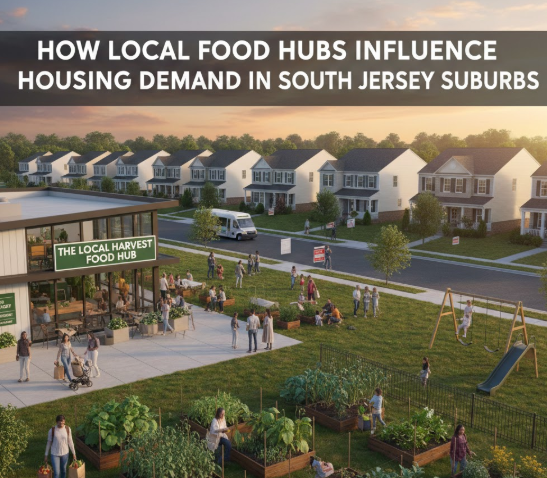
In South Jersey, food culture is now shaping suburban real estate.
Local food hubs—farmers markets, cooperative grocery spaces, and small-scale artisanal producers—are more than a weekend convenience. They are becoming a key lifestyle driver, attracting buyers who value accessibility to fresh, local food and a sense of community. Homes near these hubs often see stronger buyer interest and sustained neighborhood desirability.
Mary Murphy of The Murphy Group explains:
“Proximity to local food hubs signals more than convenience—it signals a lifestyle. Buyers increasingly consider access to quality food, walkable streets, and community interaction when choosing a home.”
🥕 1. Why Food Hubs Matter to Suburban Buyers
Buyers are drawn to neighborhoods that offer:
Access to fresh, locally sourced food
Opportunities for social connection and community events
Walkable, pedestrian-friendly environments
Support for sustainable and local business initiatives
These factors combine to create emotional and practical appeal that extends beyond the home itself.
📍 2. Neighborhoods with Emerging Food Hub Appeal
Suburban areas see demand rise when food hubs are nearby:
Small-town centers revitalized with farmers markets
Mixed-use developments featuring co-op markets
Villages with weekend food and craft events
Buyers often prioritize these neighborhoods over similar ones without local amenities, even if the homes are comparable in size and price.
🌿 3. Lifestyle and Buyer Demographics
Local food hubs appeal to a range of buyers:
Millennials and Gen Z buyers seeking lifestyle alignment
Families prioritizing healthy food options and educational experiences
Retirees valuing community engagement and convenience
Remote workers looking for vibrant, walkable environments
This broad appeal strengthens neighborhood resilience in fluctuating markets.
📈 4. Indirect Impact on Property Demand
Homes near food hubs may see:
Faster market activity due to lifestyle desirability
Greater willingness to pay premiums for convenience and community
Stronger long-term appeal driven by social and experiential factors
While appraisals may not explicitly account for a nearby food hub, buyer behavior consistently does.
🏡 5. Selling Strategies Around Food Hub Proximity
For sellers, highlighting nearby food hubs can add narrative value:
Feature weekend market routines in listing copy
Showcase walkability to markets, cafés, and local shops
Emphasize community events and neighborhood engagement
Framing homes as part of a lifestyle—not just a property—can increase buyer connection.
🏁 Final Takeaway
Local food hubs are quietly shaping South Jersey suburban housing demand.
Neighborhoods with vibrant, accessible food culture attract engaged, lifestyle-focused buyers. Proximity to these hubs enhances emotional connection, reinforces desirability, and can accelerate home sales—even when homes themselves are similar to other suburban options.
Leveraging Lifestyle-Driven Neighborhood Value
The Murphy Group helps buyers and sellers evaluate neighborhoods for lifestyle, amenities, and long-term desirability—ensuring proximity to local food hubs is recognized as a strategic advantage in South Jersey real estate.
Discover South Jersey’s lifestyle-focused neighborhoods at mgsells.com

Mary Murphy
Team Leader | The Murphy Group | eXp Realty, LLC | PLACE
or another way