

Categories
South Jersey Real Estate, South Jersey Market Trends, Burlington County, Camden County, Gloucester County, Home Buying Guides, Home Buying Tips, New Jersey Real Estate, NJ Housing, Real Estate GuidesPublished June 22, 2026
How Buyers Judge a Home Before They Even Walk Through the Front Door

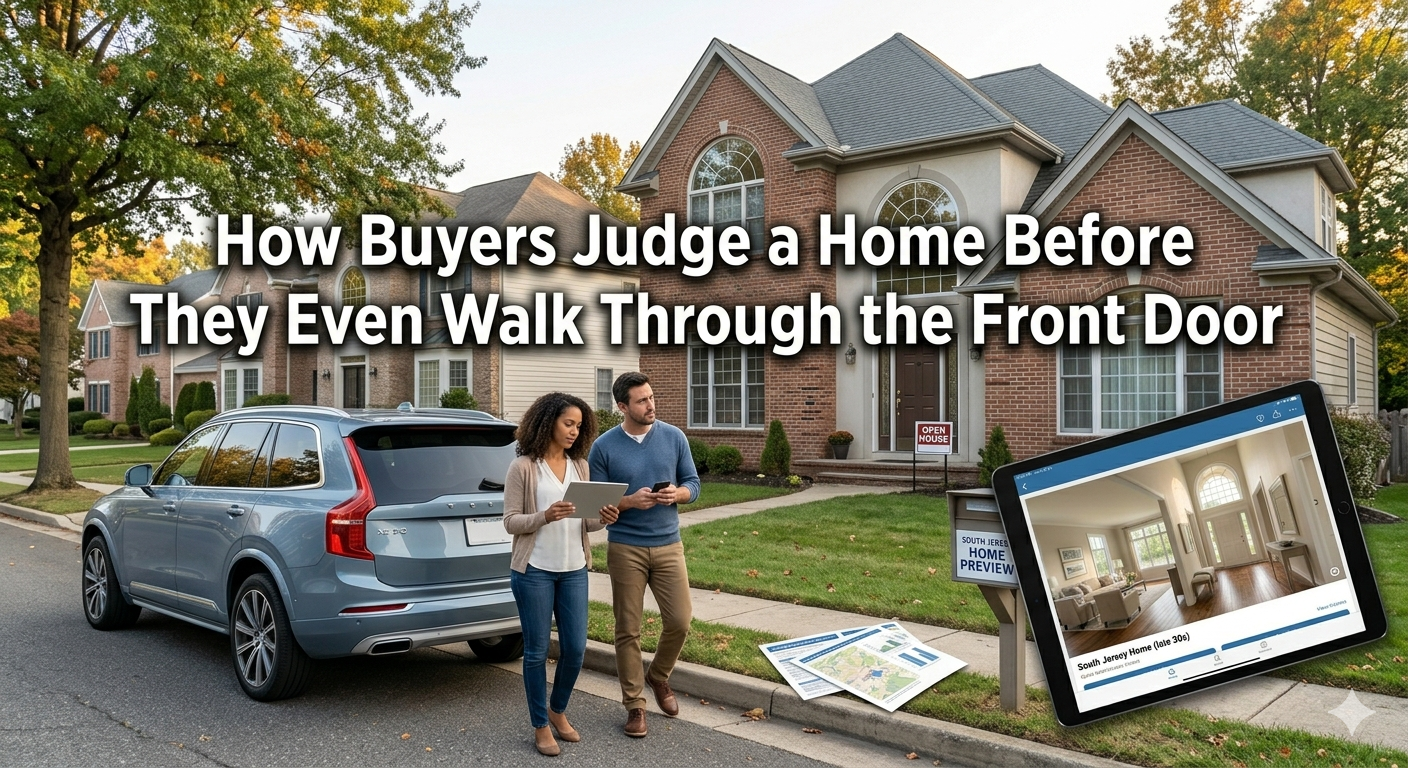
By the time a buyer physically arrives at a home, a decision has often already begun.
Not a final decision—but a strong early impression.
In South Jersey’s 2026 market, buyers routinely evaluate homes long before they step through the front door. In many cases, they’ve already decided whether the home is a serious contender—or just another listing to skip.
The showing is no longer the first impression.
It’s the second.
As Mary Murphy of The Murphy Group explains:
“By the time buyers pull into the driveway, they’ve already formed a story about the home. The showing either confirms it—or ends it.”
🧠 The First Judgment Happens Online
The home search almost always begins digitally.
Before scheduling a showing, buyers typically evaluate:
- Listing photos
- Price point
- Neighborhood location
- Street view imagery
- Floor plan or layout hints
Within seconds, they form an initial reaction:
- Interested
- Unsure
- Or not worth a visit
That reaction often determines whether the home ever gets a showing at all.
📸 1. Listing Photos Set the Emotional Tone
Photos do more than show a home—they set expectations.
Buyers quickly assess:
- Brightness and natural light
- Room size and flow
- Overall cleanliness and condition
- Visual harmony and staging
If photos feel dark, cluttered, or confusing, buyers may assume the home won’t feel better in person.
💰 2. Price Signals Value Before Any Visit
Price is one of the fastest filters buyers use.
Within moments, they subconsciously ask:
“Does this home look like it belongs in this price range?”
If the perceived value doesn’t align with expectations, many buyers won’t schedule a showing—even if the home has strong features.
📍 3. Neighborhood Research Shapes Expectations
Before visiting, buyers often research:
- School districts
- Commute times
- Street views
- Nearby amenities
- General neighborhood reputation
This shapes their emotional baseline before they ever arrive.
A strong neighborhood can elevate expectations. A questionable one can lower them before the door is even opened.
🧭 4. Street View and Curb Appeal Create the First Physical Impression
Even before stepping out of the car, buyers are evaluating:
- Exterior condition
- Landscaping
- Driveway and roof appearance
- Overall upkeep of the property
Curb appeal often determines whether buyers feel excited—or cautious—before the showing begins.
🏡 5. The Drive-Up Moment Is a Silent Decision Point
The moment buyers pull up to a home is powerful.
They are silently asking:
- “Does this match what we expected?”
- “Does it feel better or worse than the photos?”
- “Do we feel excited to go inside?”
If the answer is yes, enthusiasm builds.
If not, skepticism begins immediately.
🧠 6. Buyers Arrive With a Mental Story Already Formed
By the time buyers arrive, they already have a narrative:
- “This might be a good option.”
- “This looks like a stretch.”
- “This is probably not the one.”
The showing becomes a test of whether reality confirms that story.
🌞 7. Emotional Alignment Happens in the First Few Seconds
The strongest emotional reactions often occur immediately after entering:
- Natural light
- Entryway feel
- First view of living space
- Overall sense of openness or confinement
Buyers quickly decide whether the home feels better, worse, or exactly as expected.
⚠️ Why Some Homes Lose Buyers Before They Enter
Even strong homes can lose interest early if:
- Photos don’t match reality
- Curb appeal feels underwhelming
- Price feels inconsistent with appearance
- Neighborhood impression is weak
- Online presentation lacks clarity
At that point, the showing is often just a formality.
📈 Why This Matters More Than Ever in 2026
Today’s buyers:
- Browse more listings in less time
- Make faster emotional decisions
- Rely heavily on digital impressions
- Narrow options before scheduling tours
That means the “pre-showing” phase is often where most decisions are made.
💼 How The Murphy Group Helps Homes Pass the First Impression Test
At The Murphy Group, preparation starts long before the showing.
Their strategy includes:
- High-impact listing photography
- Curb appeal recommendations
- Strategic pricing alignment
- Neighborhood positioning in marketing
- Ensuring online presentation matches in-person experience
“If buyers are disappointed before they walk in,” Mary says, “it’s very hard to recover the excitement inside.”
📊 The Bottom Line
Buyers judge homes before they walk through the front door based on:
- Online photos
- Price perception
- Neighborhood research
- Curb appeal
- Drive-up experience
- Pre-formed expectations
And in today’s South Jersey market:
👉 By the time a buyer reaches the front door, the home has already passed—or failed—its first test.
📲 Thinking About Selling in South Jersey?
The Murphy Group helps sellers position their homes to win attention before buyers even schedule a showing—when first impressions matter most.
👉 Start here: www.mgsells.com

Mary Murphy
Team Leader | The Murphy Group | eXp Realty, LLC | PLACE
or another way